
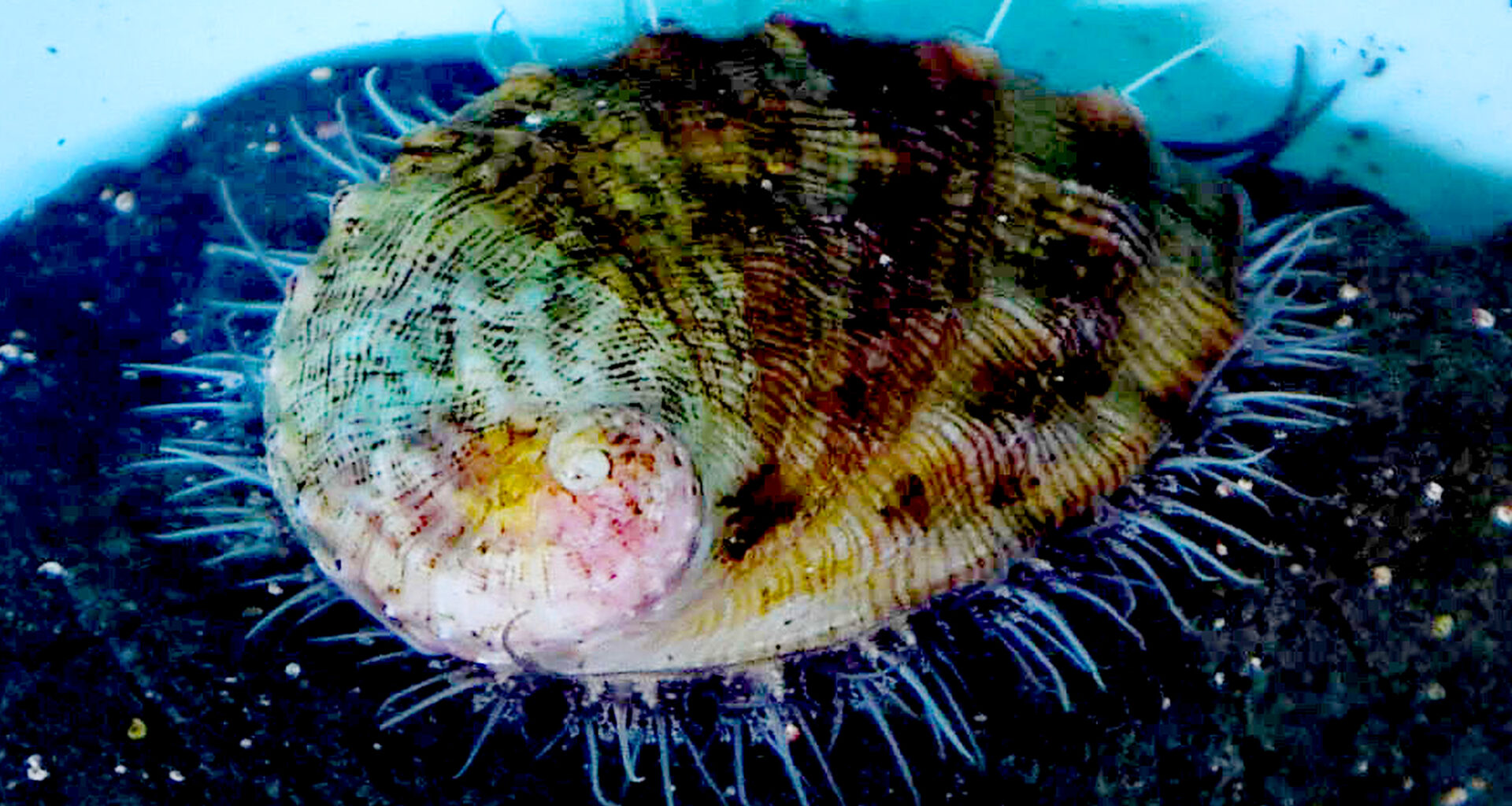
Millions of white abalone once lived on the ocean floor off the coast of Southern California and Mexico before the population began to crater 50 years ago. Now, with only a relative handful left, scientists are celebrating the discovery of one in the wild.
On May 12, scientists and staff at the Channel Islands National Marine Sanctuary spotted a white abalone near the islands for the first time in five years during a habitat survey. The goal of the survey is to spot the marine snail and determine ideal habitats for its recovery.
“It’s been like searching for a needle in a haystack,” Julie Bursek, education and outreach coordinator for Channel Islands National Marine Sanctuary, said in a news release.
The species is critically endangered, with an estimated 99% population decline since the 1970s, according to the National Oceanic and Atmospheric Administration. Though California outlawed abalone fishing in 1997, poachers can sell the meat for a steep price, and just an estimated 3,000 white abalone remain.
“With so few remaining in the wild, the animals are often too far apart to reproduce successfully,” the National Marine Sanctuary wrote. “That makes each confirmed live sighting important for scientists working to understand where white abalone still occur and what habitat may support their recovery.”
Since 2011, the University of California, Davis, has operated a captive breeding program as part of a conservation effort to revive the species. The program has successfully bred thousands of white abalone.
Next steps for the National Marine Sanctuary scientists are to continue surveying additional habitat, attempt to relocate the white abalone they saw and process their collected environmental DNA samples.
“Community science, research partnerships, and habitat surveys like this one are all important tools for helping scientists better understand where white abalone may still survive in the wild,” Bursek said.