
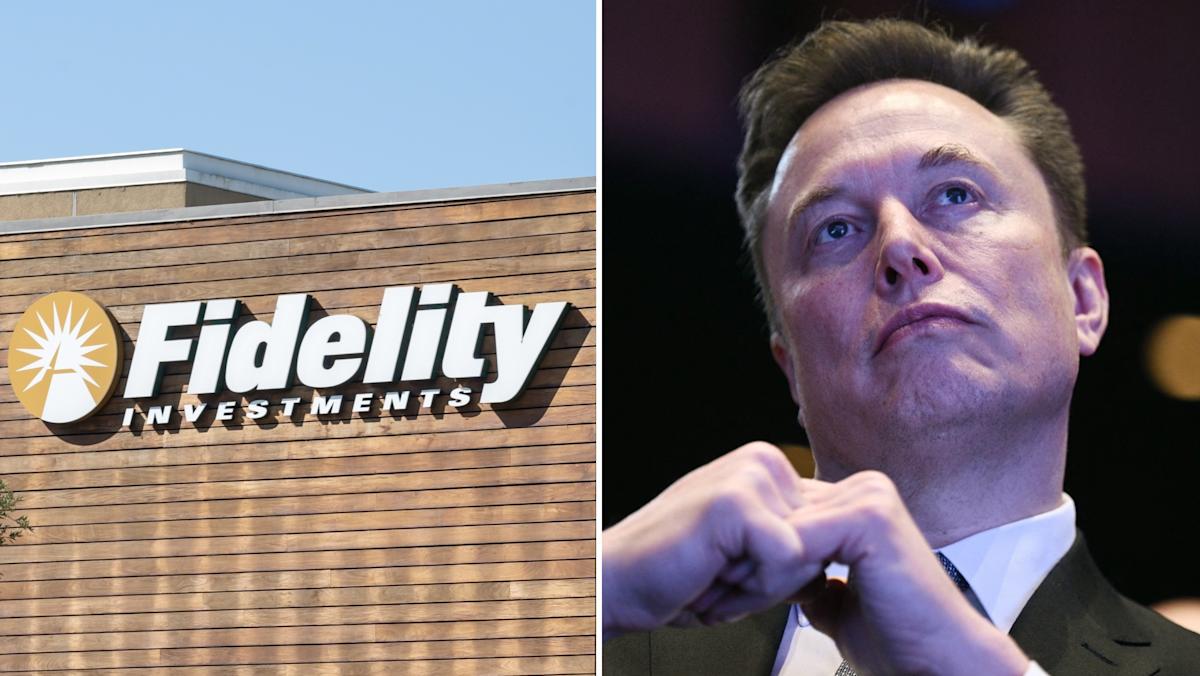
For most of history, getting into a marquee IPO at the offer price was a privilege reserved for big accounts. Fidelity just changed that for SpaceX, opening the offering to any customer with at least $2,000 in a retail brokerage account, a fraction of the threshold that has historically gated access to hot new issues. (1)
That’s an easy in. The costly out is in the fine print: a 15-calendar-day leash, and penalties that escalate with each early sale until a third strike triggers a lifetime ban on Fidelity IPOs tied to your SSN.
Must Read Why Fidelity dropped its SpaceX IPO minimum to $2,000
Fidelity is reacting to the major jump in supply. Most IPOs reserve only 5% to 10% of the total offering for retail customers, which restricts the shares that brokers like Fidelity can allocate to everyday clients. For SpaceX, Fidelity says the company has decided to reserve up to 30% of the offering, which is why, in its words, it “decided to reduce IPO eligibility for this offering.” (1)
Fidelity tied the lower bar to this SpaceX offering specifically, and has not adopted it as a permanent policy. It reviews eligibility on a per-IPO basis. Don’t assume the $2,000 door stays open for the next big name — like Anthropic or OpenAI. (1)
Fidelity’s flipping rule: sell SpaceX in 15 days and you’re banned
If you’re allocated SpaceX shares (limited to begin with) and you sell within the first 15 calendar days from the start of secondary-market trading, Fidelity will label you as a “flipper,” and that restricts your access to future new-issue equity offerings through Fidelity. The first day you can sell without the label is the 16th calendar day after the stock starts trading.
The penalties escalate with each offense (1):
First flip: blocked from future IPOs for six months
Second flip: blocked for one year
Third flip: permanently banned, tied to your SSN
FINRA defines “flipping” as a sale within the first 30 days of an offering, and brokers set their own penalty structures around that benchmark. The ban you’d face is Fidelity’s policy, not a regulatory one. (2)
You can technically sell — Fidelity doesn’t freeze the shares during the 15-day window — but doing so starts you up the penalty ladder. The retail hype for SpaceX could amplify the regular volatility that comes with new tickers, so a slide inside the window forces a choice: hold and ride it out, or sell and eat both the loss and the penalty.
One early sale costs you six months, not forever. The lifetime ban takes three strikes. Of course, with OpenAI, Anthropic and other big names lining up to go public, investors may not want to risk it.
What the $2,000 SpaceX IPO access really gets you
It’s important to know that clearing the $2,000 bar doesn’t guarantee you shares either. Fidelity says it will try to allocate some shares to every customer who confirms interest, but expects demand to outstrip the supply it receives. If it can’t fill everyone, it runs a lottery, meaning you could get a partial fill, or nothing at all. (1) Retail investors often get shut out of hot IPOs since allocations are limited, and the price has often already run up by the open.
Insiders aren’t on the same leash. SpaceX reserved up to 5% of the offering for a directed-share program, shares for “certain employees and persons” its executives pick, with no lockup at all. They bought at $135 and can sell on day one, roughly $3.75 billion in stock that can hit the market immediately while retail waits 15 days. (3) One early investor’s 7% stake is set to be worth close to $90 billion.
Read More: BlackRock warns buying and holding the S&P 500 isn’t enough for retirement anymore — here’s why
SpaceX IPO date, price and how big the $75 billion raise is
SpaceX filed its first prospectus with the SEC on May 20, 2026, then amended it on June 1 to list Class A shares on Nasdaq and the new Nasdaq Texas exchange under the ticker NASDAQ:SPCX, at a fixed $135 per share. None of this is locked in just yet — finalized details are expected after the close on June 11, with the trading circus set to begin on June 12. (3)
SpaceX skipped the usual step of marketing a price range and narrowing it through bookbuilding, going straight to a single fixed number.
SpaceX floated a figure above $2 trillion to investors in April, according to Bloomberg. By late May, Bloomberg reported the target had settled to at least $1.8 trillion after consultations with advisers and investors — a number Musk publicly disputed, replying “False” on X to a post citing the report. (4) The fixed price now implies a valuation near $1.75 trillion, below what he disputed. (3) Not everyone buys the math: Morningstar pegs SpaceX’s fair value at roughly $780 billion, less than half the target.
SpaceX reported $18.67 billion in 2025 revenue, up sharply as Starlink subscriptions and launch services compounded, against a 2025 operating loss of roughly $2.59 billion as the company poured capital into Starship and a fast-growing AI segment built around its xAI acquisition. (3)
At $135 a share, SpaceX is selling 555.6 million shares for a raise of roughly $75 billion, with underwriters holding an option to buy 83.33 million more at the same price. (3) That would dwarf the current record. Saudi Aramco’s 2019 listing raised $25.6 billion at IPO, a figure that rose to $29.4 billion once it exercised its over-allotment option. (5) Aramco’s record isn’t even in the same galaxy — at $75 billion, SpaceX would land as the largest IPO in history.
Should you buy the SpaceX IPO through Fidelity?
If you opt in, plan to hold past day 15, treat an allocation as a maybe rather than a sure thing, and size the position to what you can afford to leave alone. Fidelity’s 15-day window is the shortest of the brokers offering SpaceX, well under FINRA’s 30-day benchmark, though it pairs that with some of the steepest penalties, including the SSN-tied lifetime ban.
There’s also a way to get exposure without touching the IPO at all. Index providers rewrote their fast-entry rules for giant listings, and SpaceX is set to land in most major US indexes within weeks — CRSP-based funds like Vanguard’s VTI in as little as five trading days, the Russell 1000 about a week out, the Nasdaq-100 at 15. The S&P 500 is the lone holdout, after keeping its rules unchanged. So if you hold a broad index fund or a 401(k), you may end up owning a slice of SpaceX without ever placing the trade.
And if your choice is to sit on the sidelines and watch the rocket launch, get some popcorn ready. This one’s for the history books.
You May Also Like
Join 250,000+ readers and get Moneywise’s best stories and exclusive interviews first — clear insights curated and delivered weekly. Subscribe now.
Author’s note: IPOs are historically volatile. This article is for informational purposes only, and nothing is meant as investment advice.
—
Article sources
We rely only on vetted sources and credible third-party reporting. For details, see our editorial ethics and guidelines.
Fidelity (1); FINRA (2); US Securities and Exchange Commission (3); Elon Musk on X (4); CNN (5)
This article originally appeared on Moneywise.com under the title: Fidelity slashed its SpaceX minimum to $2,000 for retail investors — but the fine print can ban you from IPOs for life
This article provides information only and should not be construed as advice. It is provided without warranty of any kind.