
The United States healthcare landscape is undergoing a major transformation, and semaglutide has emerged as one of the most influential pharmaceutical innovations driving that change. Originally developed as a treatment for Type 2 diabetes, semaglutide has rapidly evolved into a breakthrough therapy for obesity management, cardiovascular health, and metabolic disease control.
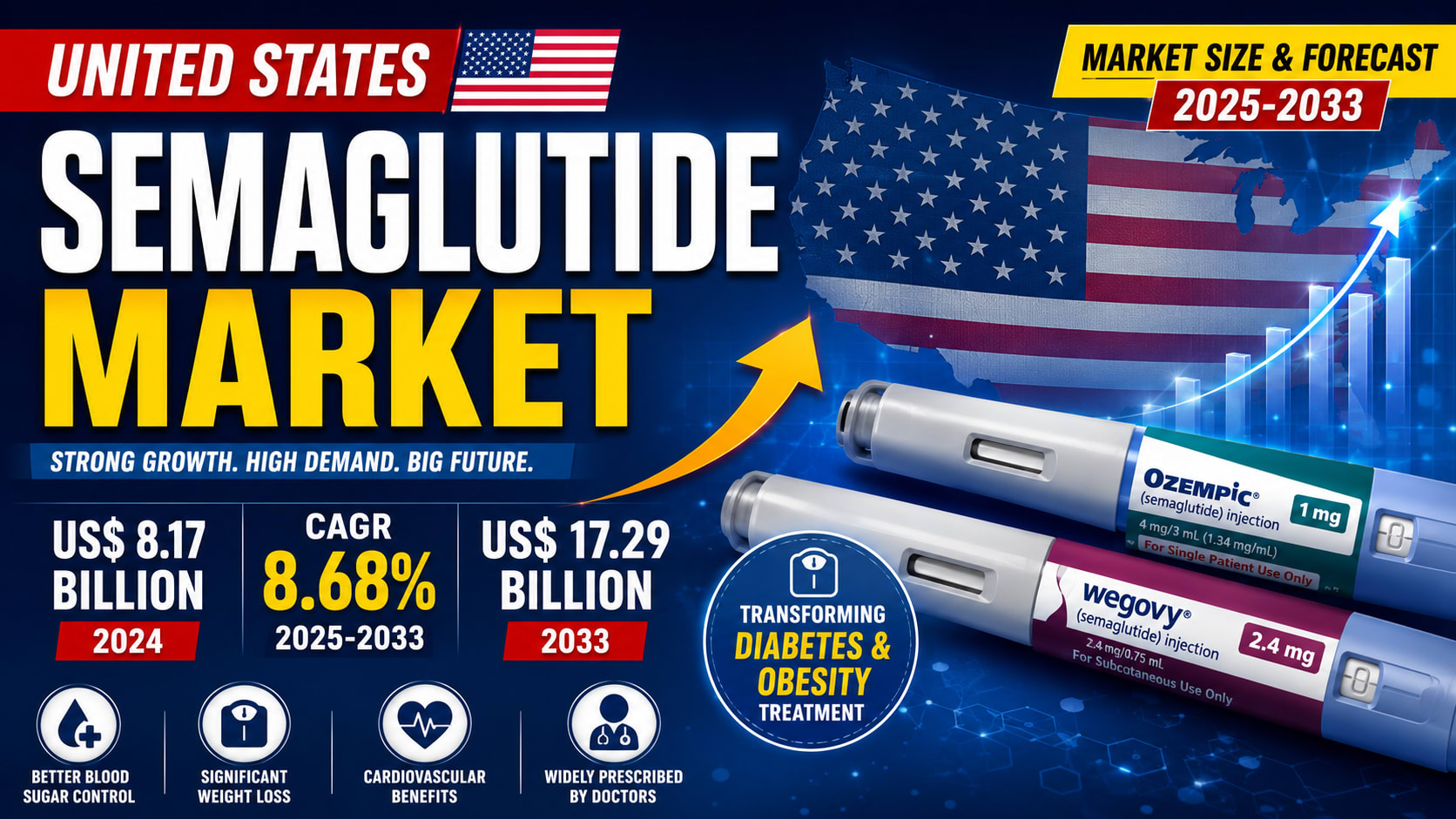
According to Renub Research, the United States Semaglutide Market was valued at US$ 8.17 Billion in 2024 and is projected to reach US$ 17.29 Billion by 2033, growing at a CAGR of 8.68% during 2025–2033. The remarkable growth trajectory reflects increasing demand for effective weight-loss therapies, growing prevalence of Type 2 diabetes, rising healthcare awareness, and broader acceptance of GLP-1 receptor agonist medications.
Understanding Semaglutide and Its Growing Importance
Semaglutide belongs to a class of medications known as glucagon-like peptide-1 (GLP-1) receptor agonists. These drugs mimic naturally occurring hormones that regulate blood sugar levels and appetite.
The therapy works by:
Stimulating insulin secretion when blood glucose levels rise
Suppressing excessive glucagon production
Slowing gastric emptying
Promoting feelings of fullness and satiety
These combined effects help patients achieve better blood sugar control while simultaneously supporting weight loss.
In the United States, semaglutide is marketed under well-known brands including Ozempic, Wegovy, and Rybelsus. Its effectiveness has led healthcare providers to increasingly prescribe it for patients struggling with obesity, diabetes, and related metabolic disorders.
The medication’s dual benefit of glucose management and weight reduction has positioned it as one of the most sought-after therapies in the pharmaceutical industry.
Increasing Obesity Rates Continue to Drive Market Growth
One of the strongest growth drivers for the U.S. semaglutide market is the country’s ongoing obesity epidemic.
Nearly half of American adults are classified as overweight or obese, creating significant healthcare challenges and increasing the risk of chronic diseases such as:
Type 2 diabetes
Cardiovascular disease
Hypertension
Sleep apnea
Certain cancers
Healthcare experts estimate that more than 260 million Americans could be living with overweight or obesity by 2050 if current trends continue.
As traditional lifestyle interventions often struggle to deliver long-term results, patients and physicians are increasingly turning to pharmaceutical solutions like semaglutide.
Clinical studies consistently demonstrate substantial and sustained weight loss among users, making semaglutide one of the most effective obesity treatments currently available.
This growing demand is expected to remain a major catalyst for market expansion throughout the forecast period.
Rising Diabetes Prevalence Strengthens Demand
Type 2 diabetes remains one of the most prevalent chronic conditions in the United States.
Millions of Americans require long-term disease management to maintain healthy blood glucose levels and avoid complications such as:
Kidney disease
Vision loss
Cardiovascular disorders
Nerve damage
Semaglutide has demonstrated superior outcomes compared to many traditional diabetes therapies.
The medication not only improves glycemic control but also reduces body weight and provides cardiovascular benefits, making it particularly attractive to physicians.
As healthcare systems focus on preventive care and long-term disease management, semaglutide adoption among diabetic patients is expected to continue rising steadily.
Weight Management Applications Create New Opportunities
The approval of Wegovy for chronic weight management significantly expanded semaglutide’s market potential.
Unlike many earlier obesity medications, semaglutide has shown clinically meaningful weight loss results that can be maintained over extended periods.
This has helped reshape public perception of obesity treatment.
Increasingly, obesity is being recognized as a chronic medical condition requiring professional intervention rather than solely lifestyle modification.
As awareness grows, more patients are seeking prescription-based weight-loss therapies.
Employers, insurers, and healthcare providers are also recognizing the economic advantages of obesity treatment, including reduced long-term healthcare costs and improved patient outcomes.
These trends are creating substantial opportunities for future market growth.
Strong Physician and Patient Acceptance Accelerates Adoption
One of the most important factors supporting semaglutide’s success is widespread acceptance among healthcare professionals and patients.
Physicians appreciate:
Proven clinical efficacy
Cardiovascular benefits
Weekly dosing convenience
Strong safety profile
Significant weight-loss outcomes
Patients, meanwhile, value the simplicity of once-weekly administration and visible treatment results.
Positive experiences have contributed to high treatment adherence rates and strong patient satisfaction.
Media coverage and public awareness have further elevated demand, helping brands such as Ozempic and Wegovy become household names across the United States.
Market Challenges Remain Despite Strong Growth
Although demand remains exceptionally strong, several challenges continue to affect market expansion.
High Treatment Costs
Semaglutide therapies can be expensive, particularly for patients without comprehensive insurance coverage.
Many insurance providers cover diabetes-related treatments such as Ozempic, but obesity medications often face more restrictive reimbursement policies.
As a result, many patients seeking weight-loss therapy must pay substantial out-of-pocket costs.
The affordability challenge continues to limit access among lower-income populations.
Supply Shortages and Manufacturing Constraints
Another significant challenge involves recurring supply shortages.
Demand for semaglutide-based medications has frequently exceeded available supply.
Manufacturing biologic medications requires sophisticated production processes and substantial investments in capacity expansion.
As prescriptions continue to rise, manufacturers face pressure to increase production while maintaining product quality and regulatory compliance.
Addressing these supply bottlenecks will be essential for sustaining future market growth.
Ozempic Continues to Dominate the Diabetes Segment
Ozempic remains one of the leading semaglutide products in the United States.
The medication has established itself as a preferred treatment option for Type 2 diabetes due to its ability to:
Improve blood sugar control
Promote weight loss
Reduce cardiovascular risk
Enhance patient adherence
Strong reimbursement support and extensive clinical evidence continue to strengthen Ozempic’s position in the diabetes treatment landscape.
Although supply challenges occasionally impact availability, demand remains exceptionally strong.
Wegovy Revolutionizes Obesity Treatment
Wegovy has become a defining product in the rapidly expanding obesity management market.
The therapy delivers significant weight-loss outcomes that frequently surpass those achieved through conventional treatment approaches.
Demand has surged among both healthcare providers and patients seeking effective long-term obesity solutions.
As obesity continues to gain recognition as a serious medical condition, Wegovy’s market presence is expected to expand further.
Improved insurance coverage and enhanced supply availability could unlock even greater growth potential in the coming years.
Retail Pharmacies Play a Critical Role
Retail pharmacies serve as the primary distribution channel for semaglutide medications throughout the United States.
Major pharmacy chains facilitate:
Prescription fulfillment
Patient education
Medication counseling
Adherence support programs
As telehealth adoption increases, pharmacies are integrating digital prescription services and online refill platforms to improve accessibility.
However, inventory management remains a challenge due to fluctuating demand and periodic supply shortages.
Despite these obstacles, retail pharmacies will continue serving as the dominant distribution channel for semaglutide therapies.
Regional Analysis: California, New York, and New Jersey Lead Adoption
California
California represents one of the largest semaglutide markets in the country.
The state’s large population, high obesity prevalence, and advanced healthcare infrastructure support widespread adoption of Ozempic and Wegovy.
Major metropolitan areas including Los Angeles, San Francisco, and San Diego continue to drive demand.
New York
New York remains a major center for semaglutide utilization.
Strong healthcare infrastructure, leading research institutions, and high public awareness contribute to robust market growth.
Healthcare providers throughout the state increasingly prescribe semaglutide for both diabetes and obesity management.
New Jersey
New Jersey benefits from a strong pharmaceutical ecosystem and growing physician confidence in GLP-1 therapies.
Rising obesity rates and increasing diabetes prevalence continue to support market expansion across the state.
Competitive Landscape
The U.S. semaglutide market remains highly competitive and innovation-driven.
Major pharmaceutical companies are investing heavily in next-generation metabolic disease treatments, expanded manufacturing capacity, and new clinical applications.
Key companies include:
Novo Nordisk A/S
Eli Lilly and Company
AstraZeneca plc
Biocon Ltd
Johnson & Johnson
Pfizer Inc.
AbbVie Inc.
Sanofi S.A.
10 Recent Developments Among Key Industry Players
1. Novo Nordisk Expanded Manufacturing Capacity
Novo Nordisk announced major investments in manufacturing facilities to address surging global demand for Ozempic and Wegovy.
2. Wegovy Received Additional Cardiovascular Benefit Recognition
Clinical evidence demonstrated cardiovascular risk reduction benefits among overweight and obese patients using Wegovy.
3. Ozempic Prescription Volumes Reached Record Levels
Growing physician adoption drove record prescription growth across multiple U.S. healthcare systems.
4. Eli Lilly Increased Competition in the GLP-1 Segment
Eli Lilly accelerated commercialization efforts for its obesity and diabetes treatment portfolio, intensifying competition.
5. AstraZeneca Expanded Metabolic Disease Research
The company strengthened investments in obesity and cardiometabolic disease drug development programs.
6. Biocon Advanced GLP-1 Biosimilar Initiatives
Biocon continued exploring opportunities within the growing GLP-1 therapeutic category.
7. Pfizer Enhanced Obesity Drug Development Pipeline
Pfizer expanded research efforts targeting next-generation obesity treatment solutions.
8. Sanofi Increased Focus on Metabolic Health
Sanofi accelerated strategic initiatives aimed at diabetes and obesity management markets.
9. AbbVie Pursued New Endocrinology Opportunities
AbbVie strengthened investments in therapies addressing chronic metabolic disorders.
10. Johnson & Johnson Continued Strategic Healthcare Expansion
The company maintained investments in innovative therapeutic areas supporting long-term chronic disease management.
Market Segmentation
By Product
Ozempic
Rybelsus
Wegovy
Others
By Application
Type 2 Diabetes
Obesity
Cardiovascular Risk Reduction
By Distribution Channel
Retail Pharmacies
Hospital Pharmacies
Online Pharmacies
By Region
California
Texas
New York
Florida
Illinois
Pennsylvania
Ohio
Georgia
New Jersey
Washington
North Carolina
Massachusetts
Virginia
Michigan
Maryland
Colorado
Tennessee
Indiana
Arizona
Minnesota
Wisconsin
Missouri
Connecticut
South Carolina
Oregon
Louisiana
Alabama
Kentucky
Rest of United States
Final Thoughts
The United States semaglutide market is entering a new era of growth as obesity, diabetes, and cardiovascular health become national healthcare priorities. With market value expected to rise from US$ 8.17 Billion in 2024 to US$ 17.29 Billion by 2033, semaglutide therapies are poised to play an increasingly vital role in chronic disease management.
Strong clinical outcomes, growing physician confidence, expanding weight-management applications, and increasing patient awareness continue to fuel adoption. While affordability concerns and supply shortages remain challenges, ongoing investments in manufacturing capacity and healthcare innovation are expected to support long-term market expansion.
As the healthcare industry shifts toward preventive and outcome-driven treatment models, semaglutide stands at the forefront of one of the most significant pharmaceutical growth stories of the decade.