
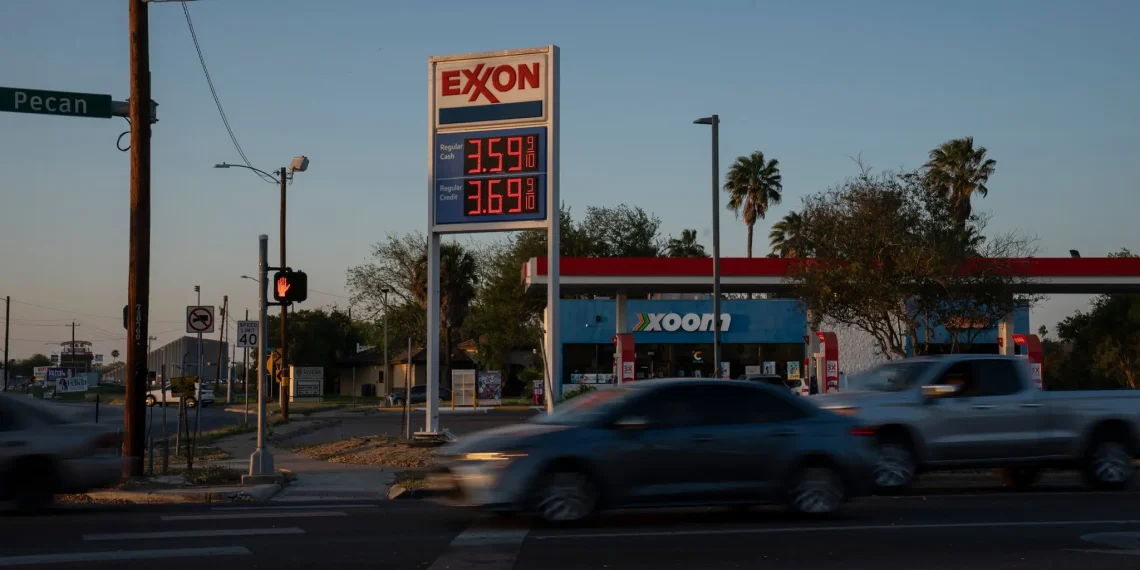
NEW YORK – The Associated Press reports U.S. consumers haven’t stopped spending money since the Iran war drove up fuel prices, but many shoppers are reassessing what they buy and where, according to company executives and retail analysts.
The behavior changes observed so far are subtle, such as altered routines for buying gasoline and fewer visits to clothing and furniture stores. They also are uneven across the population. During recent earnings calls with analysts, executives from American mainstays like Walmart, McDonald’s and Dollar General cited overall shopper resilience as well as noticeable cutbacks by lower-income customers.
But the new signs of strain cited by major retailers as income tax refunds helped shore up their sales make some economists and analysts think they will see a wider retrenchment when the refunds are gone and consumers face the cumulative impact of more expensive gas and higher prices for food, clothing, insurance and other goods and services.
Trevor Chapman, a communications executive in West Hills, California, said that instead of going to a local independent gas station, he and his wife now plan their fuel stops around Costco stores with filling stations. The couple also is doing more online food shopping to avoid impulse buys, he said.
“Gas is a kind of catalyst,” Chapman said. “It trickles down into the entire budget. We’re trying to keep everything as normal as possible. But it’s starting to feel like it’s adding up more and more.”
Needs versus wants
Before the war, retailers had spent multiple earnings seasons highlighting consumer caution and selectivity as factors that could weigh on sales of nonessential products. Shoppers appear to have curbed their discretionary spending even more as the cost of buying gas went up, said Marshal Cohen, chief retail advisor at Circana.
Between April 25 and May 23, U.S. retailers sold 6% fewer non-grocery products than they did during the comparable four-week period of 2025, Cohen said. Housewares, clothing, footwear and sports equipment had the biggest declines, anywhere from 5% to 7%. Circana reported that toys and beauty items remained bright spots, registering at least an 8% increase in the number of units sold.
Location intelligence company Placer.ai, which tracks people’s movements based on cellphone usage, saw visits to the gas stations of BJ’s, Costco and Sam’s Club stores start to accelerate in early March, aligning with a sharp rise in fuel prices, according to R.J. Hottovy, the company’s head of analytical research.
By early May, Placer.ai’s data showed four consecutive weeks of reduced foot traffic at clothing, electronics and home furnishing stores, and more trips to grocery stores and dollar stores.
“Consumers are prioritizing value-oriented retailers like warehouse clubs, superstores, and off-price chains,” Hottovy said.