
Researchers are learning more about a type of shark that can be seen in New Hampshire waters.The endangered basking shark is often spotted in New England waters from spring to fall.Researchers at the Woods Hole Oceanographic Institution said it was long-believed that the filter-feeders fasted during their long migrations, but they now know the sharks are diving to the depths of the ocean to feed, anywhere from 200 to 1,000 meters, the area known as the ocean’s “twilight zone.”Researcher Jaida Elcock said the key to protecting the endangered species is understanding its habits.>> Download the free WMUR app to get updates on the go << “If we can understand what resources they need to survive, what resources they’re using when they’re making these long-distance migrations, the more we can understand how to protect those resources and then also the basking sharks that rely on them,” she said.Basking sharks are endangered because they were harvested for centuries for their oil-rich livers. Although they are the second-largest shark, they are harmless to humans.New Hampshire has had no reported unprovoked shark attacks since 1837.
MANCHESTER, N.H. —
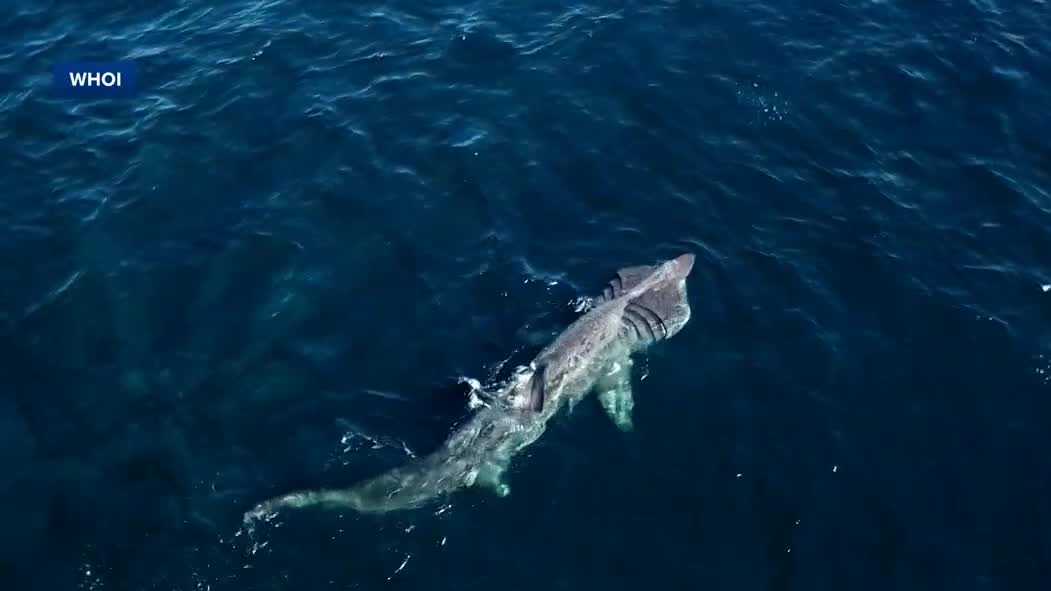
Researchers are learning more about a type of shark that can be seen in New Hampshire waters.
The endangered basking shark is often spotted in New England waters from spring to fall.
Researchers at the Woods Hole Oceanographic Institution said it was long-believed that the filter-feeders fasted during their long migrations, but they now know the sharks are diving to the depths of the ocean to feed, anywhere from 200 to 1,000 meters, the area known as the ocean’s “twilight zone.”
Researcher Jaida Elcock said the key to protecting the endangered species is understanding its habits.
>> Download the free WMUR app to get updates on the go <<
“If we can understand what resources they need to survive, what resources they’re using when they’re making these long-distance migrations, the more we can understand how to protect those resources and then also the basking sharks that rely on them,” she said.
Basking sharks are endangered because they were harvested for centuries for their oil-rich livers. Although they are the second-largest shark, they are harmless to humans.
New Hampshire has had no reported unprovoked shark attacks since 1837.