
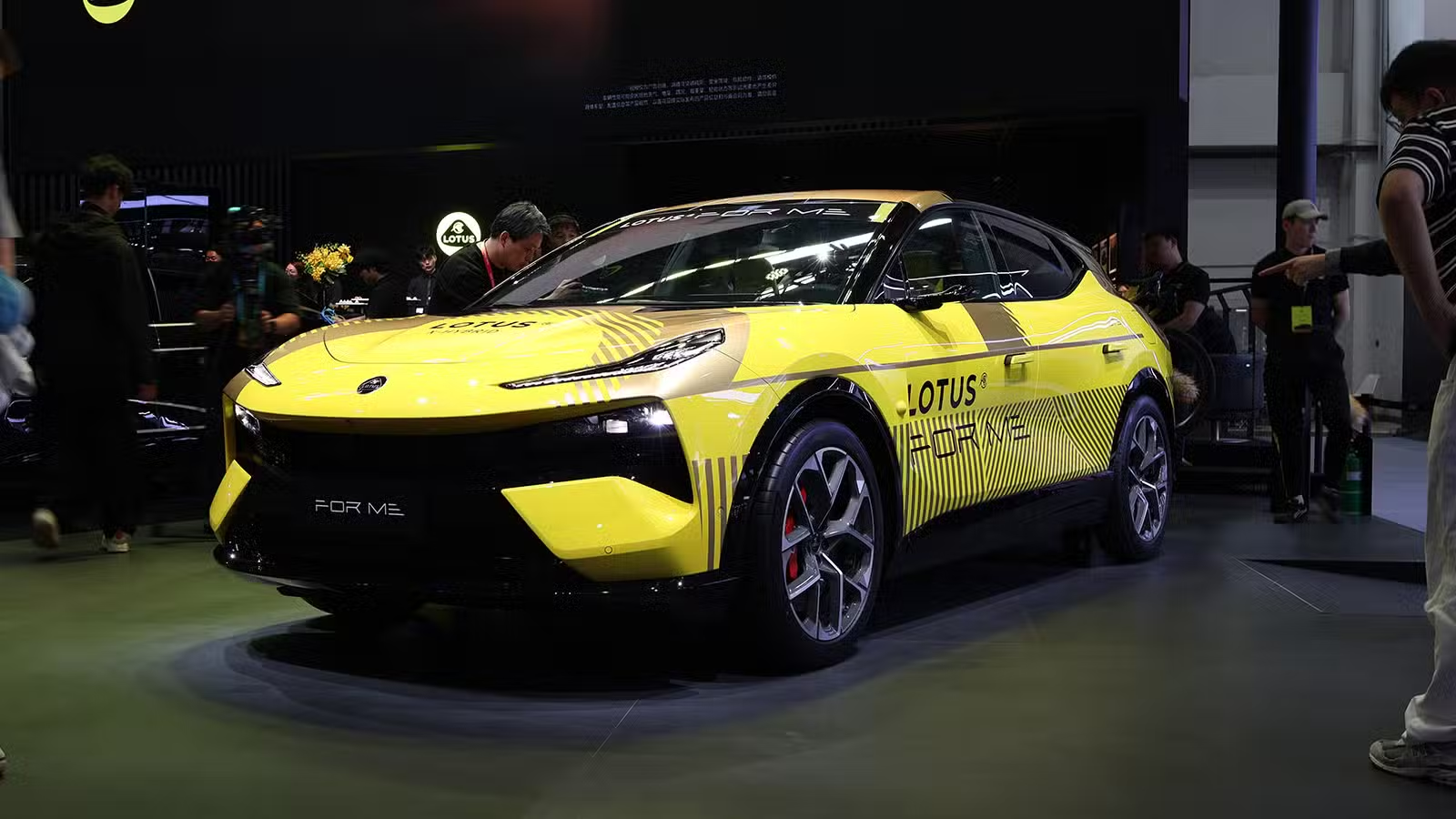
 A Lotus For Me hybrid SUV on display at the Beijing Auto Show in April 2026. Credit: CnEVPost
China’s domestic sales of traditional fuel passenger vehicles fell to 497,000 units in May, down 357,000 units from a year earlier.
Domestic NEV sales rebounded sequentially, while exports doubled year-on-year, partly offsetting weakness in the domestic market.
The contraction of China’s gasoline vehicle market is accelerating, as green vehicles rapidly take their place.
Domestic sales of traditional fuel passenger vehicles totaled just 497,000 units in May, plunging 41.8% year-on-year, according to data released by the China Association of Automobile Manufacturers (CAAM) on Wednesday.
That figure was down 357,000 units from a year earlier, and also represented a 3.5% decline from April.
Gasoline vehicles remained a persistently weak segment, even as the overall passenger vehicle market recovered on a month-on-month basis.
China’s total domestic passenger vehicle sales reached 1.444 million units in May, up 8.2% from April but still down 23.4% year-on-year.
That means gasoline vehicles fell far more sharply than the overall market, with their share being rapidly eroded by new energy vehicles (NEVs).
In the first five months of the year, cumulative domestic sales of traditional fuel passenger vehicles stood at 3.2 million units, down 1.243 million units, or 28 percent, from the same period last year.
Total domestic passenger vehicle sales over the same period were 6.79 million units, down 23.8% year-on-year.
The NEV market, by contrast, showed signs of stabilizing and recovering. Domestic NEV sales reached 1.049 million units in May, up 14.8% from April, despite a 4.1% year-on-year decline.
Of those, domestic NEV passenger vehicle sales were 947,000 units, up 15.6% month-on-month but down 8.1% year-on-year.
The domestic market continued to post double-digit year-on-year declines, weighed down by multiple factors including policy adjustments, shifts in market structure, and pressure from the macroeconomic environment, the CAAM said.
In sharp contrast to the weakness at home, exports maintained rapid growth momentum.
China exported 446,000 NEVs in May, up 3.8% from April and up 110% year-on-year. Exports of traditional fuel vehicles reached 483,000 units, up 42.6% year-on-year.
In the January-May period, cumulative NEV exports reached 1.833 million units, up 110% year-on-year. Exports of traditional fuel vehicles totaled 2.227 million units, up 36.2 percent. Overseas demand is becoming a core engine for Chinese automakers to hedge against domestic pressure.
The decline of gasoline vehicles in China is already evident in the retail market. Pure gasoline models completely disappeared from China’s top 10 best-selling passenger vehicles by retail sales in May, with the list entirely occupied by NEVs.
Geely Auto’s (HKEX: 0175) Xingyuan ranked first in passenger vehicle retail sales in May, with Tesla’s (NASDAQ: TSLA) Model Y in second place, according to a CnEVPost report yesterday.
In January, seven gasoline models were still on the top 10 list.
Cui Dongshu, secretary-general of the China Passenger Car Association (CPCA), said that amid the shock of high fuel prices, the cost of owning a gasoline vehicle has continued to climb, significantly dampening purchase intentions.
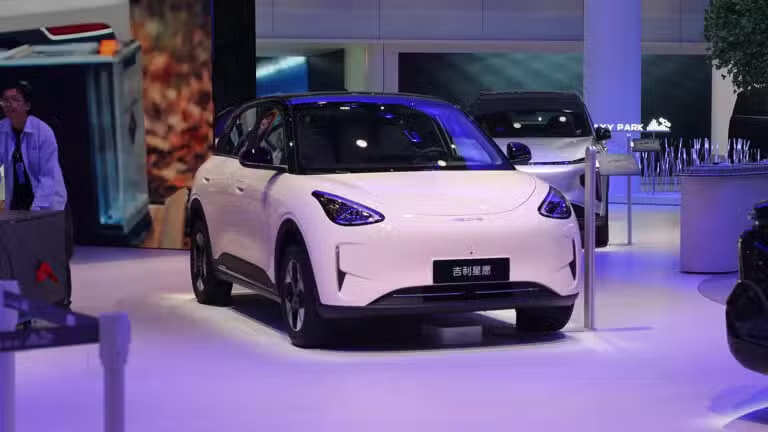
China’s top 10 passenger cars by retail sales in May were all NEVs, with Geely Xingyuan ranking first and Tesla Model Y second.