
Never say “no hitter” during a no hitter and don’t talk to pitchers during a perfect game.
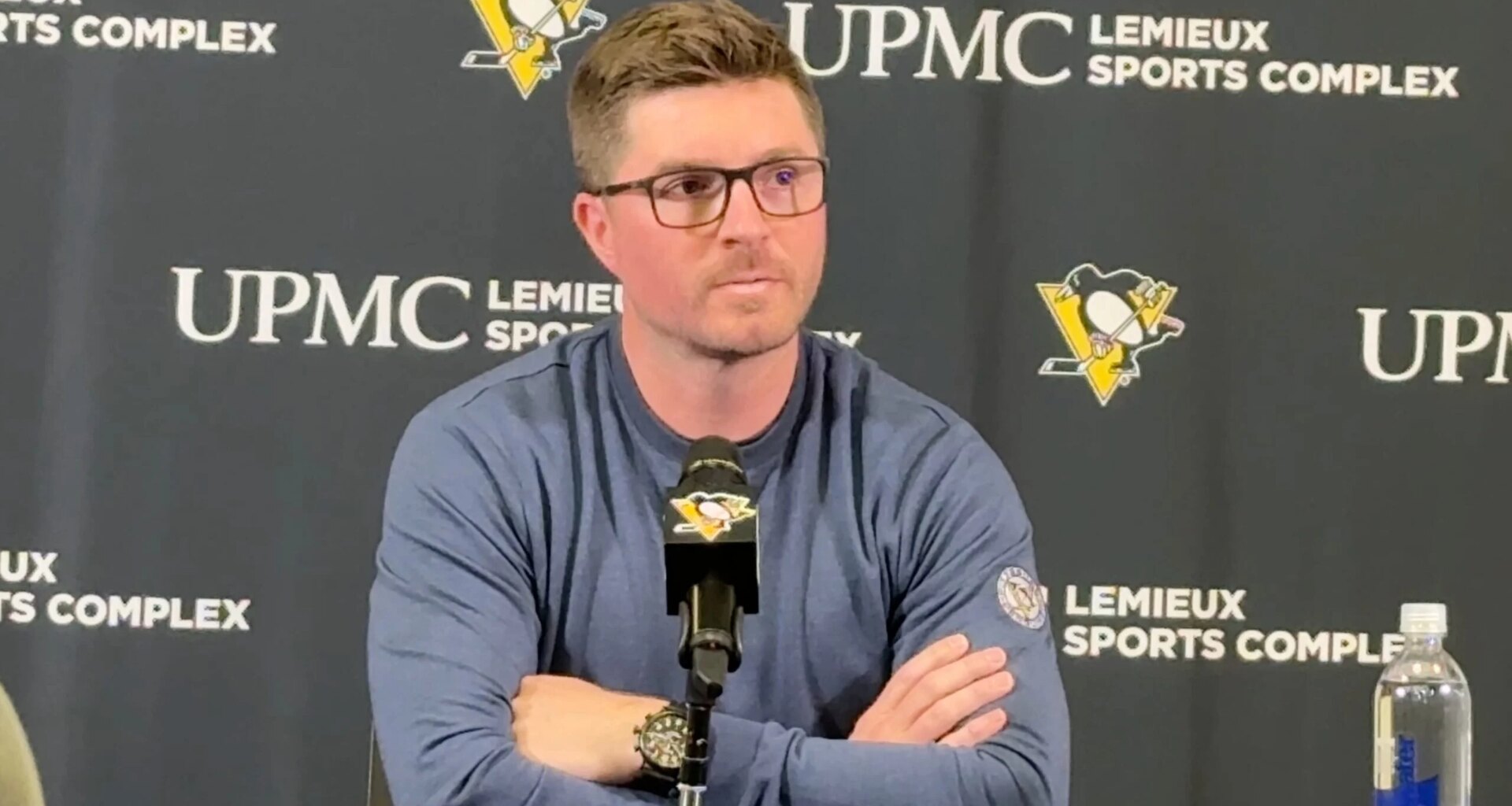
The baseball superstitions do not translate to hockey, but if they did, Pittsburgh Penguins general manager Kyle Dubas took a no-no into the ninth inning, delivering a brilliant performance that likely outpaced even his expectations for the growth and success of his team.
The Penguins finished second in the Metro Division, ended a three-year playoff drought, and finally have some base on which to build for the future.
Dubas Grade: A
In order, Dubas traded the No. 12 pick for the Nos. 21 and 31 picks, then flipped the 31st pick and their 59th overall pick to the LA Kings for No. 24. Those picks became Bill Zonnon and Will Horcoff, while the No. 12 pick became Jack Nesbitt, whose numbers fell in his third junior season.
Also at the 2025 Draft, Dubas acquired Connor Clifton AND a second-round pick for Conor Timins, who was simply a depth option for Buffalo. Another Dubas win followed by flipping 1A goalie Alex Nedeljkovic to San Jose for a third-rounder.
Then the signings were a pretty good batch, at least when considering the goal. Dubas was not hunting the best of the free agent class or win immediately, but to find players worthy of a greater chance.
Signing Parker Wotherspoon, Justin Brazeau, Connor Dewar, and Anthony Mantha was inspired work, and all of them had career years. Caleb Jones signed a two-year deal and won the third-pairing role before injuries and rehab cost him the remainder of his season. Rafael Harvey-Pinard and Alex Alexeyev were no-risk, bargain gambles who helped the organization, but primarily in Wilkes-Barre/Scranton.
The WBS Penguins playoff run helped the prospects’ development, and both RFP and Alexeyev were integral parts.
The singular blemish on the July 1 and 2 UFA signings was Philip Tomasino to a one-year, $1.75 million deal. Following a soft first season with the Penguins, Tomasino predictably failed to stick in the Penguins’ lineup, and the team waived him in November, but it was a low-risk gamble that was later rectified by trading Tomasino to Philadelphia.
Over the next week in July 2025, Dubas acquired Matt Dumba with a second-rounder from Dallas for spare parts defenseman Alex Kolyachonok. The move was ice cold as the Penguins didn’t have space for Dumba, whom they waived by December, but the second-round pick merely cost the Penguins Dumba’s $3.5 million salary and is part of their rich draft cache.
Dubas followed Dumba with a perfect trade, sending a fourth-rounder and failed first-rounder Chase Stillman (acquired in the Cody Glass deal at the 2025 NHL trade deadline) to Vancouver for Arturs Silovs.
Thus far, A-grade moves except Tomasino.
However, the trade on Dec. 12 was Dubas’s masterpiece as he dealt revived goalie Tristan Jarry and faded prospect Sam Poulin to the desperate Edmonton Oilers in exchange for Stuart Skinner, defenseman Brett Kulak, and a 2029 second-rounder.
Jarry soon swooned, battling more injuries and chaffing teammates while Skinner elicited chants of “Stu!” at PPG Paints Arena and Kulak was effectively a shot of adrenaline for paired defenseman Kris Letang’s season.
The next trade was another masterpiece as Dubas concluded months of negotiations to acquire Yegor, now Egor, Chinakhov from the Columbus Blue Jackets for the St. Louis Blues’ second-round pick (43rd overall), and their 2027 third-rounder.
After being buried in the Columbus lineup, scoring just three goals and six points in 29 games, Chinakhov exploded in Pittsburgh with 18 goals and 36 points in 43 games.
Dubas signed Blake Lizotte to an extremely affordable three-year extension worth $6.75 million, then swapped minor league winger Valtteri Puustinen for depth defenseman Ilya Solovyov, who played 14 NHL games for the Penguins and has re-signed; two things Puustinen would not have done for the Penguins.
There were two more trades, one of which was another deal worth a hearty well done as Dubas snagged 6-foot-7 Elmer Soderblom from the Detroit Red Wings for San Jose’s third-round pick (from the Nedeljkovic trade).
But one … was the mistake.
Despite Letang’s lifted play with Kulak, Dubas made a move that on paper acquired a better defenseman but, as expected by many, weakened the team. On Feb. 24, Dubas sent Kulak to the Colorado Avalanche for Sam Girard, who was falling down the Colorado depth chart, and another second-rounder (2028).
Girard took Kulak’s spot beside Letang and the pair were a wild ride with painfully disjointed play, stretches of greatness, and more ghastly performances. Perhaps the only stretches of time in which their play seemed to settle in the middle it was only on the way to one of the extremes.
The no-hitter was gone in the ninth. Not trading Kulak probably wouldn’t have changed the Penguins’ final result, but it didn’t help as the Girard-Letang pair were awful in the first three losses to the Philadelphia Flyers in Round One.
Dubas also signed college free agent Jake Livenavage before the end of the season to get the final out on an expectation-shattering season.
The totality of Dubas’s moves created a more dynamic team with youth, more vibrance than it’s had in years, and hope for the future. After a rough first year on the job, Dubas’s course correction also added hope of avoiding the pangs of rebuilding.
Of course, sports can turn quickly, but after heading down the wrong path in the beginning of his tenure, Dubas is rebounding well. It was an easy A grade.
Tags: kyle dubas penguins trade talk Pittsburgh Penguins
Categorized:Penguins Offseason Analysis Penguins Trade Talk