
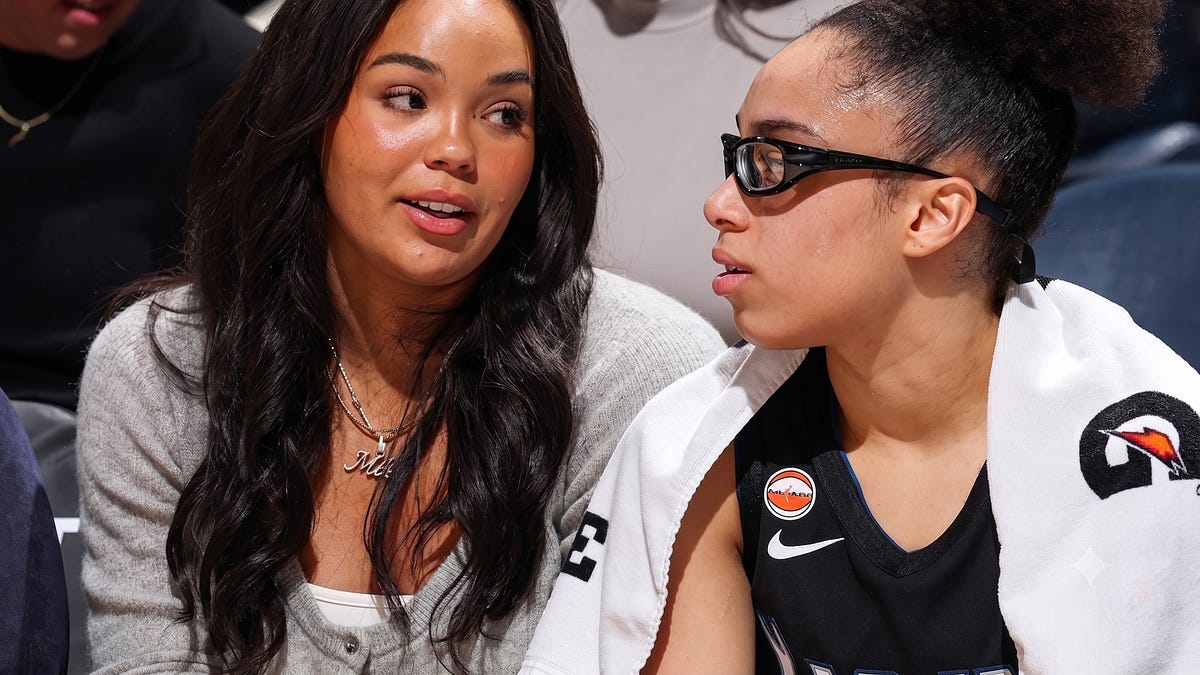
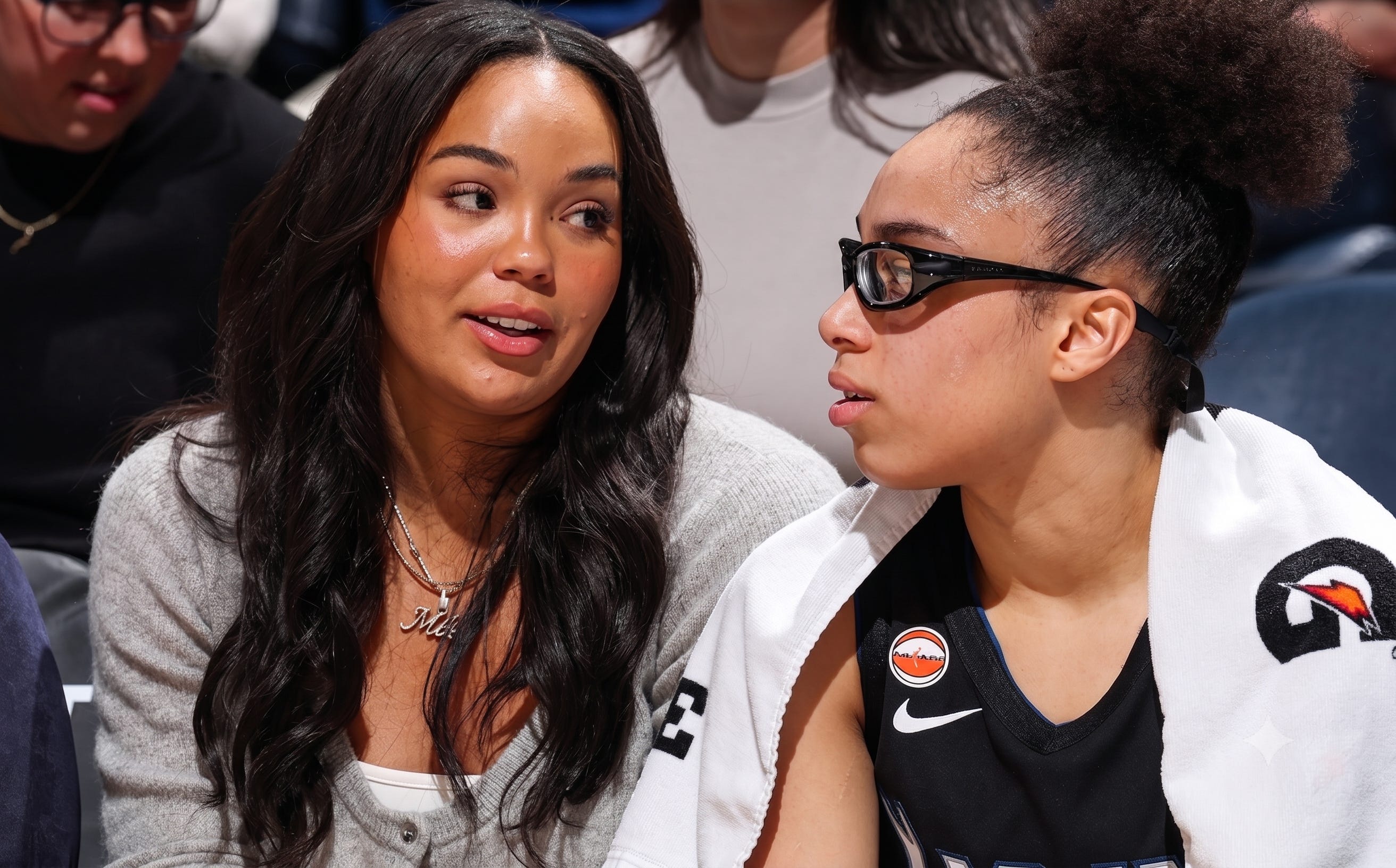
 Napheesa Collier and Olivia Miles of the Minnesota Lynx talk during the game against the Atlanta Dreamon May 9, 2026 at Target Center in Minneapolis, Minnesota. (David Sherman/NBAE via Getty Images)
As a general rule, life can get hard quickly when a team loses its best player. That goes double when the missing piece isn’t just a regular star, but one of the league’s best players — coming off what was arguably the best year of their career, as well as one of the best in league history.
We’ve seen many versions of that situation play out across many sports over the years. The best-case scenarios are teams who survive in a diminished form: the 1994 Chicago Bulls without Michael Jordan, who won just two fewer games than the year before despite a significant drop in their underlying metrics; the 2008 New England Patriots without Tom Brady, who still went 11-5 but missed the playoffs; or the 2019 Seattle Storm without Breanna Stewart, who remained above .500 at 18-16.
More often, though, the results are much uglier: See the 2011 Colts falling to 2-14 without Peyton Manning to cover for the rest of their shortcomings, the 1997 Spurs “selectively tanking” their way to 20-62 with David Robinson injured, or the Cavaliers completely disintegrating both times LeBron James left Northeast Ohio behind.
What we almost never see, though, is a team following the recent arc of the Minnesota Lynx.
The Lynx had been a dynasty in the 2010s — winning four WNBA titles in seven years, albeit none of them back-to-back — but a lot of that was driven by the greatness of Hall of Famer Maya Moore, who effectively retired mid-prime in 2019 to pursue ministry, mentorship and social activism (including a particular focus on criminal justice reform):
Beyond Moore, the Lynx’s success also obviously came from the play of fellow Hall of Famers Sylvia Fowles and Seimone Augustus, but both had departed Minnesota by the early 2020s as well. (The closest the Lynx came to a revival in this phase was a trip to the semis of the “Wubble” playoffs in 2020, where they were swept by Seattle.) In 2022 and ‘23, the Lynx fell to 33-43, the first time coach Cheryl Reeve had back-to-back losing seasons in her nearly two-decade tenure at the team’s helm.
At the same time, the player who would propel the next great phase of Minnesota basketball was already on the roster — and had been for a while.
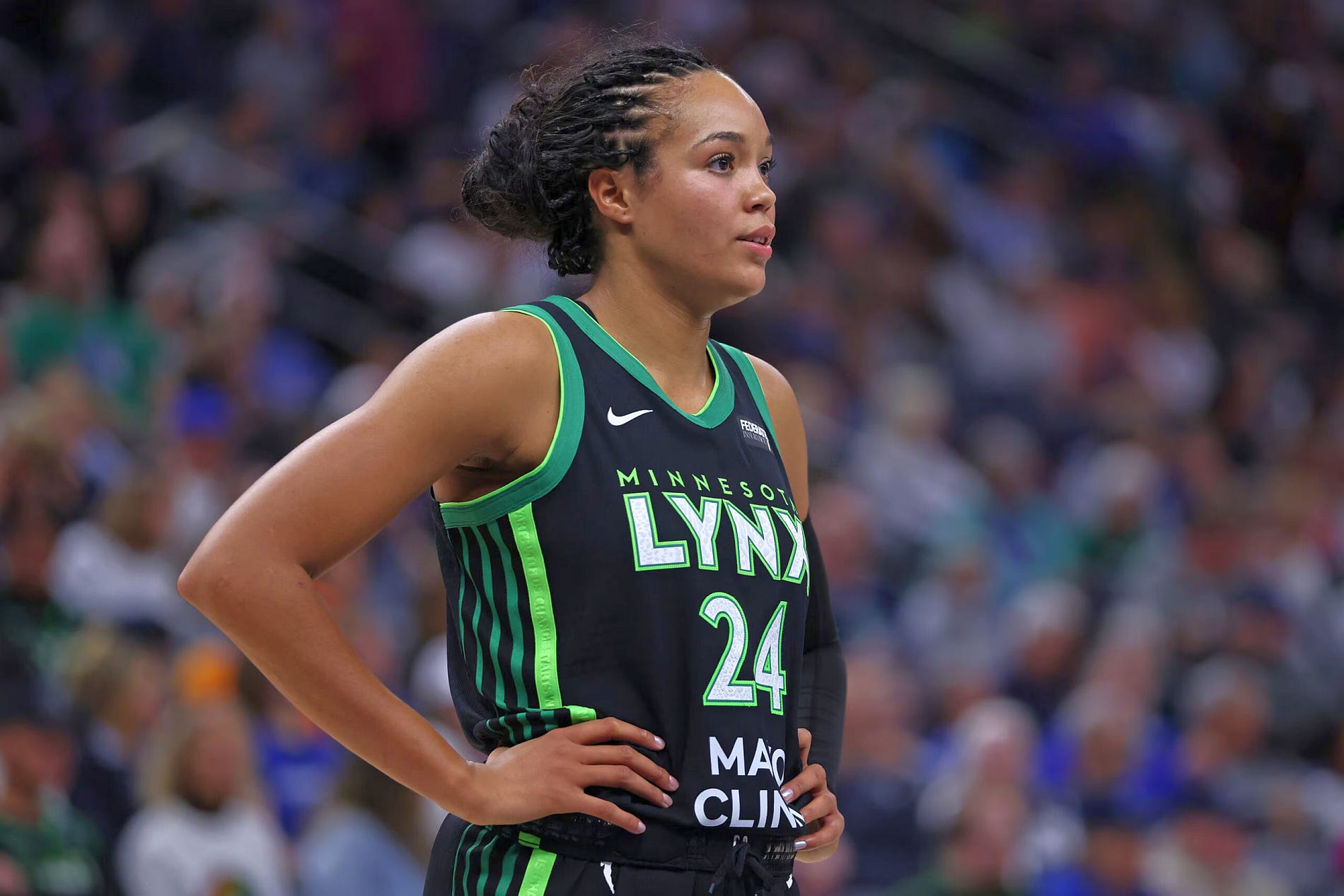
Napheesa Collier was a truly great player at Connecticut, earning All-America honors three times (including two first-team nods) and twice averaging over 20 PPG while shooting over 60 percent from the floor, including a 20.8 PPG/.612 FG%/10.8 RPG season as a senior in 2019.
But championships are how success is measured in Storrs — and Collier came in at the very tail-end of UConn’s mid-2010s dynasty, during which they won four straight titles and lost just 5 times in 156 games from 2013 to 2016. She won one of those, averaging 6.8 PPG as a freshman for the 2016 squad with Breanna Stewart as its best player, but was unable to go any further than the national semifinal as the Huskies became her team.
Collier then was taken sixth overall in the WNBA draft — respectable, but not necessarily signaling the player who would someday succeed Moore as the face of the Lynx. (Her own teammate, Katie Lou Samuelson, was picked two spots earlier.)
Collier’s WNBA journey then saw her quickly earn a reputation as a great two-way player who could do a bit of everything — a Rookie of the Year, All-Star, All-Defense selection and even a borderline MVP candidate at her best. But not necessarily a high-scoring superstar capable of single-handedly elevating a team to championship contention with her as the offensive focal point.
That changed starting a few years ago, when Collier’s already-great career took a turn for serious superstardom.
After averaging over 20 PPG for the first time in 2023, she improved her LAKER rating from +4.1 to +7.3 in 2024, finishing third in Wins Generated behind A’ja Wilson and Stewart while leading Minnesota to the Finals. And last season was supposed to be the year an “MVPhee” bid finally came together — she led the race most of the season, though a late-season injury opened the door for Wilson to swoop in and take the award, finishing ahead of Collier in the MVP voting for the fourth time since 2020.
The fact that she was even going toe-to-toe with Wilson, one of the best to ever play the game, was a testament to how much Collier had leveled up from the great player she already was a half-decade into her WNBA career. We’ve seen things like this happen before sometimes — Nneka Ogwumike followed a version of this path, too, from respected all-around talent to an MVP level-up in the middle of her prime — but it’s not common, especially not when the player just keeps improving.
That’s what made Collier’s ankle and shin injuries, suffered in a horrific collision with Alyssa Thomas during the playoffs — and subsequent offseason surgeries on both legs — such a bummer for the Lynx. With their best player sidelined for at least the first few months of the season (and now perhaps more — she has yet to resume full on-court activities), to go with other departures in a chaotic WNBA offseason, it was not obvious that Minnesota would be able to stay afloat early this season, much less build on their best season since the dynasty era.
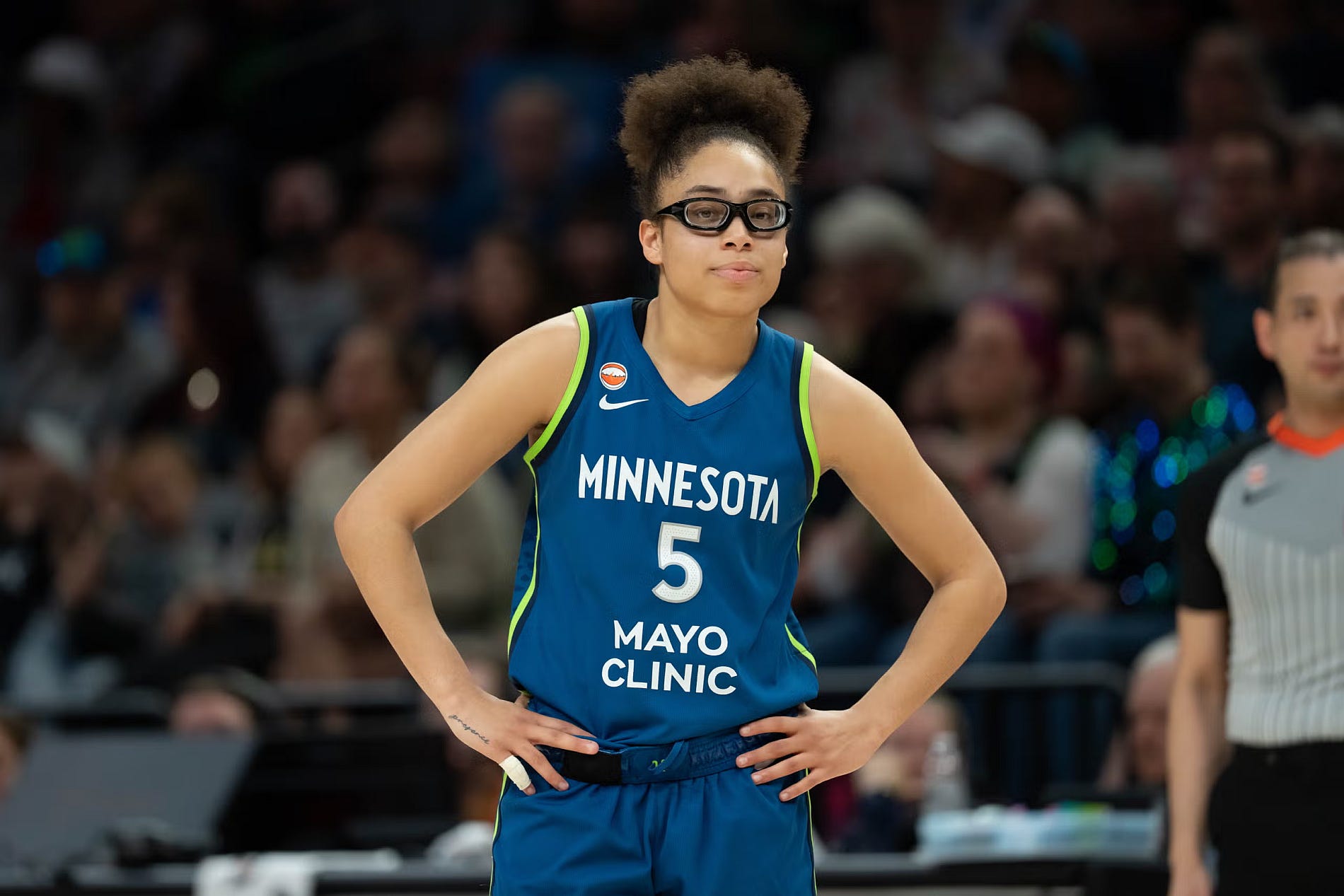
Enter Olivia Miles.
Like Collier, the bespectacled 5’10” guard didn’t follow a straight-line path to WNBA superstardom. Sure, she achieved impressive early success as a Notre Dame freshman in 2022, ranking second in Division I in assists per game (7.4) behind Caitlin Clark — and she became the first freshman in NCAA tournament history (men’s or women’s) to record a triple-double, posting 12 points, 11 rebounds and 11 assists in a first-round win over UMass.
But Miles’ ascent was interrupted in her sophomore season, when she tore her ACL during the 2023 regular-season finale — an injury that cost her the entirety of her 2024 campaign. Then, after bouncing back to earn second-team All-American honors for the Fighting Irish in 2025, Miles was expected to enter the WNBA draft and potentially even vie with Paige Bueckers for the No. 1 overall pick.
Instead, she entered the transfer portal and spent a year at TCU, producing her best season yet. But despite being the most productive college player in the class, Miles went No. 2 overall to Minnesota behind UConn’s Azzi Fudd, who went to Dallas at No. 1.
Thrust into a situation where the Lynx needed on-court production, if not exactly leadership (practically all of her teammates are veterans), Miles has answered the call with not just the best season by any rookie this year — she is heavily favored to win Rookie of the Year (88 percent, per Polymarket) —but maybe the best season by any player, period. As of Thursday afternoon, Miles was tied with Atlanta’s Rhyne Howard for the most LAKER wins added of any player in the league, fractionally ahead of even Wilson.
Furthermore, this could end up on the short list of all-time rookie seasons if Miles keeps it rolling. By both per-possession LAKER (min. 200 minutes) and Wins Added per 44 team games, only a couple of Hall of Famers — Tamika Catchings in 2002 and Yolanda Griffith in 1999 — had better debut campaigns in league history, excluding first-year WNBA players from 1997 (when technically every player was a “rookie”):
And Miles has helped Minnesota manage the loss of Collier without just a sense of survival — which, again, is usual the best-case outcome for all sports teams who lose an MVP-level star — but instead with outright improvement. They have a better record, better PPG differential, better SRS rating, better offensive and defensive efficiency, better net rating, and mostly better Four Factors in 2026 than last year, when they might have gone to the Final if Collier was healthy.
They also are WNBA title favorites according to both the prediction markets and my Elo forecast simulations, which give Minnesota a 48 percent chance to return to the Final for the second time in three seasons and a 28 percent chance to win it all for the first time since 2017.
This doesn’t mean the Lynx are somehow better without Collier — but rather that they could be even scarier when she finally rejoins the lineup, playing alongside Miles for the first time. But that still sounds like it might not be for a while; even if Collier stays on track to resume basketball activities sometime this month, she would need time to get back into game shape.
Certainly, she won’t be back ahead of Saturday’s big Commissioner’s Cup matchup against Wilson and the Aces, the defending champs and the measuring stick Miles will have to judge herself against the same way Collier has for years.
But even without Collier, the Lynx have already changed the question around their season. No longer is it whether they can survive until their superstar returns — they’ve more than proven they can — but whether Miles has given them another gear to reach even greater heights when Collier does finally come back.
Filed under: WNBA