
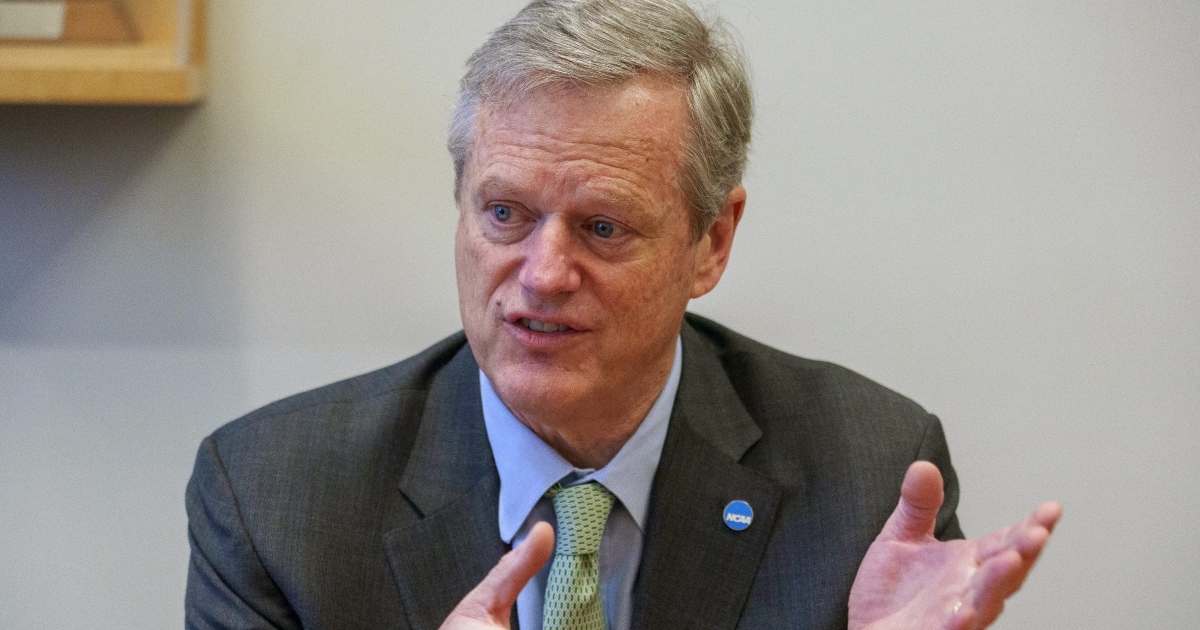
Following the ruling in Texas Tech quarterback Brendan Sorsby’s eligibility lawsuit this week, NCAA president Charlie Baker called it a “new low” while speaking at NACDA. He reiterated that Thursday and acknowledged questions about the association’s power amid the number of legal challenges.
During an appearance on ESPN Radio, Baker said if judges “ignore the rules,” he understands the questions about how much authority the NCAA has. Those have gotten louder after a judge granted Sorsby an injunction after he admitted to placing thousands of wagers, including on games involving Indiana football while on the Hoosiers’ roster. He later entered treatment for gambling addiction.
[ $19.99 gets you a FULL year of On3 | Rivals national coverage ]
Sorsby’s case is among the list of suits facing the NCAA, and the association has won a number of them at the federal level. But athletes have had the upper hand in local courts, and Baker said decisions have an impact across the landscape, even if it’s a comparatively small number of cases.
“As long as you have judges who are willing to sort of ignore the rules – and the law, in some respects – on a number of these issues, and you have people that are willing to go to court over it, it’s a question that’s worth asking,” Baker said on Amber & Ian. “I will say, on the eligibility stuff, which we’ve been dealing with all year – and I think we have a better eligibility policy that we’re going to try and put in place, although the one we had has been good for almost 100 years.
“The bigger question is not so much the individual cases because at the end of the day, the individual cases are sort of few and far between. It’s the impact it has on – most organizations, including this one, there’s the hard rules and then there’s the soft rules. The hard rules are the ones the membership … votes on and puts in place. And then, the soft rules are sort of the modes of behavior associated with those rules.”
Charlie Baker: ‘It just destabilizes a lot’
While Charlie Baker said the majority of NCAA schools stick to the rulebook – and noted they’re the ones who vote on rules – the legal challenges send a mixed message to membership. If some schools chose to fight the rules in place, he argued it creates uncertainty for those who follow them. As a result, questions mount about how stable the landscape is.
“When we’re in a situation like the one we’re in now where, even though the membership votes on the rules and the vast majority of the membership abides by those rules, the fact that some people will go to the court – and in some cases, to what I would describe as ‘friendly courts’ – to chase a decision that gets them out from under a rule, it just destabilizes a lot,” Baker said. “Because it says to the people who play by the rules, you’re being held to a different standard than the people who don’t.
“That, I think in some ways, is the bigger issue and the bigger problem because the vast majority of the membership still does comply with the rules. But you chip away at them long enough and there are certainly consequences to that.”