
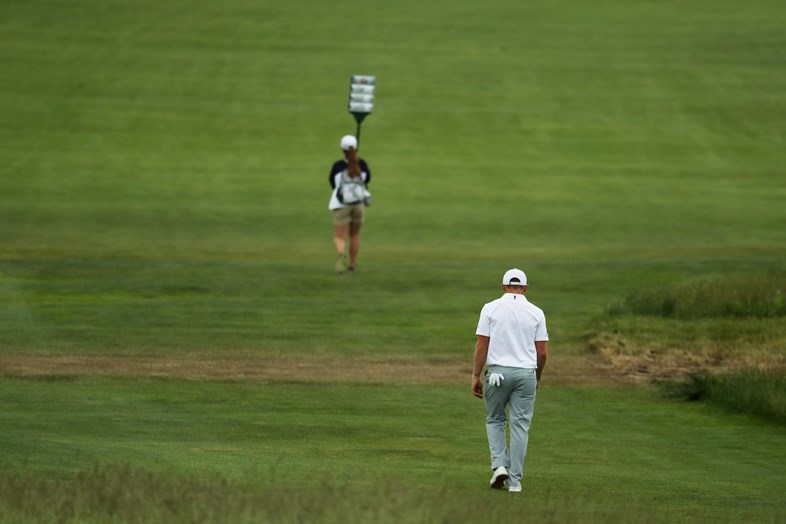
“I played in three,” he informs them, “and I participated in one.”
In truth, Gregory prefers not to divulge much about his prodigious past, only reminiscing about his otherworldly experiences in the game when prompted by intrigued or well-versed playing partners. “I make a very conscious effort not to mention stuff like that,” says the 31-year-old from Hampshire in southern England. “I don’t like being in that position like, ‘Oh, look how great I was.’ It’s not me.”
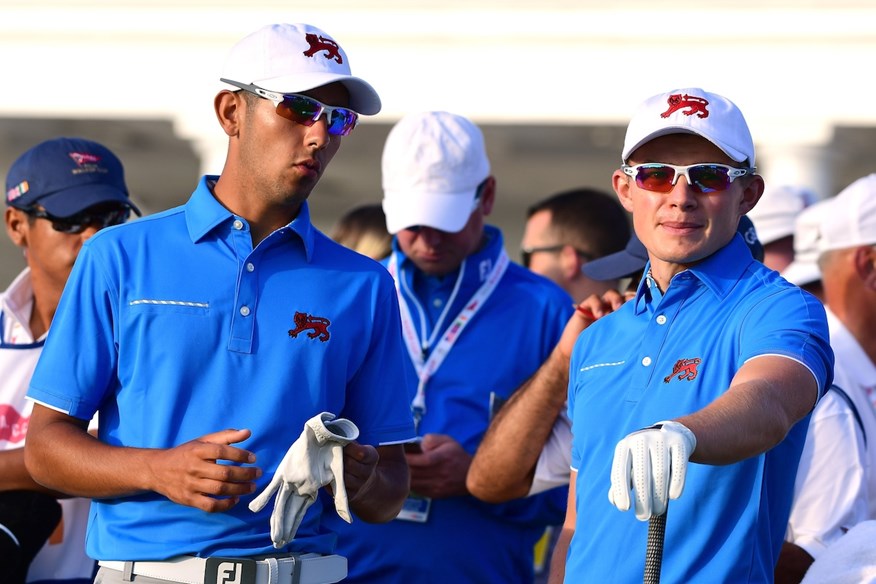
Which means that golfers who meet Gregory these days won’t know that it was only a decade ago he won the Amateur Championship, ousting Robert MacIntyre 2&1 in a tense 36-hole shootout at Royal Porthcawl. They won’t know that a month later he led the Open Championship after ten holes as a 21-year-old at Royal Troon. They won’t know he was part of the Great Britain & Ireland pairing which took down Scottie Scheffler and Cameron Champ in a foursomes match at the 2017 Walker Cup.
And they won’t know about what happened at the 2018 US Open.
“I’ve never really wanted to talk about it,” Gregory admits midway through a long phone call with TG. “But I feel like now I can be more open about it now.”
The conversation has turned to Shinnecock Hills, the feared venue for this year’s tournament and the layout on which Gregory endured his last start in a major.
By this juncture eight years ago, Gregory had entered a brave new world in the professional ranks, but a stage as grand as America’s oldest major was no longer alien to him. Not only had Gregory’s name briefly been atop the famous yellow scoreboard before he faded away at Troon, but his win at Porthcawl in 2016 also secured debuts at the Masters and the US Open the following season.
While Gregory missed the one-over-par cut mark by three shots at Erin Hills in 2017, the low scoring in Wisconsin proved a tame aberration of the US Open’s annual exercise in misery.
Gregory made his way to Shinnecock via sectional qualifying, rounds of 69 and 67 comfortably good enough for one of the 14 spots made available at Walton Heath. He wasn’t completely satisfied with his game and an underlying wrist injury was causing some discomfort, but the Englishman’s week on Long Island had an auspicious start.
As he began clipping balls on the practice range, Gregory’s partner Sian spotted Tiger Woods walking by and encouraged him to grasp a golden photo opportunity. Gregory was awestruck and has little recollection of the pleasantries exchanged. But when they crossed paths again later by the putting green, Sian speculatively asked Woods if he fancied coming around for dinner that evening.
“I’ve wanted to meet Tiger my whole life and I could barely get a word out,” Gregory smiles. “She doesn’t know much about golf and because of that she wasn’t fazed about chatting to him.”
Tiger never came to tea, but the photo was printed, framed and placed in Gregory’s locker even before he left Shinnecock. As he had only travelled with Sian, Gregory didn’t use any of his allotted passes for the week, but earned some support quickly by handing tickets out to military veterans via a friend in the United States Army. “I’m probably the only English guy who’s had ten military members as their visitors for the week at the US Open,” he laughs.
The jitters only really set in when Gregory stepped on to the course.
“I didn’t drive it well at all in the qualifier,” he recalls. “I hit it so far offline on a lot of holes that I was OK. But I walked on to the first tee at Shinnecock and thought, ‘Crap, this is tight.’ High rough both sides, it’s 15 yards wide and I can’t hit a fairway that’s 60 yards wide.
“I played the practice round and I hit it everywhere. I lost loads of balls. I just had a sickly feeling, thinking I am not ready for this. I’d never had that before, the other majors I’d played in my game was in a really good spot, so I spent way more hours on the range than I normally would.”
Gregory sensed a big number was coming on Thursday morning. How big? He wasn’t quite sure.
“I actually got off to a decent start,” he says of his first round. “I made a par on my first hole of the day. I made an OK bogey on the second but then I hit it so far left off the tee. The next one went right and for the rest of the round I had no idea where it was going.”
Gregory made a triple-bogey seven on the par-four third and followed that with two consecutive doubles. At eight-over-par after five holes, he was still hoping to salvage something under 80. But Gregory’s second par didn’t come until his 11th hole. And with the winds beginning to whip around Shinnecock Hills – a course that needs no extra help – Gregory’s nightmare was only just beginning.
“There are golf demons around this place,” John Bodenhamer, the USGA’s course supremo, says of Shinnecock. “They come up out of these putting greens in a devilish, wonderful, charming way.” Devilish yes, callous even, but there was nothing charming about the torture being inflicted on Gregory.
The reality, though, is that those deadly dry putting surfaces – which famously provoked Phil Mickelson to hit a moving ball in a fit of frustration – were far from Gregory’s greatest concern. Reaching the turn in 47 shots, this was a perpetual panic about the direction of his next tee shot.
“Shinnecock isn’t a course where you can rip a two-iron and that will be all right,” Gregory explains. “It’s 250 yards of carry to the fairway. I couldn’t see any way I could get the ball around. It feels like the whole world is crumbling around you. It feels like the worst you could ever shoot is 75, but with four holes to go I thought I might not break 100. My focus wasn’t there. It was all just a blur. I had two really tricky holes coming up where I’m not hitting it straight enough to keep it anywhere near the golf hole.”
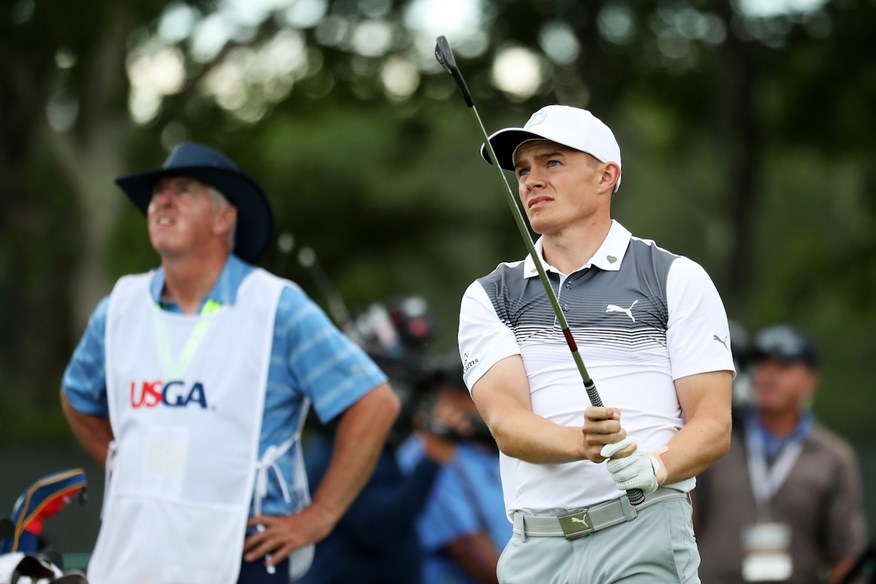
By this stage, a grim silence had set in between Gregory and his veteran caddie Chris Carr. “It just got the point where we were going through the motions,” he explains. “If he got me in the fairway I was OK. But he’d hand me driver and I’d whack it and we’d see where we ended up. There’s not much conversation you can have. He could say, ‘hit driver towards that tree’, but I wasn’t going to hit it there so it didn’t really matter. We just hit it and tried to find it.”
With a bogey on the 18th came a merciful end. Gregory signed for 92, a 22-over par round which included three pars, ten bogeys, three double bogeys and two triples. He hit five fairways and four greens in regulation. The scoring average on a chastening day was more than 76, Rory McIlroy posting 80 and Jordan Spieth 79. But this was the first time in 16 years a US Open player had shot in the 90s.
Gregory bravely fronted up to reporters. “If you stuck me in the fairway, I would’ve played pretty good,” he said, smiling through the pain, before rushing off for dinner in an attempt to forget all about it. But when he returned to his rental property, his phone lit up with messages from a slew of trolls.
“I read some of the comments,” he says. “They were telling me how bad I am at golf. I didn’t sleep much that evening. But the next day I thought, ‘I’ll just try and find a way to get it round and break 80.’ That felt respectable after the first round.”
On Friday, Gregory shot 75.
It was an improbable comeback which Gregory ranks second on his list of career achievements, behind only his Amateur Championship trophy. To return from oblivion with a birdie and six bogeys, five-over-par felt like the round of a lifetime. “I don’t know how I was so composed,” he says. “I feel lot of people would have just not bothered turning up for the second round.”
The wrist problem was an easy out, “but I just feel like I’m so much better than that”.
“Going out there and giving it a go, and then shooting a half-decent score, I’m proud of being able to do that,” he adds. “Then I could get back home and get back to work.”
If Gregory could salvage one thing from his DFL finish at Shinnecock, it was that his powers of resilience could stand up under the most testing circumstances imaginable.
But the sad truth is that irrevocable damage had been done that week on Long Island.
“It’s a week that’s changed me a lot in terms of motivations and how I view myself,” Gregory reflects now. “It had a big impact on my self-worth. I always wanted to be the best player I could be, but after that it was about proving the people who say I can’t do it wrong. That’s a very dangerous motivation. I had a lot of posts about me on social media. Someone tagged me in a picture of the bins at Shinnecock. You end up searching for people saying you can’t do it because that’s all that can motivate you.”
For a long period, Gregory was fueled by the ghouls. After making only one of eight cuts on the Challenge Tour that season, he bounced back by snaffling his first European Tour card at Q School. “I got a lot of stick on Twitter so it proves to all them that I can do it, so I’m happy with that,” he said. “They haven’t got an argument with me.” Gregory then said he would be “carefully” constructing a retort to his social media critics.
“For the people who said I should learn my trade at the Tower Bridge,” he later posted. “I’ll learn it on the European Tour if that’s OK?”
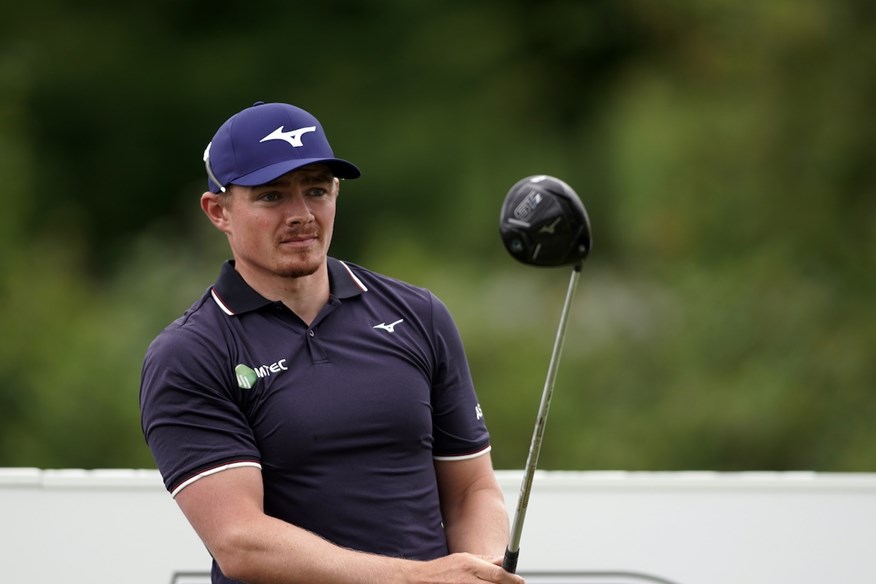
Gregory, however, lived his rookie season on Europe’s top table on a diet of missed cuts and financial struggle. While determined to rail against the lowlifes taunting him for his round at Shinnecock, his game was falling apart.
“I’d openly say that I’ve battled the driver yips, and the tee shot yips more specifically,” he explains. “It doesn’t really matter if it’s the driver or not, it’s just off the tee. I think that came from [the US Open] and I’ve never really got to the bottom of the issue. What happened at Shinnecock repeating itself has stopped me being able to pull driver. Because every time it comes out of the bag, it’s going to happen again.
“It always felt like I was trying to find ways not to hit driver or to find the easiest way to not mess up. I’ve hit a lot of two-irons off tees and I’ve had decent results, but you can’t win. I’m giving up 30, 40, 50 yards off the tee. I’m a good iron player, but it’s just that constant fear of that repeating itself.”
Soon Gregory began skipping European Tour events because, without making any cuts, he couldn’t afford to play in them.
“I’m not from a wealthy background,” Gregory says. “I had a bit of backing but not crazy amounts. I was very lucky to be supported by Cobra, Mizuno and Titleist at different stages which all helped but there’s still that pressure of trying to finish in X position to get the money back on what I spent for the week.”
A sleeve sponsorship could be worth up to £10,000 to Gregory for a season on the main circuit, but he was burning through around £2,000 an event on travel, accommodation, coaching and caddie costs.
“I got midway through the year and I’d used up all the money to be able to play,” he says. “I missed two events and I chatted to a couple family members and said I’m not sure what to do. A few of them chipped in to give me a little bit of money to go and play in Germany the next week. I finished 28th at the Porsche European Open and that funded me for the rest of the season.”
Money is prosaic motivation at the elite level but as Gregory discovered as he slipped back down the ladder, it is for most players the primary source of anxiety.
“It was a weird time because I’ve got a DP World Tour card, but the funds are running low. I’ve got people that are backing me, but I can’t keep playing without knowing if I’m going to make the money back. Being a professional golfer, unless you’re in the top 100 in the world, there is a lot of pressure because you’re one bad season away from not having a job.”
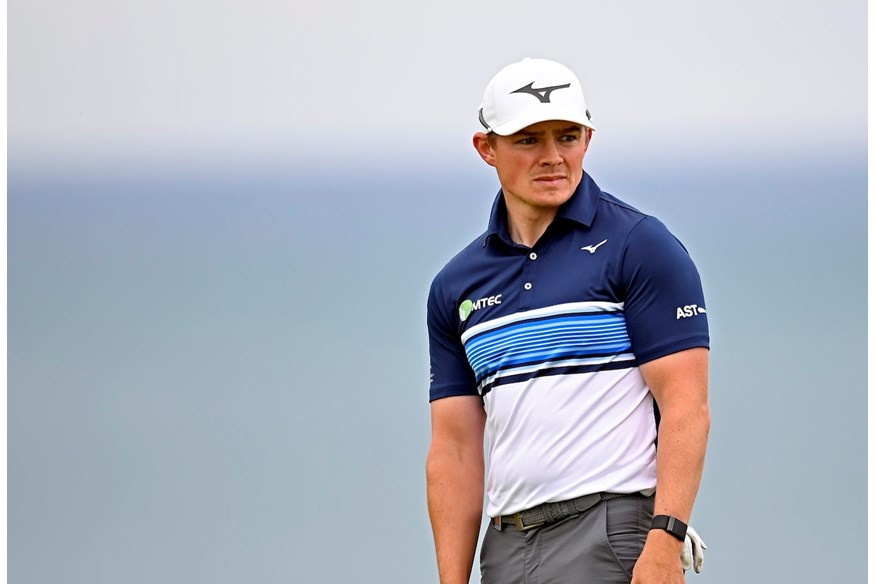
Gregory found solitude back on the Challenge Tour in 2020, rebuilding at ease well away from the glare of the bigger stages. But then Covid came and sucked out his wavering joy as a touring golfer. Otherwise confined to the four walls of his hotel room with gyms and restaurants off limits in isolated parts of continental Europe, Gregory spent up to five hours a day pounding balls on the range because there was nothing else to do. And yet he couldn’t find the secret in the dirt.
It was at this point Gregory now accepts he should have walked away, but he plowed on for a little while longer and eventually took residence on the Clutch Pro Tour. “I had some decent results,” he says. “But then I went to Ireland just lost it off the tee again. I just thought that I’ve had enough of this. I put so much effort trying to get my game in a good spot and I just can’t get control off the tee.”
Gregory finally escaped the touring bubble and found a fresh start at Corhampton, which began with teaching small sessions to wide-eyed juniors.
“I went back to my home club,” he explains. “I was working in the pro shop a few days a week there anyway trying to fund playing in the Clutch events, so I told the head pro Ian Roper that I want to try and do my PGA training. I wasn’t enjoying playing so if I could do a bit of coaching and stay within the game, I could keep doing what I enjoy.”
It was here he started to once again enjoy being a part of the game. “When they’d go from hitting a few balls along the floor and then they’d get one in the air, and it’s the best thing that’s ever happened,” he smiles. “That’s what started making me fall back in love with it again. A couple of them knew that I’d played in majors. They completely ignored the fact that one of them was terrible. They just loved it.”
Still in his early thirties, Gregory has spent a long time during this transition wrestling with the feeling of resentment towards what he wasn’t able to achieve in a career rather than what he had.
“If you’d have asked me three years ago, I’d have said I absolutely hate that I did that and then didn’t do anything with it,” he admits. “That was something that was big for me and probably stopped me getting as good as I could have been. ‘I was this good and now I’m not.’ I look at it now and if you gave me what I did in those two or three years when I was 14 years old, I’d have snapped your hand off and never fought twice. It’s only because I did that that I feel like I should have done more. But it doesn’t work like that. And what I’m doing now, I really enjoy.
“For a lot of the past eight years, I’d say I wish I’d never played the [US Open] qualifier. But I’d say now I’m content that I did because I feel like my life now is pretty good. I enjoy what I’m doing. We’ve got a nice house. We’re comfortable. There’s so many good things at the moment. I wouldn’t want to stop that and I might not have had that if it went a different way.”
This is the first year since 2018 that Gregory has found comfort with a driver in his hand. He plays twice a week these days and harbors ambitions of contending in the PGA Cup – the ‘World Cup’ for PGA professionals – and even qualifying for another Open Championship while honing his coaching trade. Gregory watches most of the big tournaments on TV and is no longer pining to be there, but has his reasons for skipping this upcoming major.
“I don’t think I’m ready enough to watch a US Open at Shinnecock if I’m honest,” he says. “I’ll watch the scores, but I probably won’t watch it on TV. I want to remember all the nice things that happened. I feel like there’s too much negativity attached to that week.
“What I would love to do one day is go back and play it. Maybe not in a US Open, but just go and play Shinnecock. Everyone says how amazing it is, but I honestly couldn’t tell you because I spent zero time playing from the spots I should have been in. I’d love to go and play it and just enjoy it as a golf course.”
For Gregory, there would be no more cathartic tee time.