
They’re toxic. They can regenerate. They’re nearly impossible to kill. And their footprint is growing across the United States.Allow us to introduce you to the invasive hammerhead worm. As its name implies, the narrow, snakelike flatworm has a head built like that of a hammerhead shark.The invasive species is hardly a newcomer, believed to have hitched a ride to the U.S. from Southeast Asia with a shipment of plants around 1900.But numbers are growing across the nation and the relatively unknown creature is beginning to show up in more places.And officials are sounding the alarm as they can harm local ecosystems by preying on native earthworms, which are essential for healthy soil.You see, earthworms are garden champions, cleaning the soil by eating their weight in organic matter every day and aerating it as they wriggle around, creating tunnels to ease root growth. They also improve soil moisture, remove fungal spores and stimulate microbial activity, which benefits plant health.Hammerhead worms not only eat earthworms — but earthworms are staples of their diet. A loss of earthworms would pose a catastrophic threat to farms and gardens.To make matters worse, they’re toxic, and notoriously difficult to kill.Hammerheads are coated in the same paralytic neurotoxin present in pufferfish, which keeps birds and insects from preying on them. This gives them a decisive advantage in the food chain.That chemical coating is toxic to pets and would likely irritate your skin if you were to pick up a worm. To add insult to injury, their bodies contain parasitic nematodes, tiny roundworms that feed on plants and can parasitize humans, animals and beneficial insects.And they multiply like crazy.Hammerhead worms are hermaphroditic, so they reproduce without a mate. Their favorite party trick is detaching a portion of their rear ends and leaving them on plants, where, within 10 days, those little butts grow heads and become offspring. If you were to chop a hammerhead worm to bits, each would grow into a new hammerhead worm. Don’t do it.If you spot one, officials say there is a way to safely euthanize it.Using gloves or a shovel, officials advise you to place the worm into a sealed plastic bag and add vinegar, rubbing alcohol, salt or soapy water to the bag. From there, place the sealed bag into the freezer for 48 hours. Then you can place the entire bag into the trash.The slithering pests love heat and humidity, so they initially made their homes in warmer climates. But greenhouses are also hot and humid, so the worms have been inadvertently transported on nursery plants across the United States. So far in 2026, the hammerheads have been reported in Alabama, Arizona, Arkansas, California, Florida, Georgia, Hawaii, Illinois, Indiana, Kansas, Kentucky, Louisiana, Mississippi, Missouri, New Jersey, North Carolina, Oklahoma, South Carolina, Tennessee, Texas, Virginia, Washington and Wisconsin. But officials say they are likely hiding out in other states as well.Authorities are tracking their whereabouts across the nation. Sightings can be reported at EDDMaps, which lists it as shovel-headed garden worm. Click the “report sighting” tab and follow the instructions.The Associated Press contributed to this report.
ST. LOUIS —
They’re toxic. They can regenerate. They’re nearly impossible to kill. And their footprint is growing across the United States.
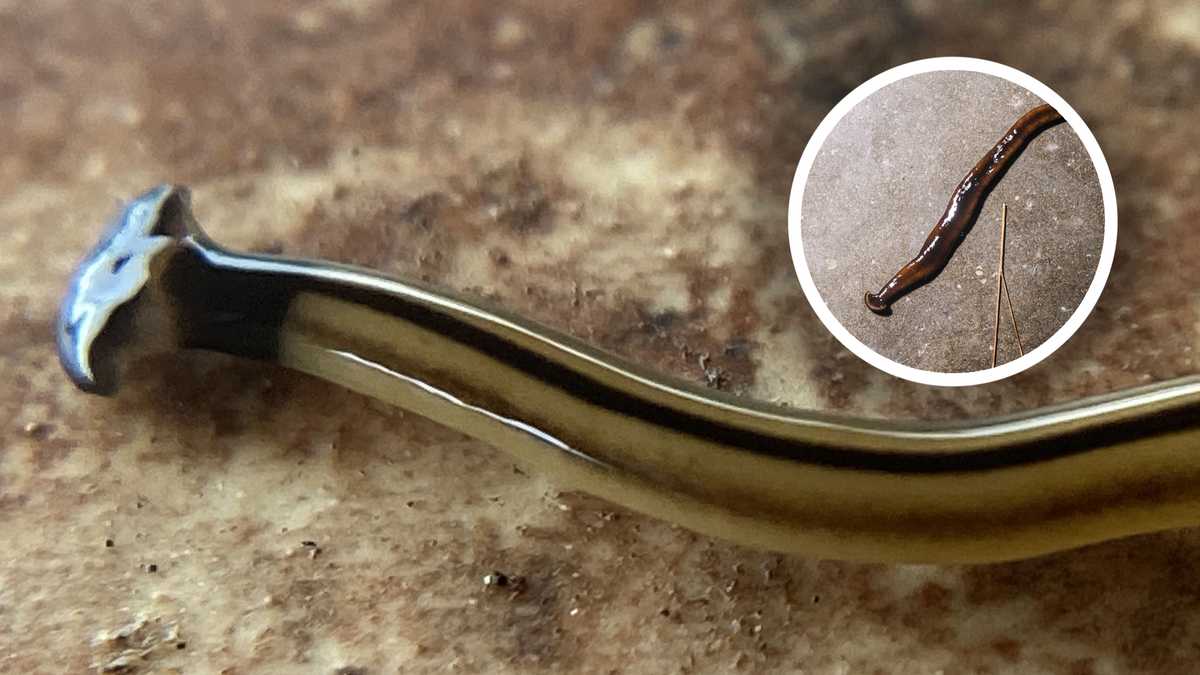
Allow us to introduce you to the invasive hammerhead worm.
As its name implies, the narrow, snakelike flatworm has a head built like that of a hammerhead shark.
The invasive species is hardly a newcomer, believed to have hitched a ride to the U.S. from Southeast Asia with a shipment of plants around 1900.
But numbers are growing across the nation and the relatively unknown creature is beginning to show up in more places.
And officials are sounding the alarm as they can harm local ecosystems by preying on native earthworms, which are essential for healthy soil.
You see, earthworms are garden champions, cleaning the soil by eating their weight in organic matter every day and aerating it as they wriggle around, creating tunnels to ease root growth. They also improve soil moisture, remove fungal spores and stimulate microbial activity, which benefits plant health.
Hammerhead worms not only eat earthworms — but earthworms are staples of their diet. A loss of earthworms would pose a catastrophic threat to farms and gardens.
To make matters worse, they’re toxic, and notoriously difficult to kill.
Hammerheads are coated in the same paralytic neurotoxin present in pufferfish, which keeps birds and insects from preying on them.
This gives them a decisive advantage in the food chain.
That chemical coating is toxic to pets and would likely irritate your skin if you were to pick up a worm. To add insult to injury, their bodies contain parasitic nematodes, tiny roundworms that feed on plants and can parasitize humans, animals and beneficial insects.
And they multiply like crazy.
Hammerhead worms are hermaphroditic, so they reproduce without a mate. Their favorite party trick is detaching a portion of their rear ends and leaving them on plants, where, within 10 days, those little butts grow heads and become offspring.
If you were to chop a hammerhead worm to bits, each would grow into a new hammerhead worm. Don’t do it.
If you spot one, officials say there is a way to safely euthanize it.
Using gloves or a shovel, officials advise you to place the worm into a sealed plastic bag and add vinegar, rubbing alcohol, salt or soapy water to the bag. From there, place the sealed bag into the freezer for 48 hours. Then you can place the entire bag into the trash.
The slithering pests love heat and humidity, so they initially made their homes in warmer climates. But greenhouses are also hot and humid, so the worms have been inadvertently transported on nursery plants across the United States.
So far in 2026, the hammerheads have been reported in Alabama, Arizona, Arkansas, California, Florida, Georgia, Hawaii, Illinois, Indiana, Kansas, Kentucky, Louisiana, Mississippi, Missouri, New Jersey, North Carolina, Oklahoma, South Carolina, Tennessee, Texas, Virginia, Washington and Wisconsin. But officials say they are likely hiding out in other states as well.
Authorities are tracking their whereabouts across the nation. Sightings can be reported at EDDMaps, which lists it as shovel-headed garden worm. Click the “report sighting” tab and follow the instructions.
The Associated Press contributed to this report.