
MULTNOMAH COUNTY, Ore. (KATU) — The U.S.-Israel war with Iran pushed fuel costs up for everyone.
Even with a peace deal in the works, it could take months for fuel costs to come down.
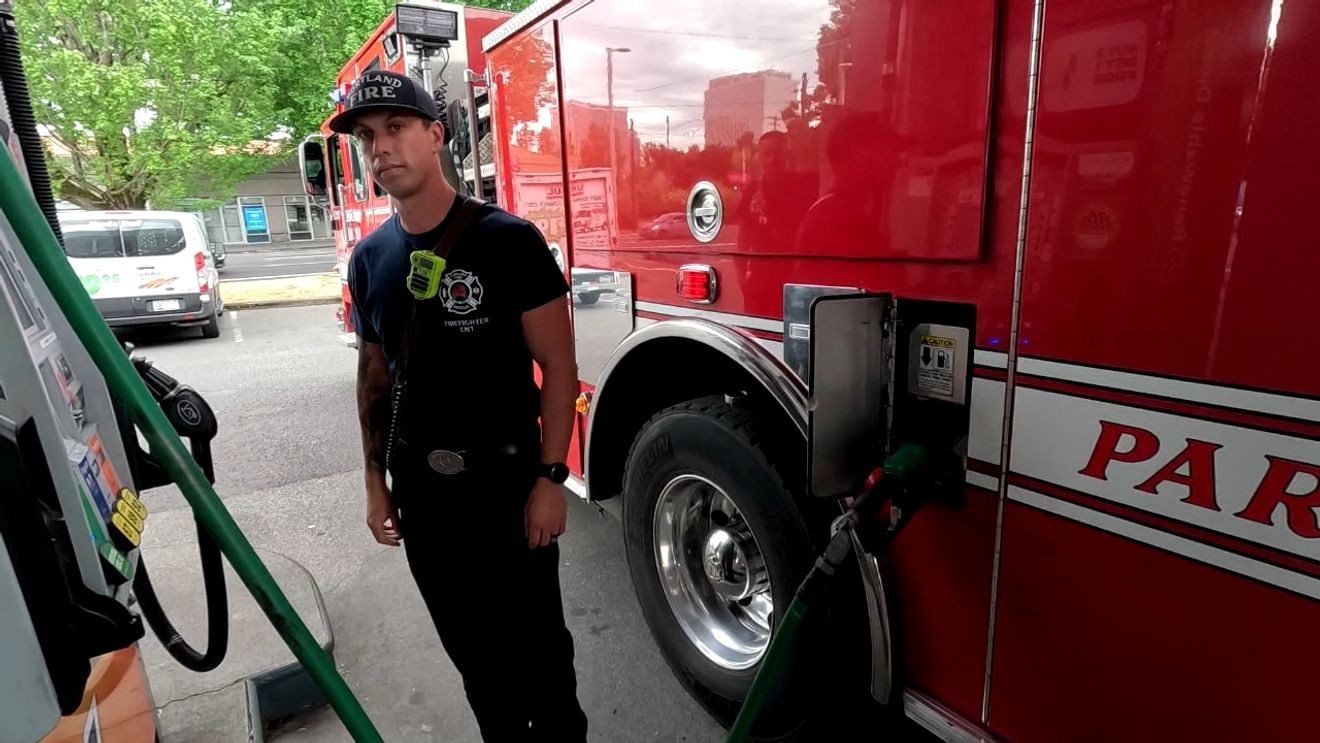
High fuel prices aren’t merely impacting the average person going to fill up at the gas station, as even fire agencies across the Portland Metro and first responders are having to adjust to keep life-saving fire engines on the road.
Rick Graves with Portland Fire and Rescue (PF&R) said the agency spends upwards of a million dollars a year on fuel. The higher energy costs happen to come at the time of year when the bureau uses the most amount of fuel.
SEE ALSO | Fire season arrives early across Oregon, prompting warnings from fire officials
“The wildland season when we’re addressing large fires for an extended period of time that causes the rigs to be in pump gear if you’re pumping of an engine or just traveling the extended distance,” Graves explained.
Those energy costs also come as Oregon enters an earlier wildfire season than it did in 2025. Officials with the Oregon Department of Forestry have already warned the dry winter the state had along with low snowpack could make way for a busy and challenging wildfire season. That’s one of the reasons why Gov. Tina Kotek declared a state of emergency Tuesday due to the imminent threat of wildfire.
To ensure PF&R’s engines can stay on the scene of a fire for an extended time if needed, Graves said their trucks cannot fall below three quarters of a tank, which means more visits to the pump during the wildfire season.
“As we see these increased costs at the pump, we’re going gonna see that. We have tools that we fuel inside these rigs that we also have to purchase fuel for,” Graves told KATU.
Up the historic Columbia River Highway in east Multnomah County, other agencies like Corbett Fire District are also adjusting to the surge in fuel prices. A few years ago, the rural fire department began using a smaller truck for most of their responses which are medical related, and that don’t require the use of its bigger fire engine.
Corbett Fire District Chief Rick Wunsch said the move slashed some costs, but because of the fuel costs, they’re now having to cut into those savings.
“We are paying attention to the increase in fuel costs. They’ve went up, by my estimation, about 50% here since February,” Wunsch said. “Luckily some of the savings we’ve seen in doing some cost-cutting and using some smaller rigs to go on a majority of our calls, we’ve seen savings there, but obviously it’s cutting into that at this point with the higher fuel costs.”
Graves said it will take some time to find out the true impact of the increased fuel costs on PF&R’s budget.
“What I believe we’re going to see as we look back on this time period, we’re going to see more of, not the $80,000, but more of the $100,000 to $120,000 expense in those evaluation periods. We are seeing more costs. It’s just natural that it’s going to bear more of a burden to our budget as a result of the increased fuel costs that we’re all seeing at the pump.”
Both fire agencies told KATU there won’t be any immediate disruptions to daily operations.