
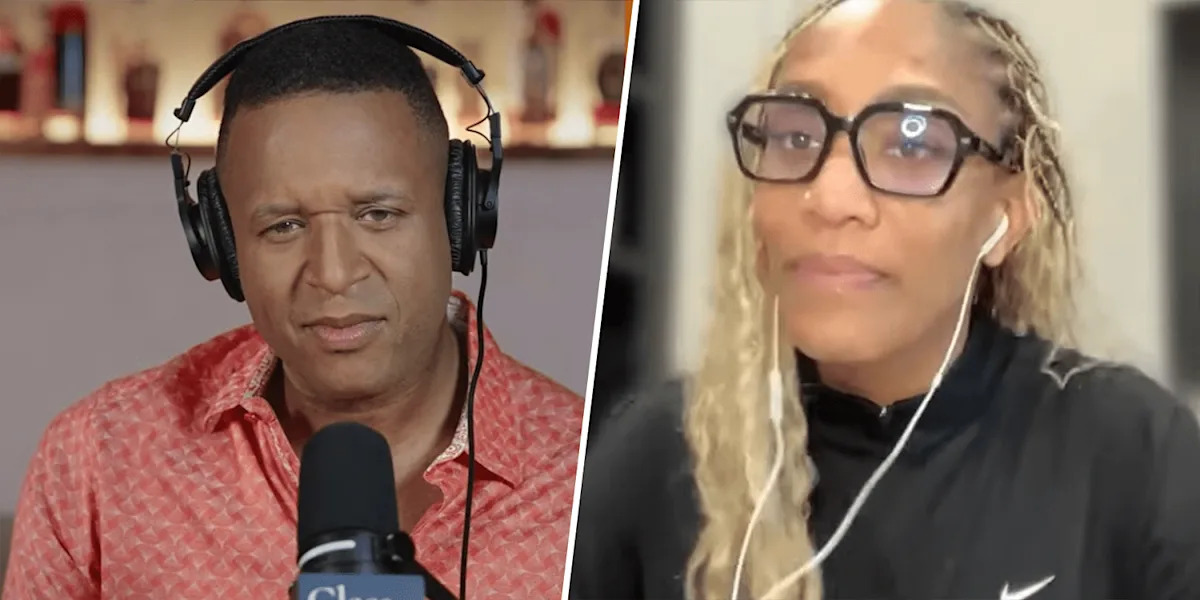
A’ja Wilson is at the top of her game. The Las Vegas Aces center is a two-time WNBA MVP, Olympic gold medalist and now the face of a Wheaties box.
But her success as an athlete hasn’t come without challenges. Wilson, 29, opened up about her experiences with depression on the June 16 episode of the “Glass Half Full” podcast, hosted by Craig Melvin, a fellow South Carolina native.
Wilson said she started experiencing depression during the COVID-19 pandemic, when she and 143 other WNBA players were quarantined at IMG Academy in Florida in 2020. The isolation bubble (referred to as the “wubble”) lasted for nearly 100 days, per ESPN. Stuck with just her own thoughts and the game, Wilson realized she “didn’t really have an outlet,” she told Craig.
“It was just me and basketball. And normally, basketball is my sanctuary. But sometimes when that’s the only thing, it’s kind of like the highs and lows,” she said. “I just didn’t feel right. And I felt like I started to dive into people pleasing, and I felt bad because I wasn’t the person that everyone wanted me to be all the time.”
That’s when Wilson started to come to terms with the reality of her mental health.
“And then you say the magical question, ‘What’s wrong with me?’ And it’s like, well, nothing’s wrong with you. You’re just human,” she explained.
For Wilson, navigating her mental health challenges meant accepting day-to-day fluctuations and trying to make each day better than the one before, she said.
Navigating the mental health challenges of the bubble season, which marked Wilson’s first MVP year, shaped her personally and professionally, she told Craig. When she came out if it, she “just didn’t feel good,” even amid so much success. The next season, she was ready to “give my all to the game,” she said.
“That right there I think was a pivotal moment for me to really realize who I was and understand that, yes, I can battle with anxiety and depression and still be an amazing woman that shows up for her family, her friends, and everyone in between,” she said.
That perspective shift brought a change in priorities, too.
“I really kind of turned the page into becoming a woman that I wanted to be, not necessarily a woman that everyone wanted me to be,” she added. “I kind of really started to focus on myself.”
In March 2021, Wilson published an essay in The Players’ Tribune speaking candidly about her struggles with mental health as a Black woman.
“I mean, I have this vision for myself that I feel like I have to meet — not as a basketball player, but as a Black woman in America. As A’ja. I feel like I need to handle every situation with grace and poise and positivity. I can’t let them catch me losing my cool, right? … Meanwhile, when the cameras are all gone and I’m in bed by myself, I’m crying my eyes out.”
Wilson has continued to advocate for Black women’s mental health throughout recent years. In 2024, she expanded one of her essays into a best-selling memoir: “Dear Black Girls: How to be True to You.”
While Wilson continues on the lifelong journey of mental health, she is sticking with therapy, she told Craig. And she’s staying level-headed about the challenges that come her way.
“Life be life-ing, Craig,” she joked.
This article was originally published on TODAY.com