
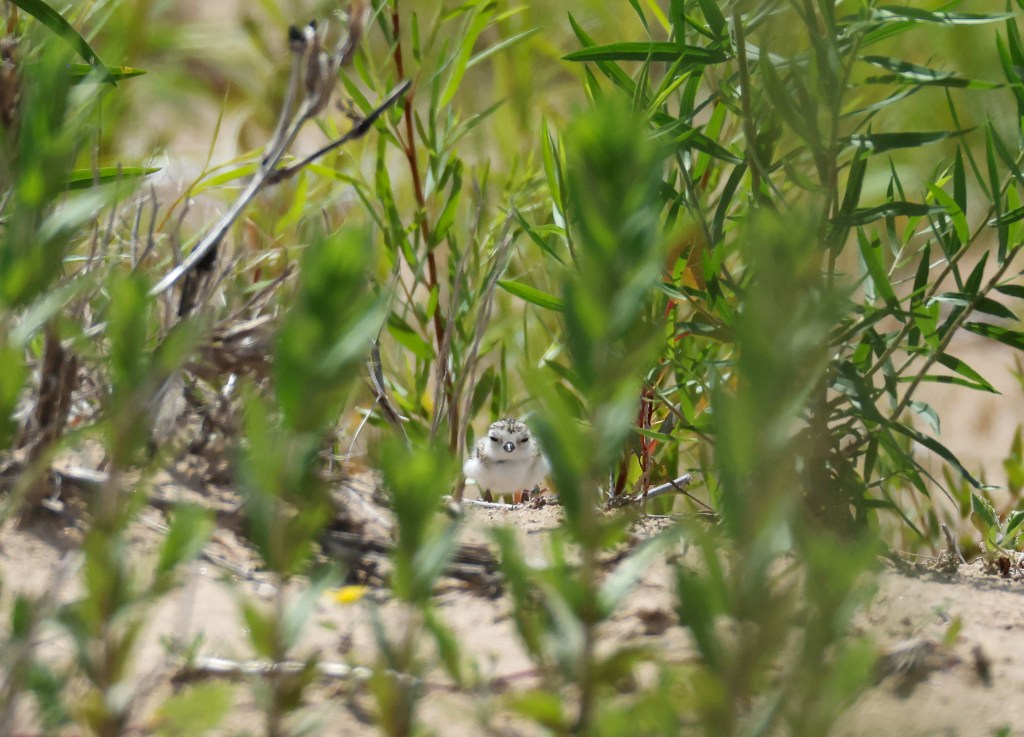
Four piping plover chicks hatched Monday at Montrose Beach Dunes Natural Area, marking the latest milestone in Chicago’s efforts to restore one of the Great Lakes’ most endangered and beloved birds.
The chicks, born to piping plovers Imani and Sea Rocket, emerged from their nest near Montrose Pier under the watchful eyes of volunteer bird monitors, who spent sunup to sundown waiting to confirm all four eggs had successfully hatched.
Tamima Itani, who leads the volunteer group Chicago Piping Plovers, said Tuesday that even after eight seasons of watching eggs hatch, the experience “never ceases to be amazing.”
“There’s something about the piping plovers,” Itani said. “I’ve seen people see piping plovers for the first time, especially if we put the scope on one, and you see their faces melt watching these birds, especially the chicks.”
She described the hatchlings as fluffy white cotton balls smaller than a marshmallow. But they also carry a legacy: Imani is the son of Monty and Rose, the pair that sparked a citywide conservation movement after raising the first successful piping plovers chicks in Chicago in more than 70 years.
Monty died in 2022, and Rose did not return that year, but they live on through a new generation of chicks, according to the Chicago Park District.
“The story of our local piping plovers beautifully highlights the power of collaboration; by partnering with conservationists and dedicated volunteers, we are building sanctuaries where endangered species can flourish,” said Park District spokesperson Irene Tostado.
Across the Great Lakes region, this year’s breeding season has been especially successful, Itani said, with the population surpassing 90 breeding pairs. But since Imani and Sea Rocket’s nest is expected to be Chicago’s only piping plover nest this year, she said protecting the birds remains especially important.
For Itani, the hatchlings’ arrival is personal as she’s known Imani since he was only a few hours old.
“It’s this relationship to the animal world, where you actually know an individual,” she said. “It’s not an anonymous bird. It’s someone you actually know.”
The Chicago Piping Plovers monitors spend from 6 a.m. to 8 p.m. every day with the birds during nesting season, giving them a front-row seat to the plovers’ personalities, Itani said. Sea Rocket has a friendly, sweet disposition, often approaching monitors she recognizes, while Imani is territorial, chasing away birds that wander too close to the nest. Itani said he takes after his father and father before him.
“You know their personalities, you know their behavior, you know their preferences,” Itani said. “To be honest, you get attached to them.”
While Imani and Sea Rocket have successfully raised chicks before, survival is never guaranteed. In 2024, Itani said only one of their four hatchlings survived.
“It’s a very tough world out there for piping plovers, which is one of the reasons they’re endangered,” she said.
The monitoring group was worried about last week’s storms affecting the pair’s latest nest. But Itani believes that the location of the nest, built closer to the pier and on slightly higher ground than last year’s nest, protected the four eggs from storm surge.
“Sea Rocket and Imani weathered the storms well, as witnessed by the hatching,” she said. “We’re very pleased that the storms from last week did not impact them.”
Habitat loss remains the greatest threat to piping plovers, Itani said. Since Monty and Rose nested at Montrose in 2019, the Chicago Park District has restricted access to portions of the beach during peak nesting season, typically from May through September.
These efforts have helped bird populations beyond just the piping plover, Itani said.
“The nice thing about protecting the piping plovers is they end up being what’s called an umbrella species,” she said. “By protecting the piping plovers and their habitat, you’re actually also protecting other species.” The lakeshore bird also faces threats from predators like dogs, coyotes and skunks.
To help protect the hatchlings, the Park District is asking visitors to stay outside protected areas, follow posted signs, keep dogs away from nesting habitat and watch where they step.
“The hatchlings are the size of cotton balls and may be exploring their new surroundings,” Tostado said.
The Park District and Chicago Piping Plovers plan to announce a naming contest Tuesday for the four chicks, with organizers encouraging submissions tied to Chicago history or culture.
For Itani, one of the most memorable moments of hatch day came when she watched a chick seek shelter beneath a plant to escape Monday’s heat.
“That’s a chick that’s less than 12 hours old, but it knows to go to (the shade),” Itani said. “It was really striking how instinctively they know how to take care of themselves.”