
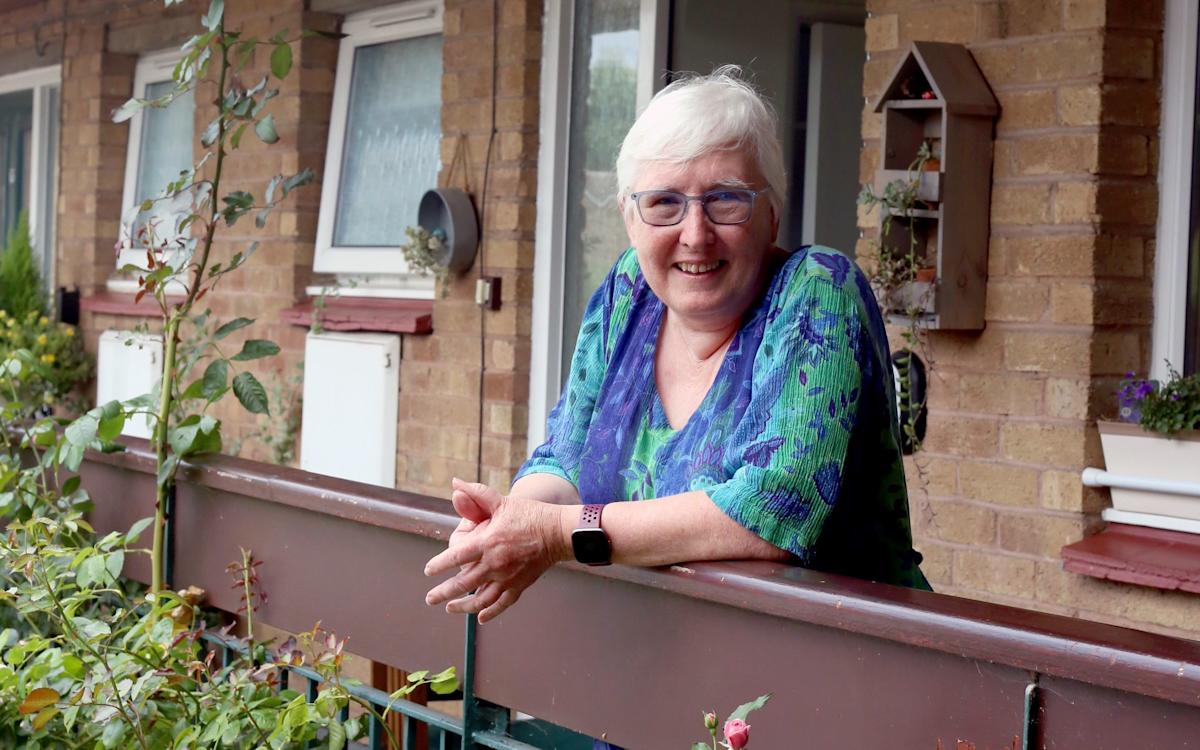
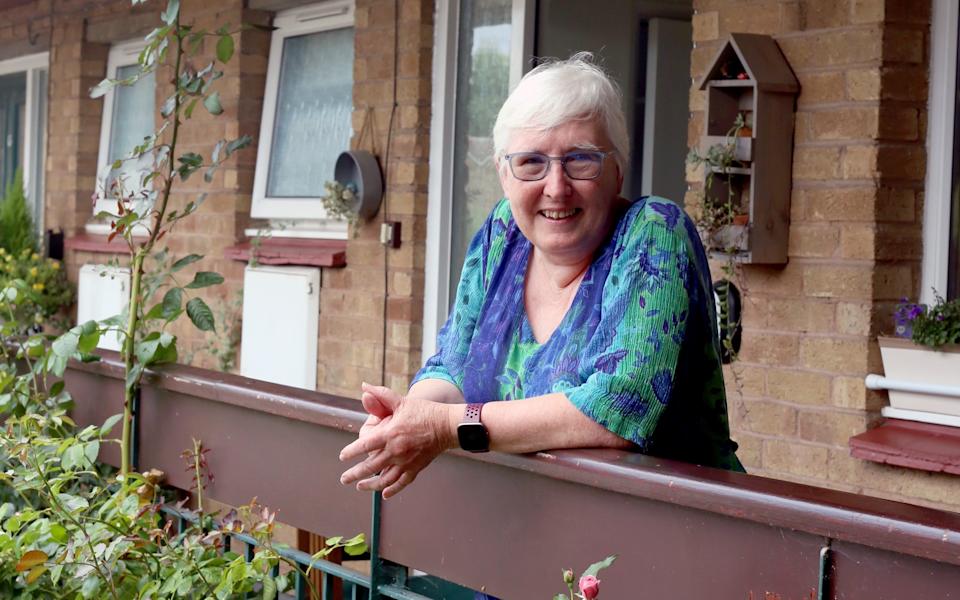
 Heather Rowell is one of many pensioners who have moved into the social housing system to cope with higher costs
Saving for your whole life is often not enough, as Heather Rowell discovered when she retired after decades spent working in retail.
“I had always put away as much as I thought I could afford,” says the 72-year-old. “My employer had a very good pension scheme and I had been contributing to the state pension.
“But I realised that I was still not going to meet the rising costs of living.”
Almost overnight, her monthly earnings fell by a third on what was already a relatively modest income. This led to her cutting back on daily essentials and selling her car.
Rowell’s affordability squeeze was made even tougher by the fact she did not own her home. The combined cost of her rent and council tax accounted for at least three quarters of her pension pot each month.
She is not alone.
As home ownership rates fall across the country, the financial pressures facing her are likely to become increasingly common for millions of others in retirement.
The Pensions Policy Institute has forecast that the share of pensioners renting into retirement will jump from 6pc today to 17pc by the 2040s, accounting for around two million people.
This is especially problematic given the higher costs faced by those renting into their later years.
Across a person’s typical 20-year life expectancy in retirement, renting will cost a pensioner an additional £398,000 compared to an average homeowner, according to analysis by Standard Life.
The consequence of this will be inflated rates of pensioner poverty, inevitably weakening the UK economy.
 1606 Pensioner poverty rates could start rising again
Crucially, it will also increase the welfare bill as a growing number of pensioners become reliant on housing benefits.
Rowell is one of many pensioners who have moved into the social housing system to cope.
Her new residence is a development near Reading, provided by Anchor, England’s largest not-for-profit provider of housing and care for older people.
This means her rent is far below market rate, which helps to keep costs down.
“It’s not that pensioners like me want luxuries,” says Rowell. “We just want to heat our homes, eat properly and live without the constant worry of unexpected bills.
“An unexpected bill that might once have just been annoying can now become a crisis.
“It builds a lot of stress and strain. I’ve seen it a lot, people just go into their flats, shut their front doors and that’s it. They can’t cope with anything else because it is just all too much.”
Demand for social housing for older people is already skyrocketing.
Since June 2024, Anchor’s waiting list has more than doubled from 12,708 to 27,743, says Mario Ambrosi, a director at the company who is also chairman of the Housing and Ageing Alliance.
“I think it’s a combination of the higher cost of living and the huge demographic changes that we’re seeing,” says Ambrosi.
1606 Number of pensioners on housing benefit to soar
As Britain’s population ages, the number of people aged 75 and over will soar by 1.48 million between 2022 and 2035.
This is coinciding with dwindling home ownership rates, which long underpinned pensioner earnings.
For decades, generations of workers have retired not only owning their own homes outright but also having benefited from astronomical house price growth.
Since 1982, UK house prices have soared by 300pc beyond inflation.
However, this gravy train is coming to an end as house prices stall, withdrawing a vital source of pensioner wealth.
Furthermore, the share of people who own their own homes in England has also fallen from 70pc in the early 2000s to around 65pc today, as homes have become increasingly unaffordable in proportion to earnings.
Among 55 to 64-year-olds, who will soon be entering retirement, home ownership rates in England have slumped from 82pc in 2003-04 to 71pc in 2024-25.
Over the same period, the share of pensioners living in the private rented sector has more than doubled from 4pc to 10pc.
1606 More people are renting as they near retirement age
The problem of renting in retirement will become even more acute for future generations of retirees.
Among 45 to 54-year-olds, home ownership rates have dropped from 81pc to 66pc.
Worse still, those aged under 30 are less than half as likely to own their own homes compared with 30 years earlier.
“This is a serious problem that’s already starting and we can predict it’s only going to get worse,” says Catherine Foot, the director of the Standard Life Centre for the Future of Retirement.
“Our system and all of its assumptions have been built on this idea that you’re going to have low housing costs in retirement. That foundation is disappearing for younger generations, undoubtedly.
“It has got really significant implications. Poverty rates will undoubtedly increase for tomorrow’s pensioners as a direct result of their increased housing costs. I am certain of that.”
The share of pensioners living in poverty has plummeted in recent decades, falling from 28pc in 1999-2000 to 13pc by 2012-13, partly aided by the introduction of Pension Credit in 2012-13.
But that progress is now reversing. In 2023-24, it hit 16pc, meaning 1.9 million of 12.1 million pensioners were living in poverty.
Among those in the private rented sector, the poverty rate is double this at 37pc.
By 2050, the second Pensions Commission warned that renters will make up half of all pensioners in poverty, despite only being around a quarter of the total pensioner population.
Jamie Fiveash, the chief executive of pensions firm Smart UK, warned that policymakers are sleepwalking into an economic crisis.
“It will ultimately fall on the welfare state,” he says.
The number of pensioners receiving housing benefits is forecast to rise from 1.1 million in 2030-31 to 1.7 million in 2050-51.
Higher numbers of pensioner renters are expected to add around £2bn to Britain’s housing benefits bill by the 2040s, says Heidi Karjalainen, a senior research economist at the Institute for Fiscal Studies (IFS).
There will also be an indirect cost to the public finances as fewer older people will have property wealth to pay for their care costs, says Karjalainen.
“At the moment, if you move to a care home and there is no one living in your home, then that will be counted towards the asset test for social care,” she says.
“If fewer people own their own homes, there is a potential pressure on higher social care costs because people don’t have the assets to pay for their own care.”
The IFS estimates that one in seven 65-year-olds will incur lifetime care costs of more than £100,000.
LaingBuisson estimates that 45pc of the UK’s care home residents are self-funded.
Data on the number of people who rely on housing wealth to pay for care are scant, but government figures show that thousands of pensioners take out deferred payment agreements each year, which are primarily bridging loans to allow for the sale of a property to pay for care.
Yet beyond handouts, reduced pensioner earnings are likely to have wider implications for the economy.
In recent years, the “grey pound” has become a significant driver of the UK economy.
By 2018, people aged 50-plus held three quarters of the nation’s financial wealth and accounted for 54pc of all consumer spending, some £319bn, according to the International Longevity Centre.
If future generations are not accumulating property wealth, they will have far less cash to spend elsewhere.
All of which indicates that the rise in pensioner renters is a problem a cash-strapped Government can no longer ignore.
“We have a long history in the UK of finding extreme poverty and destitution for people in old age absolutely unacceptable,” says Foot. “I think there will be strong political pressure to spend money to protect those hardest hit from complete destitution in their old age.
“But there are many questions about where that money comes from.”