
TALLADEGA, Ala. — Residents across Talladega spent much of the week sharing photos and videos after a black bear wandered through neighborhoods, drawing crowds and plenty of attention on social media.
The sighting surprised many residents. Wildlife officials, however, say it’s exactly the kind of thing they expect to see this time of year.
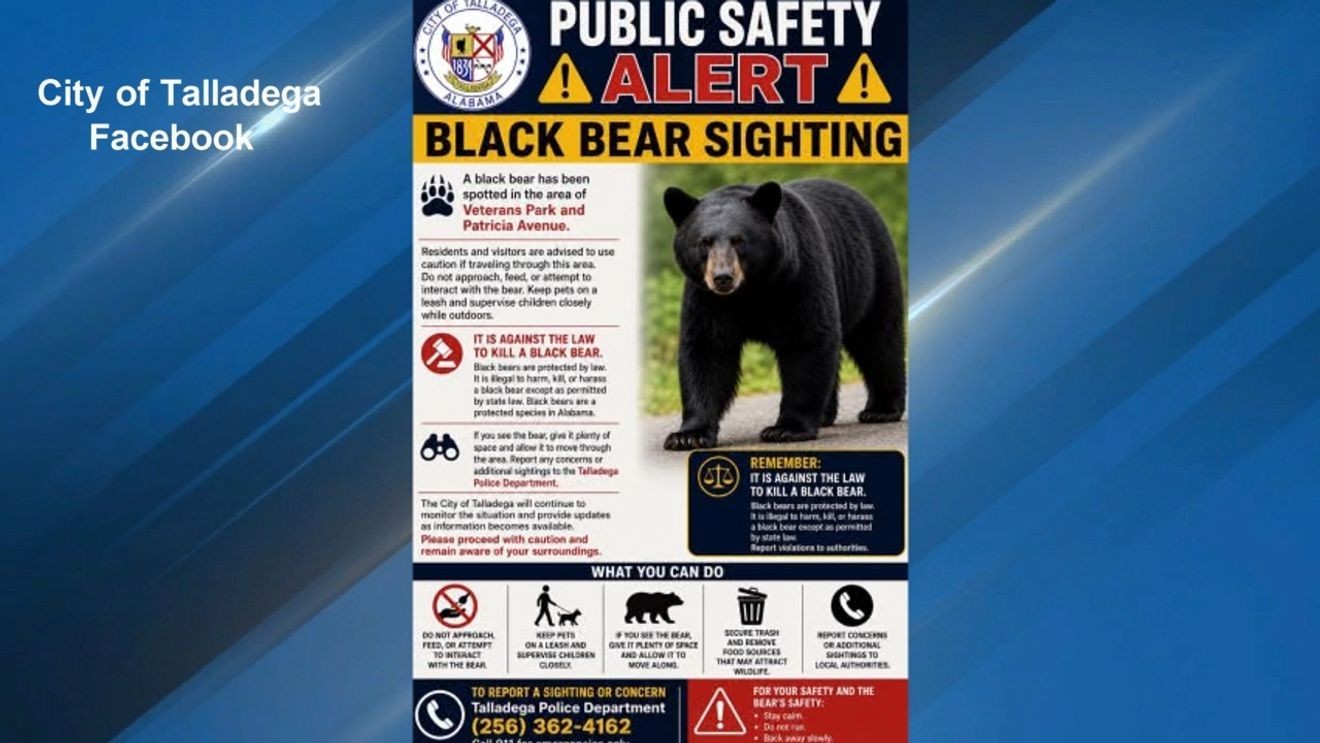
Talladega police were called to Patricia Avenue Tuesday after reports of a bear in a backyard. When officers arrived, they found the animal helping itself to figs from a tree while curious neighbors gathered nearby.
Police worked with wildlife officials to keep people away from the bear and give it room to move back toward nearby wooded areas.
For some residents, the sighting was not entirely unexpected.
Zoe Yates said her family and neighbors have been spotting the bear in different areas for about two weeks.
The bear has frequently been seen near wooded property, a creek and a small cave outside the city.
While some people have expressed concern about the sightings, Yates sees the situation differently.
“A lot of people are saying that they’re scared, but it’s their home and we’re kind of intruding on them,” Yates said.
According to the Alabama Wildlife and Freshwater Fisheries Division, black bears can be seen anywhere in Alabama, especially during the summer.
Wildlife officials say June, July and August are common months for sightings because young male bears are leaving the areas where they were born and beginning to travel on their own.
Those journeys can take them through neighborhoods, farms and communities that border forests, creeks and other natural habitat.
In many cases, bears are not looking for people. They’re looking for food.
A trash can left outside overnight, pet food on a porch, a bird feeder or even the smell from a backyard cookout can attract a curious bear.
“Anything that would attract a raccoon would attract a bear,” said Marianne Gauldin with the Alabama Wildlife and Freshwater Fisheries Division.
Because of that, wildlife officials recommend bringing pet food indoors, securing trash and removing bird feeders if a bear is repeatedly spotted in the area.
Officials also say residents should never approach a bear.
Instead, they recommend staying calm, giving the animal plenty of space and allowing it a clear path to leave.
One question often asked after a sighting like this is why wildlife officials do not simply trap and relocate the animal.
Gauldin says relocation is generally reserved for bears causing significant problems. In most situations, the preferred approach is to give the bear room to move away on its own.
For now, that appears to be what happened in Talladega.
Wildlife officials say most black bears want to avoid people and will continue on their way if given the opportunity.
Their advice is simple: keep your distance, secure anything that could attract a bear and let the animal move on.