
Several communities in Massachusetts have issued outdoor water bans after days of high heat and drought conditions.A total outdoor water ban was issued to the towns of Hingham, Hull, and north Cohasset on Tuesday due to low water reserves in the storage tanks.Those communities rely on the Weir River Water System, which said the low reserves are due to overconsumption combined with the ongoing drought.”Maintaining adequate tank levels is critical for drinking water supply and firefighting capabilities,” a Weir River Water System news release. “Current water reserves have reached critical levels, and immediate conservation is necessary to protect public health and safety.”The outdoor ban includes:Lawn and landscape irrigation Using sprinklers or hoses Filling swimming pools and hot tubs Washing vehiclesThe water ban will stay in effect for the remainder of the summer.Anyone who doesn’t comply with the ban may be subject to fines or have their water service shut off.The Massachusetts Executive Office of Energy and Environmental Affairs announced that the southeast region of the state had worsened to a “Level 2 – Significant Drought” on June 9.The town of Bridgewater also issued a mandatory water restriction on all nonessential outdoor water use after the public works department reported low levels of water in the storage tanks.Bridgewater’s public water system is supplied by groundwater wells on High Street, Carver’s Pond and Plymouth Street.The town said outdoor water use will only be permitted for health and safety, legal, and agricultural purposes, including livestock and vegetable gardens.Water can also be used outdoors for core business operations, in public recreational spaces, and for soil stabilization.Bridgewater is holding a town council meeting Tuesday night, where water conservation is expected to be discussed.
BRIDGEWATER, Mass. —
Several communities in Massachusetts have issued outdoor water bans after days of high heat and drought conditions.
A total outdoor water ban was issued to the towns of Hingham, Hull, and north Cohasset on Tuesday due to low water reserves in the storage tanks.
Those communities rely on the Weir River Water System, which said the low reserves are due to overconsumption combined with the ongoing drought.
“Maintaining adequate tank levels is critical for drinking water supply and firefighting capabilities,” a Weir River Water System news release. “Current water reserves have reached critical levels, and immediate conservation is necessary to protect public health and safety.”
The outdoor ban includes:
Lawn and landscape irrigation Using sprinklers or hoses Filling swimming pools and hot tubs Washing vehicles
The water ban will stay in effect for the remainder of the summer.
Anyone who doesn’t comply with the ban may be subject to fines or have their water service shut off.
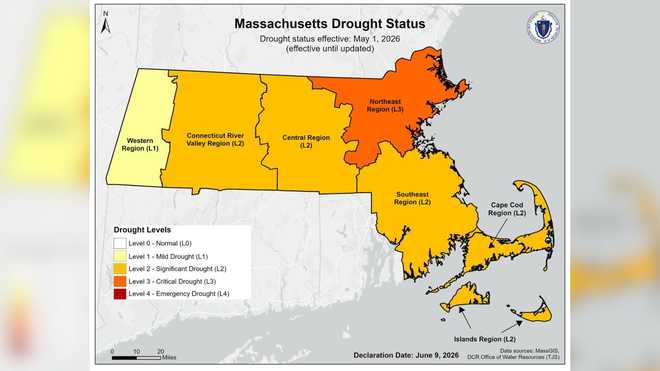
Hearst OwnedMassachusetts Executive Office of Energy and Environmental Affairs
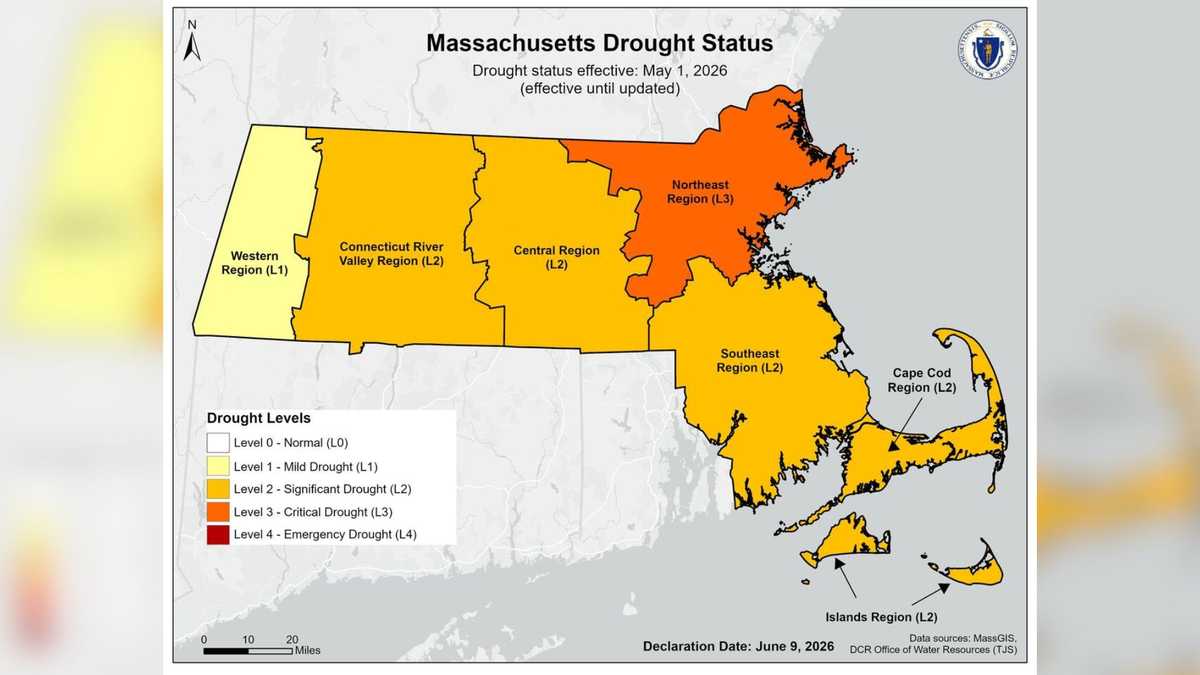
The Massachusetts Executive Office of Energy and Environmental Affairs announced that the southeast region of the state had worsened to a “Level 2 – Significant Drought” on June 9.
The town of Bridgewater also issued a mandatory water restriction on all nonessential outdoor water use after the public works department reported low levels of water in the storage tanks.
Bridgewater’s public water system is supplied by groundwater wells on High Street, Carver’s Pond and Plymouth Street.
The town said outdoor water use will only be permitted for health and safety, legal, and agricultural purposes, including livestock and vegetable gardens.
Water can also be used outdoors for core business operations, in public recreational spaces, and for soil stabilization.
Bridgewater is holding a town council meeting Tuesday night, where water conservation is expected to be discussed.