
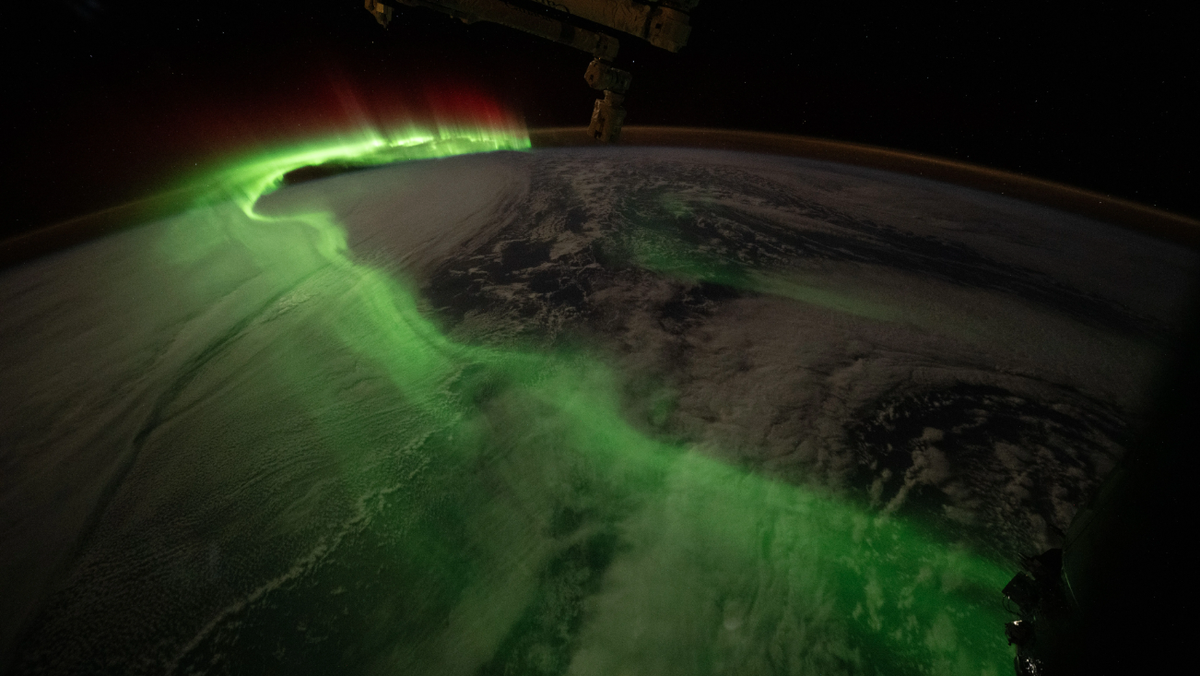
Take *** look at *** spectacular green glowing aurora that left astronauts aboard the International Space Station, in their words, in awe. Astronaut Jessica Mir shared time-lapse video of the Aurora Australis, the southern counterpart to the northern lights, captured from *** SpaceX Dragon craft just outside the ISS. According to Mir, the vivid activity was the result of *** recent solar event, and she described it as dancing and snaking below and putting on quite *** show.
WATCH: A glowing aurora dances beneath the International Space Station, dazzling astronauts
A brilliant view of the aurora australis

Updated: 7:16 PM EDT Jun 17, 2026
A brilliant dance under the stars.The International Space Station has been capturing some stunning visuals of southern auroras while in orbit.The southern aurora, known as aurora australis, was captured in a time-lapse video by ISS astronaut Jessica Meir. She described how the emerald lights “danced and snaked” along Earth’s atmosphere. “I am in awe of this evocative phenomenon,” Meir wrote in a post on X.According to NASA, “Auroras are colorful, dynamic, and often visually delicate displays of an intricate dance of particles and magnetism between the Sun and Earth called space weather.”The word “aurora” is the Latin word for “dawn” and also comes from the name for the Roman goddess of the dawn.
A brilliant dance under the stars.
The International Space Station has been capturing some stunning visuals of southern auroras while in orbit.
The southern aurora, known as aurora australis, was captured in a time-lapse video by ISS astronaut Jessica Meir. She described how the emerald lights “danced and snaked” along Earth’s atmosphere. “I am in awe of this evocative phenomenon,” Meir wrote in a post on X.

Jessica Meir, ISS
The aurora australis arcs over Earth during an active solar event in this photograph taken on June 5, 2026, from the International Space Station as it orbited 271 miles above the Indian Ocean southwest of Perth, Australia.
According to NASA, “Auroras are colorful, dynamic, and often visually delicate displays of an intricate dance of particles and magnetism between the Sun and Earth called space weather.”
The word “aurora” is the Latin word for “dawn” and also comes from the name for the Roman goddess of the dawn.