
Major League Baseball’s latest labor battle began in earnest three weeks ago as the sides delivered their opening economic proposals in New York City. The league proposed a salary cap-and-floor system. The Major League Baseball Players Association reiterated players’ longstanding opposition to a cap — a stance that three decades ago led to a 232-day strike.
The discord has left fans in an uncomfortable position: trying to enjoy a summer of baseball while fearing next season could be in jeopardy.
We received 8,500 responses to our fan survey about the MLB-MLBPA labor negotiations. A pattern that emerged was that while many believe the league lacks competitive balance, there isn’t consensus support for the league’s solution of a hard cap.
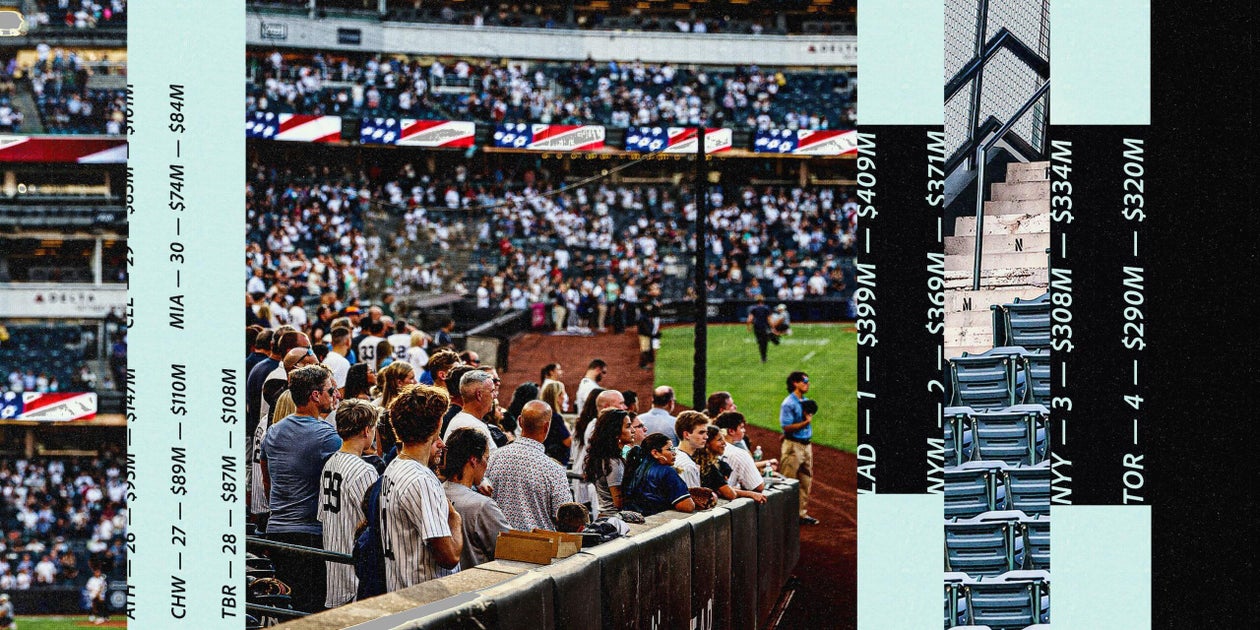
The median fan’s position was perhaps best illustrated by a Cincinnati Reds fan who completed the survey as the team — with a payroll projected by FanGraphs at $128 million — faced two big-market behemoths in the same week: New York’s Mets ($369 million payroll) and Yankees ($308 million).
The Reds fan believes MLB’s payroll disparity has created an unfair fight, yet they primarily blame that disparity on the owners who spend too little. They want a salary cap-and-floor system but prefer one that, unlike MLB’s hard-cap proposal, merely taxes teams that spend above or below the prescribed range.
This fan feels their favorite team should spend more. They are under no illusion that a cap system would make consuming baseball cheaper for fans, but they hope it would lead to more teams in contention and more small-market teams retaining homegrown stars. They expect MLB to miss games in 2027 due to a lockout; if that occurs, they’d primarily blame the owners.
All of these were the top responses to different questions in our fan survey. But there’s much more to cover. Below are the results, with some representative reader responses listed for each question. To the charts!
Reader submissions have been lightly edited for clarity.
It’s no mystery why MLB owners chose these collective bargaining agreement negotiations to seriously push for a salary cap for the first time since the 1994 strike. As the league’s payroll divide widens and the Dodgers dynasty continues, fans have grown frustrated.
In early negotiations, the league has leaned upon fan sentiment to strengthen its argument for a cap, citing fans’ concerns about competitive balance. Responses to this survey question reflect that: Nearly 75 percent of fans agree, to some degree, that the payroll disparity has created an unfair fight.
But who is responsible for that disparity?
And how should it be solved?
Those questions are next.
Cardinals fan (Somewhat agree): It is unfair to the fans, but every owner is perfectly capable of raising payroll, so it’s not necessarily an unfair system, just an unequal one.
Diamondbacks fan (Strongly agree): Large-market teams already have a competitive advantage in being able to draw in top talent and, with no real payroll restriction, the disparity between the haves and the have-nots only grows larger.
Braves fan (Strongly agree): It starts with media revenue disparity. This can and should be fixed by the owners.
This answer is far less likely to be trumpeted by the league office.
Three-quarters of participants blamed MLB owners for the league’s growing spending gap, and nearly 60 percent specifically blamed low-spending owners. Not Steve Cohen, Mark Walter or Hal Steinbrenner. More like Jerry Reinsdorf, Bruce Sherman and Paul Dolan.
This wasn’t a case of the sample being spoiled by big-market voters bagging on small-market owners, either. Among participants whose favorite team currently carries a bottom-10 payroll — the Marlins, Guardians, Rays, White Sox, Athletics, Nationals, Cardinals, Pirates, Twins and Rockies — low-spending owners again took far more blame (49.1 percent) than high-spending owners (16.8 percent) or players (28.5 percent).
Rangers fan (The owners who spend too little): Owners that don’t spend money on players to be competitive shouldn’t own a team.
Marlins fan (The owners who spend too little): Owners should treat a sports franchise like a hobby. It’s going to cost them money. If you’re not rich enough to compete, don’t buy a team.
Brewers fan (The owners who spend too much): It’s a mixed bag. There are definitely owners who could spend more. But some are willing to push their revenue advantage to the extreme.
As we saw in our February survey, a salary cap-and-floor system remains a popular idea among fans.
In this survey, the fan bases with the least support for a cap system: Dodgers (17 percent), Mets (33.3), Yankees (41.6) and Phillies (48.9). Meanwhile, four fan bases from smaller markets had more than 75 percent support for a cap system: Pirates (84.7 percent), Reds (81.7), Twins (80.7) and Guardians (77). That tracks with how fans are assigning blame for the league’s payroll disparity; many fans of low-payroll franchises see a cap system both slowing big spenders and forcing their owners to surpass a salary floor.
Nationals fan (Salary cap-and-floor system): Luxury taxes have proven useless as the wealthiest teams just chalk them up to a cost of doing business.
Angels fan (Market system): Free-market capitalism is the way of the land. If certain owners don’t like it, maybe they should just get out.
Astros fan (Salary cap-and-floor system): At least go to the NBA system of tax aprons and a soft cap.
While the previous question showed strong support for a salary cap-and-floor system, these results suggest a soft-cap system may be the solution most fans find agreeable. MLB already has luxury-tax tiers that penalize high-spending teams and serve as something of a soft cap — though neither the league nor the union would call it that. Why not do the same on the low-spending end?
The players are offering that. The union’s initial economic proposal included a soft salary floor — a “competitive integrity tax” — set at $150 million in the first year of the CBA. Eleven teams are carrying luxury-tax payrolls below $150 million this season, according to FanGraphs. In theory, the league could acquiesce to that offer in exchange for other gains in negotiations, yet the likelihood of 30 owners agreeing to any sort of salary floor without the assurance of a hard cap is vanishingly slim.
It’s also worth noting that the soft-cap system’s edge in polling was influenced by voters who’d rather stick with the market system anyway. Among survey participants who previously indicated they prefer a cap system over the status quo, 67 percent voted for a hard-cap system, compared to only 29.1 percent favoring a soft-cap system.
The top fan bases in hard-cap support: Pirates (74 percent), Reds (63.8), Twins (55.4), Guardians (54.4) and Brewers (54.2). Those most opposed: Dodgers (7.3 percent), Mets (18.6), Yankees (26.0), Red Sox (29.6) and Phillies (31.6).
Orioles fan (Soft-cap system): The tax needs to be significant on both sides of the scale. Make it hurt!
Pirates fan (Hard-cap system): Unless the penalties are going to be severe for overspending on a soft-cap system, it’s useless. Nobody is scared of the current luxury tax system. If you make it so severe that nobody dares go over it, you might as well just have a hard cap to begin with.
Nationals fan (Soft-cap system): We already have a soft cap, which taxes teams that spend too much. We need a floor that does the same. No owner is going to spend a tax on a floor — they will just sign players to get above it.
Apparently, our readers don’t need a sports economist or labor expert to explain to them why MLB’s owners have long craved a salary-cap system.
The Athletic’s Evan Drellich recently wrote about how MLB’s lack of a salary cap (and thus payroll certainty) impacts the league’s franchise valuations, which continue to lag behind the NFL and NBA. With a cap on the table, this CBA negotiation is an “800-pound gorilla” that’s “going to have a huge impact on the value of these things,” Sal Galatioto, president of the sports banking firm Galatioto Sports Partners, told Drellich.
While Manfred made the case that the league’s initial economic proposal would benefit big leaguers, Bruce Meyer, the union’s interim director, argued that a salary cap would mean a pay cut for players overall and that it would hit amateur players particularly hard.
White Sox fan (It would help owners more than players): Objectively better for owners, as the cap would almost certainly boost their team valuations immediately.
Reds fan (It would help owners more than players): A salary cap only helps owners, which is why they have been wanting it for decades. If it didn’t help them, they wouldn’t want it.
Yankees fan (Neither side would be helped or hurt more): Owners win through increased valuations of their team. Players win because more of them will be paid. The very best players lose because they are the ones who beat the weight of the cap.
The skew of these charts seems to tell a clear story.
Overall, survey participants don’t care a whit about whether owners emerge from these CBA negotiations making more money than before. Comparatively, they care far more about how the outcome impacts players’ earnings — yet that still only amounts to tepid interest. Baseball fans appear far more concerned with whether changes address competitive balance than whether they’ll fatten either side’s pocketbooks.
One participant disagrees fervently. They wrote in the survey that their son has been bouncing around the majors for several years now. “He really is a success story just by making it,” the parent wrote, “but the financial reward for all the hard work has been almost non-existent.” They would like to see players like their son rewarded earlier in their careers.
Pirates fan (Owners: 1; Players: 5): No matter how much money Paul Skenes ends up making in his career, I feel more allegiance to him as a worker and millionaire than the average owner and billionaire.
Royals fan (Owners: 3; Players: 3): Just looking for a system that is more fair for all teams — no excuses for any MLB team to cry poor.
Mariners fan (Owners: 1; Players: 1): Neither side really cares how much it costs me to go to a game and buy a hot dog and a beer, so why should I care about them?
There are numerous ways one could attempt to objectively compare the competitive balance of these leagues, yet all would likely land somewhere between inconclusive and unsatisfying. They are very different sports with radically different rules and roster constructions. Quarterbacks and goaltenders are more important than any single player on a baseball team. One star player can turn around an entire NBA franchise, while baseball rebuilds require years of acquiring and developing prospects.
But for many fans today, the biggest difference between those leagues is that the NFL, NBA and NHL have salary caps, and MLB doesn’t. And they see an uneven playing field. Right or wrong, that perception matters.
Mariners fan (Worse): Ask yourself who is going to win the Super Bowl next year and you could have 15 possible choices. World Series? The Dodgers … and perhaps three or four other teams could get lucky.
Athletics fan (Worse): You can have teams go on a run in the NBA on the backs of two great players. In the NFL, a Hall of Fame quarterback can drag you all the way. There’s no equivalent in baseball. So, trying to compare the titles is the wrong way to look at competitive balance.
Blue Jays fan (About the same): Parity is in the eye of the beholder. We have endless stats to compare players in any sport. We have no easily digestible measure of competitive balance.
Overall, nearly two-thirds of fans don’t anticipate that a cap system will significantly help their team reach the postseason or win a World Series.
Optimism was more apparent yet still muted among fans who previously stated they prefer a salary cap-and-floor system over the current system; 52.4 percent of them indicated they believed their team would have better odds of making the postseason under a cap system.
Guardians fan (Playoffs: No; World Series: Yes): The Guardians front office is plenty good enough to make the postseason with limited resources. Happens year in and out. But taking that next step is a massive challenge when facing off against mini All-Star teams.
Cardinals fan (Playoffs: Yes; World Series: Yes): A cap, if done right, will incentivize players to stay with their teams (make more money if they do so, like in the NBA). This will help with continuity, fan interest, and the likelihood of each team having a better chance to compete for a World Series if managed well.
Rockies fan (Playoffs: No; World Series: No): I’m a Rockies fan. God himself couldn’t make that team work.
In the majors, small-market teams already struggle to retain star talent — sometimes because of the players’ choice, and other times because of a club’s financial caution.
But it’s not just small-market clubs. In 2020, the Red Sox traded star Mookie Betts to the Dodgers in an effort to reduce luxury-tax payroll.
Would such an occurrence be even more common under a hard cap? That’s unclear. Even so, that hypothetical is not scaring off supporters of a hard cap.
Giants fan (Yes): It’s how the other leagues work. Players will take a discount if they want to win.
Brewers fan (Yes): This is already how it works for small-market teams EVERY DAY. The only difference would be that the big spenders would have to do this, too.
Diamondbacks fan (No): Economic incentives for keeping homegrowns and long-timers will need to be built in.
Pleading for your favorite team’s owner to spend more isn’t quite a universal feeling, but these days, most fans can relate. More than half of respondents felt their favorite team’s payroll is too low. Among fans of teams with bottom-10 payrolls, 90.3 percent indicated their team’s payroll this season should be higher; only one such voter, a Cardinals fan, felt their team’s payroll was too high.
Who else thinks their team should spend less? A heavy majority (86.3 percent) of those who believe their favorite team’s payroll is too high were fans of teams with top-five payrolls: the Dodgers, Mets, Yankees, Phillies and Blue Jays, all of whom have projected payrolls above $285 million, according to FanGraphs.
Angels fan (It should be higher): It ain’t my money.
Rays fan (It should be higher): The Rays could spend more — period — and should get more pooled revenue to allow them to spend even more.
Phillies fan (It should be lower): As a fan of a top-five spending team, it still seems obvious that the competitive balance tax might need to be higher, and that money should probably be diverted to low-spending teams that would then be required to spend more on payroll.
Here, we’ll let the chart and the readers speak for themselves.
Red Sox fan (No): When was the last time that happened? It’s a myth.
Cubs fan (No): All prices for attending a game are optimized to be the most that can be charged without pushing away too many customers. Prices are not player salaries + operating costs + profit margin. All savings in players’ salaries would go to the owners.
Reds fan (Yes): Ultimately, but not necessarily from the start.
Yankees fan (No): Baseball is not like the airlines. There are no low-cost carriers offering cheap tickets and unbundled experiences at the ballpark. Even the crappy teams price-gouge the consumer.
For this question, we allowed readers to select multiple options. That 75 percent included among their selections that they’d like to see more homegrown stars staying with their original, small-market teams underscores how important that topic remains. It’s a tired act for fans of big-market teams to constantly draw up lopsided mock trades to pluck a star from Pittsburgh, Cleveland or Milwaukee. But it’s also a reality that these smaller cities tend to eventually see their stars traded away.
In addition, a majority of survey participants indicated that seeing more teams in contention would be a sign that a cap system was working.
Other possible gauges suggested by respondents included more small-market teams making the World Series; each MLB team spending as if they’re trying to win a title that year; and this: “How do other leagues determine if their cap system is working? Franchise values.”
Padres fan: It’s not about whether the Pirates, Marlins, etc., make the playoffs. It’s about all the teams starting the race from the same point.
Guardians fan: Guardians fans knowing the Francisco Lindor trade was a matter of fate and then celebrating a damn miracle of José Ramírez taking a hometown discount is a horrible look for the entire league.
Yankees fan: More teams are already in contention and make the playoffs thanks to expanded playoffs. I believe MLB has had the most parity in champions over the last 20 years of the major North American sports leagues, all of which have hard caps. Owners now are capable of offering the money it takes to retain homegrown stars, they just refuse so the league can help them cry poor in CBA negotiations. All this is to say, a majority of this list of supposed cap-system benefits ALREADY HAPPENS.
This hews closely to the results of our February survey, in which 77 percent of participants said they expected MLB to miss games in 2027, and 14 percent believed that outcome would be avoided.
The harder MLB pushes a salary cap, missing games becomes more likely.
“There’s a line that we’re not going to cross,” Pirates ace Paul Skenes, an MLBPA executive subcommittee member and one of the sport’s biggest stars, told the Pittsburgh Post-Gazette this week, “and if we have to miss games, we’ll miss games. I’m sure the owners feel the same way.”
With that sort of talk, it’s hard for fans to be anything other than pessimistic. MLB has not missed games due to labor strife in three decades. Are the MLB owners willing to jeopardize the league’s current momentum by canceling part or all of the 2027 season?
Rockies fan (Yes): This has the same signs as the strike in 1994.
Astros fan (Yes): I hope they lose only a few games, but both sides are dug in. Who will blink first? I’m not sure there’s baseball in 2027.
Dodgers fan (Yes): I’m not optimistic — and it kills me. I visit Arizona with friends each spring and usually have booked the house we’re going to stay in by now. We haven’t done it yet for next year.
It may be comforting for the league to know that nearly 40 percent of these fans can’t imagine themselves turning away despite a lengthy lockout.
But 33.7 percent of respondents said whether they abandon the sport depends on how many games are missed, which illustrates the gamble MLB’s owners would be taking if the lockout lingered into the spring. Maybe missing a small number of games wouldn’t be catastrophic. But how many is too many? A sense of urgency is warranted. The league is well aware of the damage inflicted by the 1994 strike and how hard it is to win fans back.
Blue Jays fan (Yes): Left the NHL in 2012.
Twins fan (No): I will always love baseball and will continue to follow, but side interests like fantasy baseball may be hurt.
Nationals fan (Depends on how many games are canceled): I’ve been a Nats season-ticket holder since they moved to DC in ’05. I’ve been hesitant to break that streak, even with the recent and past poor performance. Losing a season to COVID wasn’t their fault. Losing a season because of greed would be. I’d have no problem canceling my tickets and avoiding the team.
If a lockout were to cost MLB games next season, fans are more than twice as likely to blame the owners than the players. That’s a sizable gap.
Though the scales of fan sentiment could tip over the course of the protracted negotiations, MLB’s owners initially have a chasm to overcome if they are to persuade the baseball-loving public that the benefits of a salary cap are worth canceling games over.
Marlins fan (The owners): Owners control the levers here.
Mets fan (Both equally): The system includes missing games as a tool of negotiations. If they’re willing to use that tool, so be it. Both sides will have compelling reasons not to finalize an agreement. Blame would only come if one side digs in on unreasonable demands.
White Sox fan (The players): They play a kid’s game. They all make millions. Players used to have jobs in the offseason; now most are set for life after just a few years. The top 1 percent doesn’t need more.
Tigers fan (The owners): The players are asking to tweak the system already in place. The owners are asking to start from scratch. Any games lost would be on the side asking to remake the wheel.