
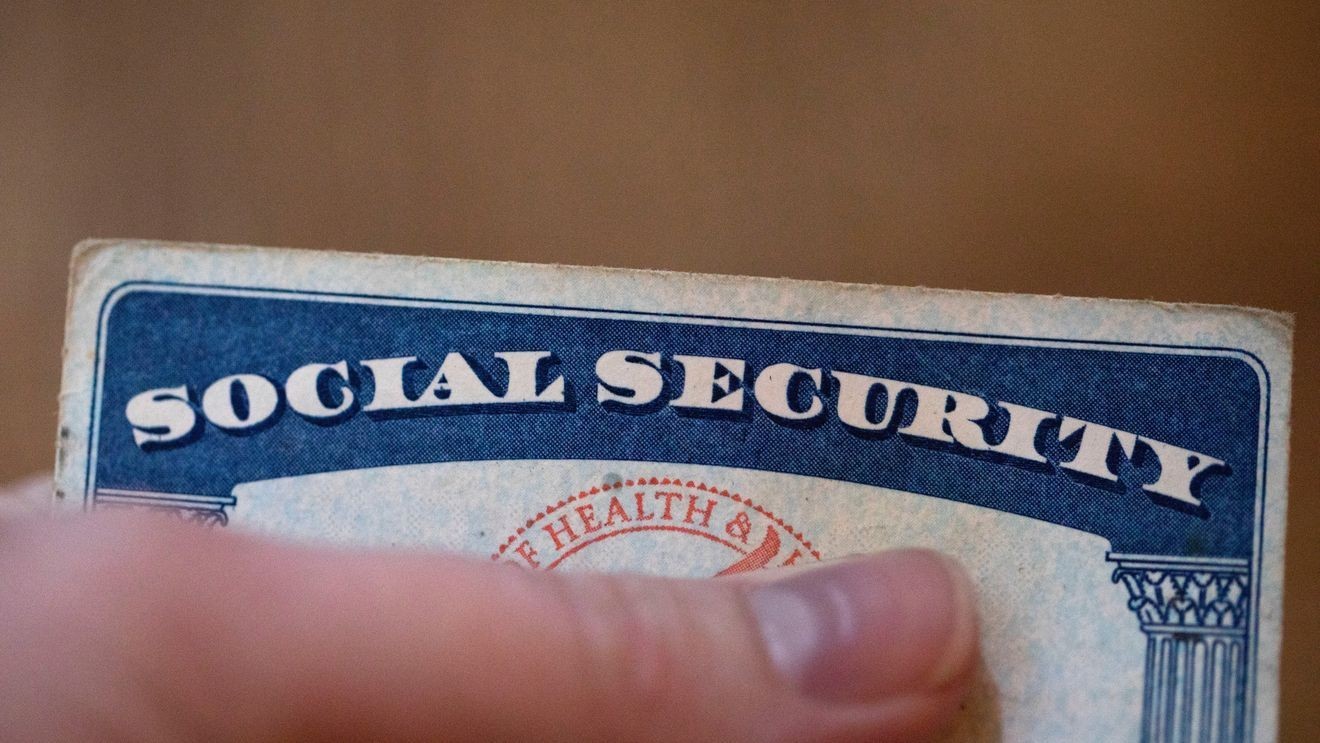
A new report is raising fresh concerns about the future of Social Security, warning that the program’s financial outlook has deteriorated and that millions of Americans could face automatic benefit reductions if Congress fails to act.
According to the latest projections, Social Security’s trust fund is now expected to be depleted in 2032 — one year earlier than previously forecast. If lawmakers do not approve changes before then, benefits could be automatically reduced by roughly 22 percent.
The warning is renewing pressure on Washington to address a problem that policymakers have acknowledged for decades but have repeatedly struggled to solve.
Joining The National News Desk to discuss the issue was Brandon Arnold, Executive Vice President of the National Taxpayers Union.
Arnold said the potential impact on retirees could be significant.
“We could be talking about a catastrophic hit,” Arnold said.
The average Social Security recipient currently receives about $2,100 per month in benefits. A 22 percent reduction would translate to a loss of roughly $450 per month for many retirees.
“That is absolutely enormous,” Arnold said. “It would be tremendously disruptive for your average senior living on a paycheck-to-paycheck basis.”
The new projections come as many Americans continue to grapple with concerns about inflation, housing costs, healthcare expenses, and retirement security.
While the projected shortfall remains several years away, Arnold warned that waiting to act will only make the problem more difficult and expensive to solve.
“There is still a path to protect retirees,” he said. “But every day that goes by, it becomes more challenging.”
The looming funding issue is not new.
For decades, economists, lawmakers, and policy experts have warned that demographic shifts — including longer life expectancy and a growing number of retirees relative to workers — would eventually place significant strain on the program.
Arnold noted that efforts to reform Social Security were being debated more than 20 years ago during the George W. Bush administration.
“It was expensive back then,” he said. “It’s only gotten more expensive as demographics have changed and politicians have continued to sweep this problem under the rug.”
Social Security has long been referred to as the “third rail” of American politics because of the political risks associated with changing a program relied upon by tens of millions of Americans.
But Arnold argued that doing nothing may now be the greatest political risk of all.
“Anyone who says we can’t touch Social Security is effectively owning that 22 percent cut,” he said.
According to Arnold, lawmakers have numerous options available to address the shortfall.
Some proposals involve relatively modest adjustments, such as changes to how annual cost-of-living increases are calculated.
Others would involve larger structural reforms, including raising the retirement age, modifying benefits formulas, or introducing greater reliance on private retirement savings accounts.
“There are small changes, big changes, and everything in between,” Arnold said. “What we need is an adult conversation about this program.”
Supporters of reform argue that acting sooner would allow changes to be phased in gradually, minimizing disruptions for current retirees and future beneficiaries.
Critics of some reform proposals warn that certain changes could shift costs onto workers, reduce retirement security, or place greater burdens on lower-income Americans.
For now, the debate remains unresolved.
But with the trust fund’s projected depletion date moving closer, pressure is growing on both parties to confront an issue that could affect the retirement security of millions of Americans.
“We’ve known about this problem for decades,” Arnold said. “The question now is whether Washington will finally act before the clock runs out.”