
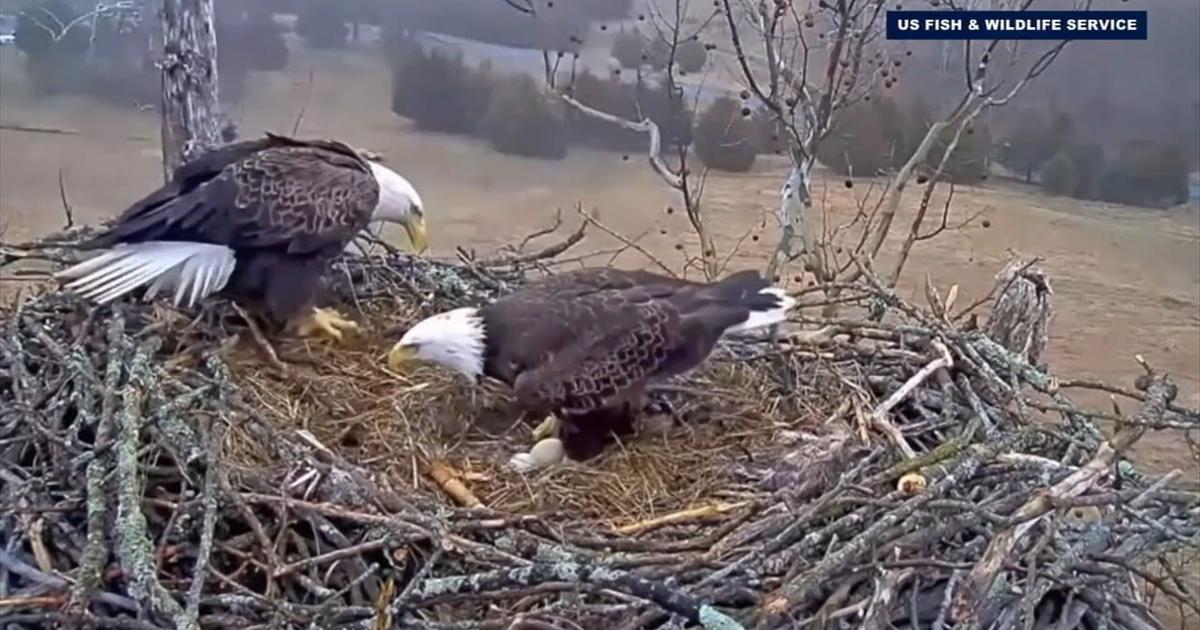
BETHLEHEM, Pa. — The bald eagle has long been our nation’s symbol. It was chosen to be the centerpiece of the United States seal in 1782.
They were pushed to the brink of extinction until a concerted effort was made beginning in the 1960’s to save them.
Less than a month from America’s 250th birthday, this symbol of the nation has taken up a home in the city of Bethlehem.
A pair of nesting bald eagles are raising their babies behind the new Wawa on Route 412.
You can see them if you look above the tree line.
Workers have seen this nesting pair flying in and out all day, and they’re raising at least two babies. It’s a sight you can check out for several more weeks.
Just look into the sky and you might see something special. Young bald eagles are learning to fly under the watchful eyes of their parents, and the customers at Wawa love it.
“It’s white and brown and it’s bald,” said Nakalia LaFortune, a nine-year-old.
The eagles were spotted a few weeks ago off of Hellertown Road. They’re usually flying by their fourth month.
“I don’t see them often myself. I think I see hawks more than eagles actually. So I guess this is pretty special,” said customer Danielle Thompson.
The bald eagle population collapsed by the 1950’s due to a chemical farmers used called DDT. By 1963, there were just 417 nesting pairs in the lower 48 states.
Thanks to conservation efforts beginning in the late 60’s, there are now 71,000 bald eagle pairs across the country.
“We hear a lot of bad things about the environment, It’s good to hear some really promising optimistic things. It’s always exciting to have new life coming around,” said Colleen Donnelly of Havertown.
“I hope the population continues to grow. I hope we do our due diligence as far as pollution and picking up trash that you see in the environment,” said Jake Wooden of Quakertown.
Bald eagles were taken off the endangered species list in 2007.
They’re not as common as hawks however, in the United States.
You should be able to spot the eagles here at the Wawa throughout the rest of the summer.