

The summer solstice arrives at 4:24 a.m. EDT on Sunday, the moment when the sun reaches its northernmost point, bringing us the longest day of the year, the largest gap between sunrise and sunset, at 15 hours 17 minutes and 3 seconds in Boston.
This official start of astronomical summer is not the earliest sunrise nor is it the latest sunset, however. These vary because of the elliptical shape of Earth’s orbit and its axial tilt. Our earliest sunrise occurs around June 14 and the latest sunset is still about five days away.
The solstices mark the times during the year when the Earth’s tilt is at its most extreme, and days and nights are at their most unequal. The summer solstice is the moment when the Northern Hemisphere reaches its maximum tilt toward the sun.
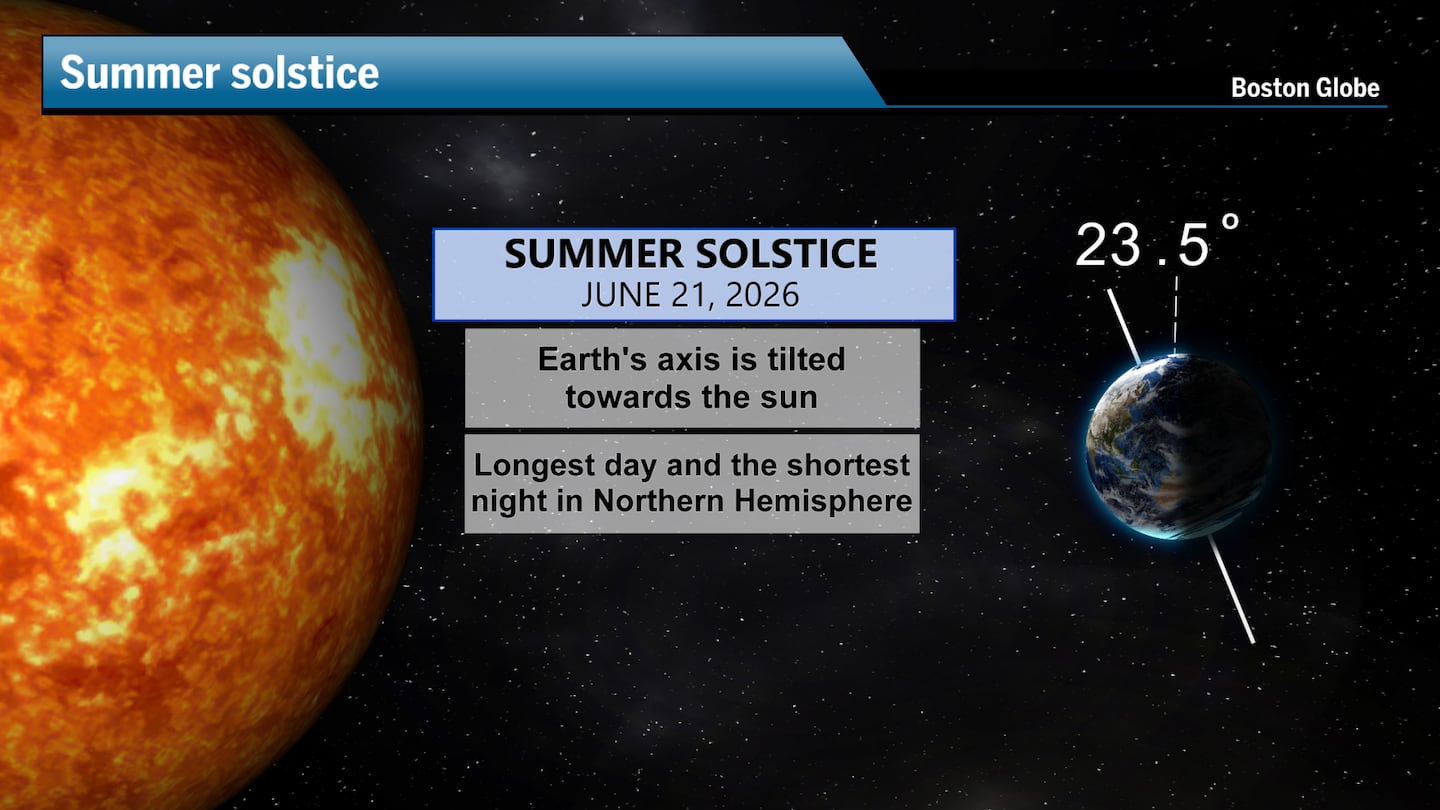 The summer solstice occurs when Earth’s Northern Hemisphere tilts 23.5 degrees towards the sun.Boston Globe
The word “solstice” comes from the Latin words “sol,” meaning sun, and “sistere,” meaning to stop. On Sunday, the sun will appear to stand still as it makes its appearance farthest north from the equator and starting soon, it will ever so slowly begin moving south again, and we’ll slowly lose daylight. The loss of daylight will be very small and almost undetectable for a few weeks. By July 4, the decrease in light will only be five minutes.
Lots of sunlight vs. the warmest day
Although Sunday will give us the most amount of light, it’s not the average warmest day of the year for New England. That holds off until the third week of July because of something called “seasonal lag.” Seasonal lag occurs because the Earth is mostly water and that takes longer to heat up than the land.
Over the next month, here in our spot in the Northern Hemisphere, we will still be gaining more energy than is lost and the air temperature will increase.
Meteorological summer began three weeks ago on June 1. Since then, temperatures have been above average for the month. This Sunday, this weather trend will continue with slightly warmer than normal temperatures in the mid-80s, with a blend of sun and clouds.
Some fun facts: The hottest summer solstice on record sits at 97 degrees, set in 2024 and 2012. The all-time June hottest temperature? We don’t have to go back very far. The mercury soared to 102 degrees on June 24 just last year.
The wettest summer solstice was on a soggy June 21, 2015, when 1.72 inches fell.
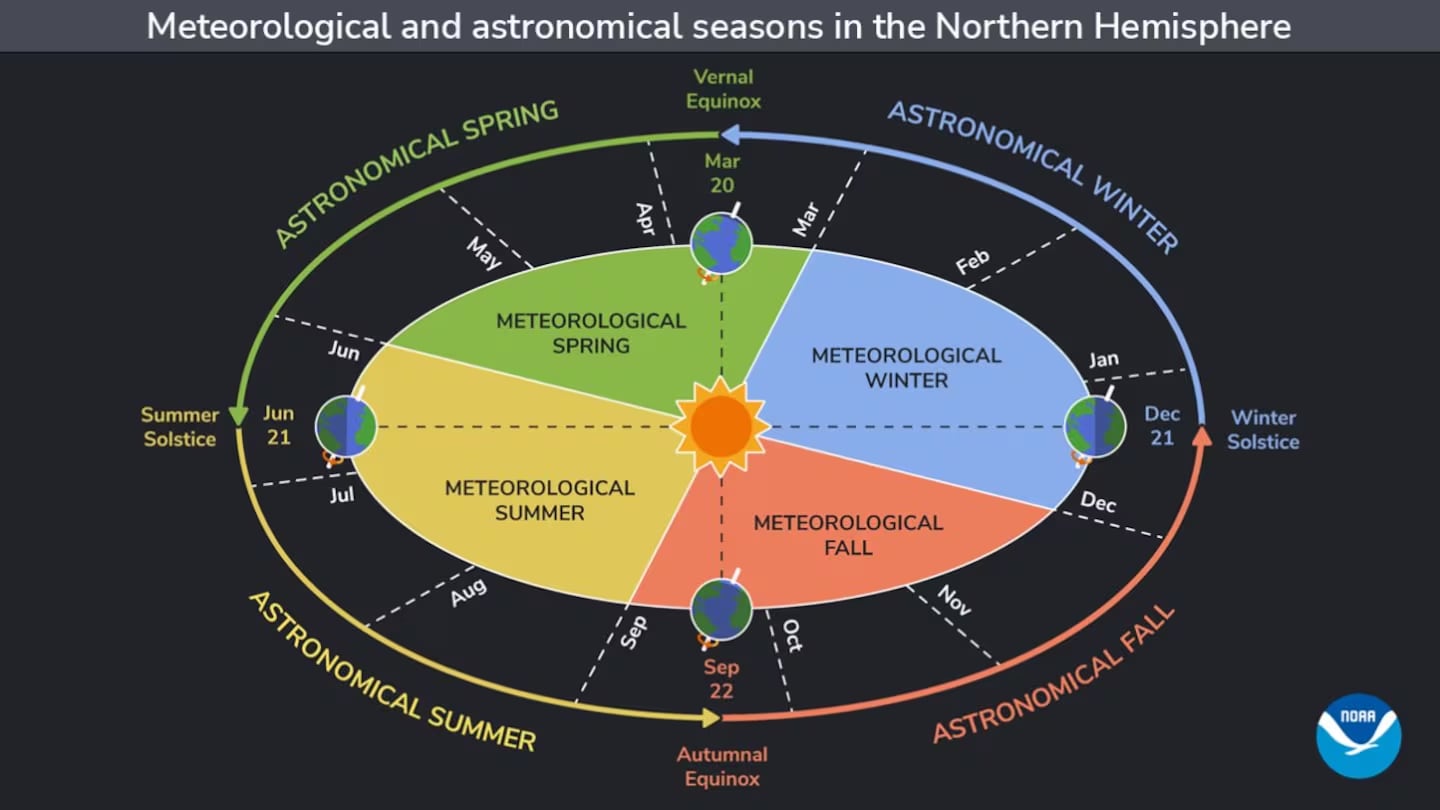 Astronomical seasons are based on the position of the Earth in relation to the sun, whereas meteorological seasons are based on the annual temperature cycle. The Earth’s annual trip around the sun forms the basis for the astronomical calendar in which seasons are defined by two solstices and two equinoxes.NOAA
Lead Meteorologist Ken Mahan contributed to this article.
Sign up here for our daily Globe Weather Forecast that will arrive straight into your inbox bright and early each weekday morning.
Marianne Mizera can be reached at marianne.mizera@globe.com. Follow her @MareMizera.