
“I knew that if I didn’t speak French, I wouldn’t have a choice to stay here.”
For Claire Dooley, who moved from Vancouver to Montreal five years ago, the challenge was never deciding whether she wanted to stay in Quebec. It was figuring out how.
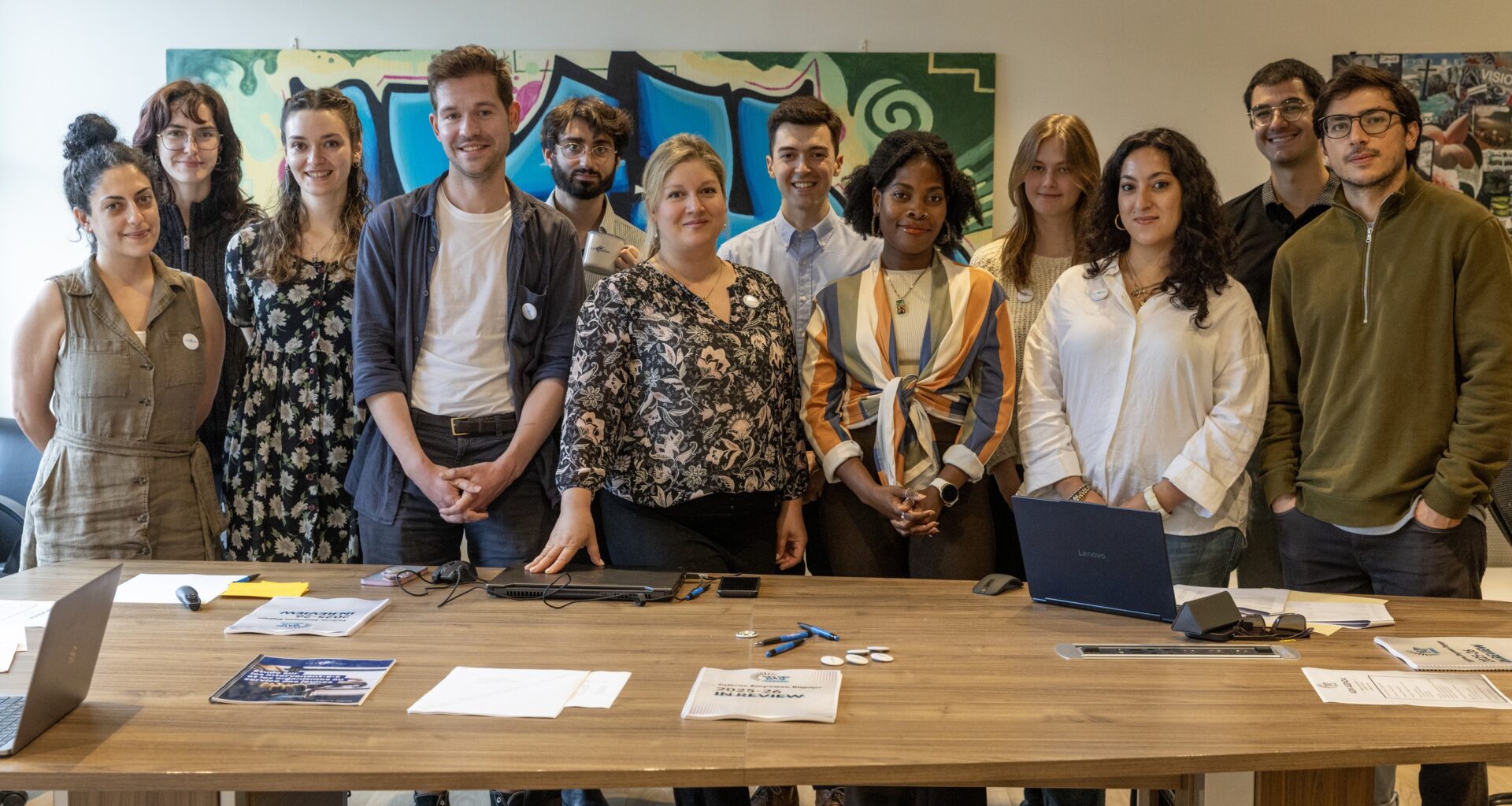
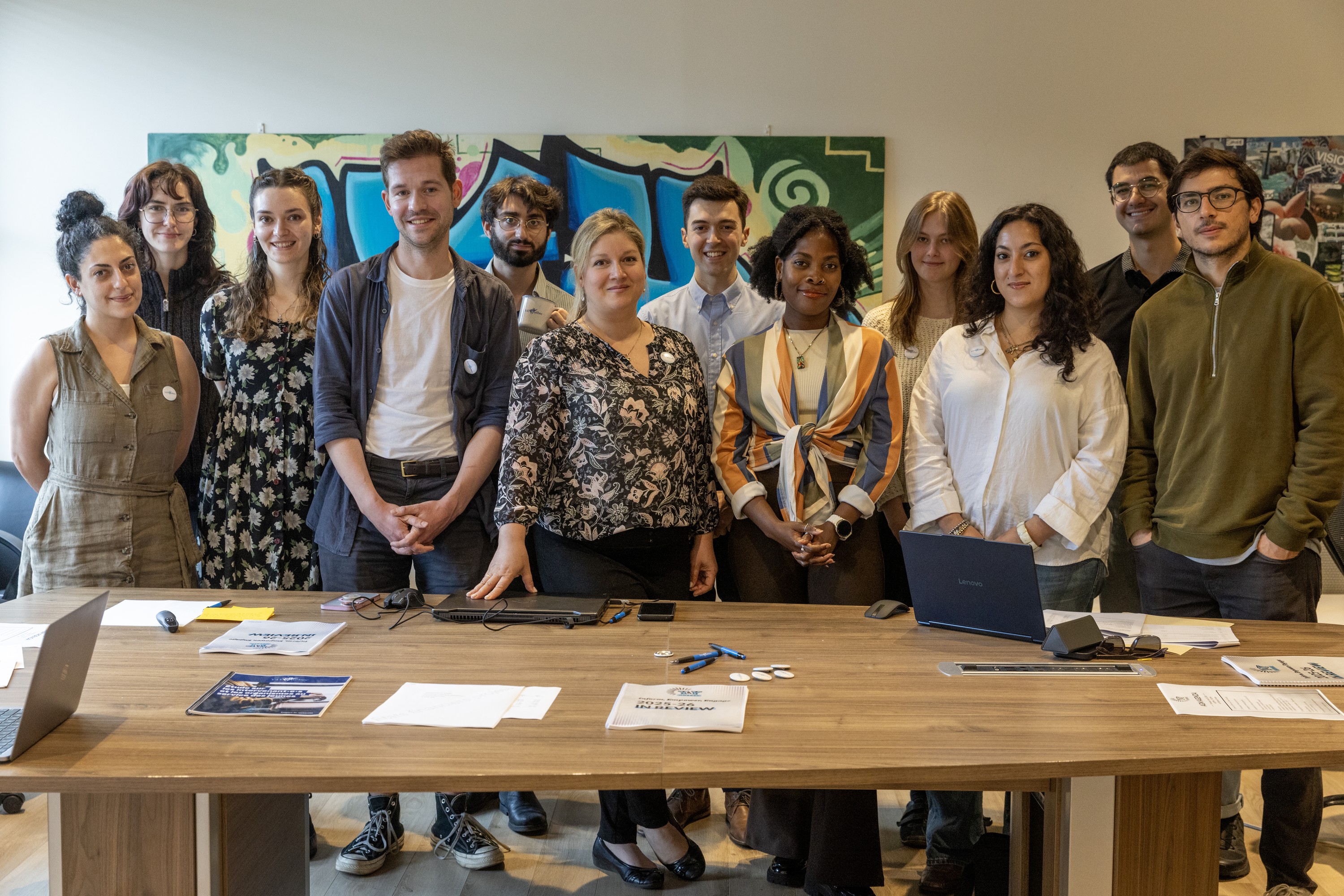 Members of Y4Y gather for a photo prior to their annual general meeting in Montreal on Thursday, June 18, 2026. Many young anglophones in Quebec describe building a future in the province as a balancing act between finding meaningful work, managing rising living costs and navigating language expectations. John Mahoney / Montreal Gazette
Her experience reflects a broader reality facing many young anglophones in the province.
In 2021, English-speaking Quebecers age 15 to 34 had an unemployment rate of 13.1 per cent, compared with 7.8 per cent among francophone youth, according to Statistics Canada.
This data was cited Tuesday by the groups Provincial Employment Roundtable (PERT) and Youth 4 Youth (Y4Y) Quebec, who presented the preliminary findings of their consultations with more than 200 English-speaking youth across the province.
The groups reported, despite having higher levels of education on average, English-speaking youth statistically make less than their francophone counterparts. Among 25- to 34-year-olds, they earned a median income of $33,200, compared with $39,200 for francophone peers.
But the young people behind those numbers were not describing a generation eager to leave Quebec.
Instead, many described building a future in the province as a balancing act between finding meaningful work, managing rising living costs and navigating language expectations.
Among the English-speaking youth consulted for the research, language remained a significant source of uncertainty. More than half said their French skills were inadequate for the jobs they wanted in Quebec, while 73 per cent said they needed additional language training.
For Dooley, improving her French became a practical necessity. She added a French minor to her studies before enrolling in Francization Québec, the province’s government-funded francization program.
“It was really helpful,” she told The Gazette. “But it’s also not accessible for a lot of people.”
Dooley said the intensive schedule of the full-time program can make it difficult to access for students juggling work and school. The classes she attended through the program ran five days a week, from 8:30 a.m. to 4 p.m.
There have also been reports demand for these courses has outpaced their capacity, especially after Quebec enforced new budgetary rules around the program in 2024.
Yet, language remains only one part of a broader set of challenges facing young people entering the workforce in Quebec.
Kathy Baig, spokesperson for YES Employment + Entrepreneurship, which provides career support for English-language workers in Quebec, said youth are entering a labour market that has become increasingly difficult to break into.
“Youth are trying to get that first opportunity, but they can’t get the experience without someone giving them a chance,” Baig said in an interview with The Gazette.
Competition for entry-level positions has intensified, she said, while affordability pressures have forced many students and recent graduates to work while studying or juggling multiple jobs.
Editor’s Picks
Participants in the consultations also spoke about the difficulty of becoming financially independent. Many reported relying on parents or guardians for support as they navigated school, work and rising housing costs.
For anglophone youth, uncertainty about French can make an already difficult transition even harder.
Samantha Restall remembers feeling that uncertainty herself.
Despite attending French immersion and spending most of her life in Quebec, she questioned whether her language skills measured up when she entered a largely French-speaking workplace.
“I definitely felt not French enough,” Restall said.
Baig said that sentiment is one she hears often from young job-seekers.
“Young people often underestimate their own abilities, particularly when it comes to working in a second language,” she said.
For some, opportunity has meant leaving Quebec — at least temporarily.
Giovanni Gherman, a Montreal native, moved to Ottawa after graduation in search of broader career opportunities.
Still, he hopes the move will not be permanent.
“I do want to come back,” he said.
His experience reflects a broader tension facing many young anglophones in Quebec: not whether they want to stay, but whether they feel they can build the lives and careers they want in the province.
Like many of the young people interviewed, Gherman sees French as a reality of life in Quebec, rather than an obstacle.
“It makes me uncertain,” he said of his language skills. “But language is something that you can continue to learn and develop.”
That outlook reflects a broader theme that emerged throughout the research.
Young anglophones described enrolling in French-immersion programs, taking francization courses, and using language-learning apps. Rather than rejecting Quebec’s linguistic reality, many spoke about trying to adapt to it.
“The youth that we spoke to want to be part of that process,” said Adrienne Winrow, executive director of Y4Y Quebec.
For Dooley, the question has never really been whether she wants to stay.
She does.
Asked whether she feels she fully belongs in Quebec yet, she pauses.
“Give me a couple more years.”