
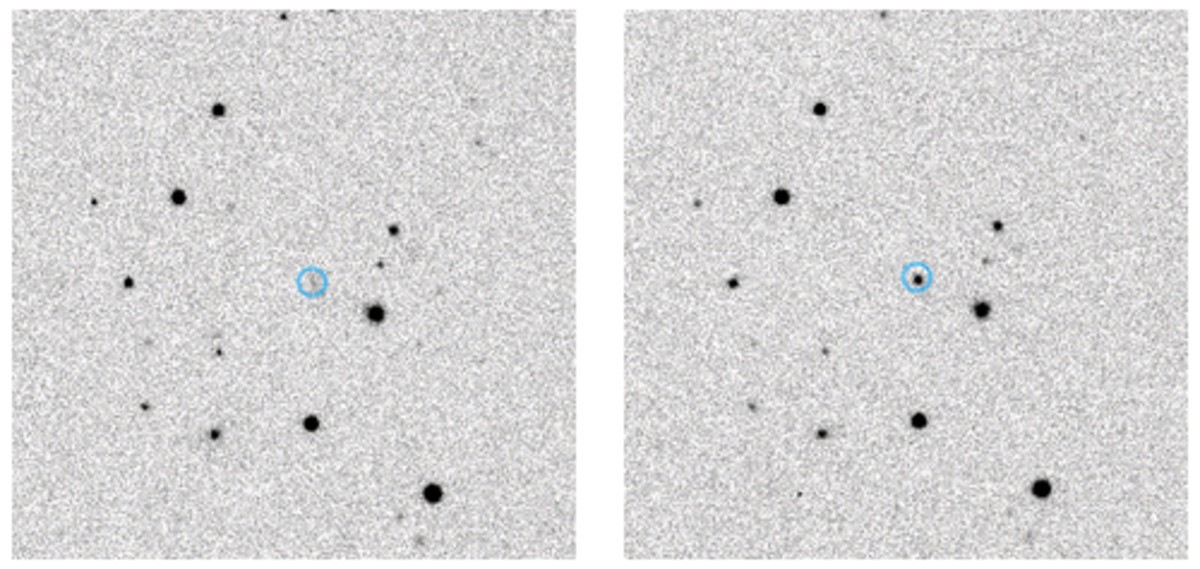
When astronomers first observed iPTF14hls in September 2014, they identified it as a supernova and expected it to dim within 100 days. Instead, it kept erupting. Over approximately 1,000 days, its brightness peaked at least five times, varying by as much as 50 percent. Rather than cooling as expected, it maintained a near-constant temperature of about 5,000 to 6,000 Kelvin. A check of archival photographs found an explosion in the same location in 1954.
Since 1954, the star has exploded six times. It is estimated to be “at least 50 times more massive than the Sun.” The debris expansion rate is slower than any known supernova by a factor of six — as if the star is exploding in slow motion. Proposed hypotheses include antimatter burning in the stellar core, a pulsational pair-instability supernova, and a magnetar with an evolving magnetic field.
“None of the theories nor proposed hypotheses fully explain all the aspects of the object.” The star eventually faded into a remnant nebula after about 1,000 days, in 2018. The Hubble Space Telescope continues to image the location.