
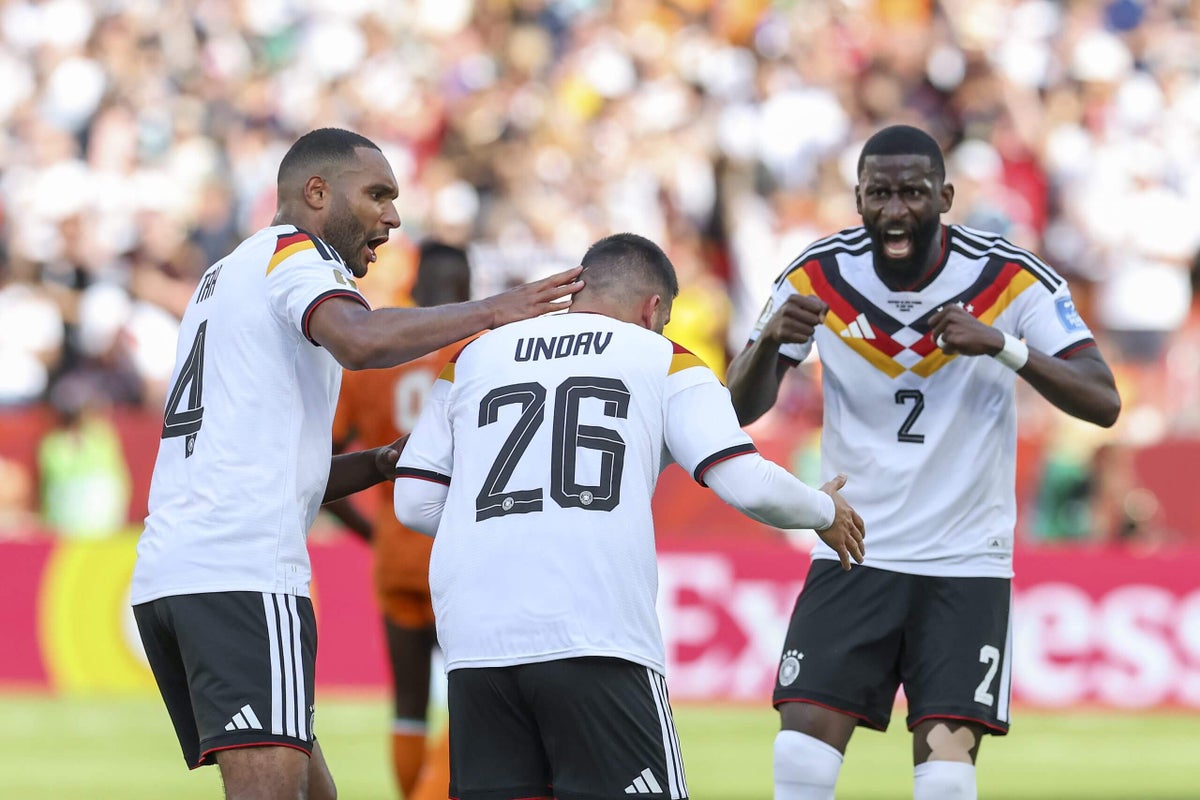
Germany do not have a formidable World Cup reputation for nothing.
The four-time winners were wobbling badly against a disciplined and polished Ivory Coast, trailing 1-0 to Franck Kessie’s goal and looking ragged.
Enter Deniz Undav. The Stuttgart striker plundered two second-half goals, including a stoppage-time winner, to earn his side a place in the last 32.
Here, The Athletic analyses the major talking points.
Do Germany look like winners?
This game is only the second comeback win of the tournament after South Korea against the Czech Republic. For most of it, Germany did not look like the inevitable winners, and perhaps that stands them in good stead for the knockout rounds.
Their attacking play was poor in the first half, as Nagelsmann’s midfielder-heavy system struggled against Ivory Coast’s 4-1-4-1. Neither Florian Wirtz nor Jamal Musiala could get on the ball in dangerous spaces, and besides the underlapping of left-back Nathaniel Brown, Germany had few runners or players creating space. Their best moment? A Kai Havertz header off Joshua Kimmich’s cross, forcing a good save from Yahia Fofana.
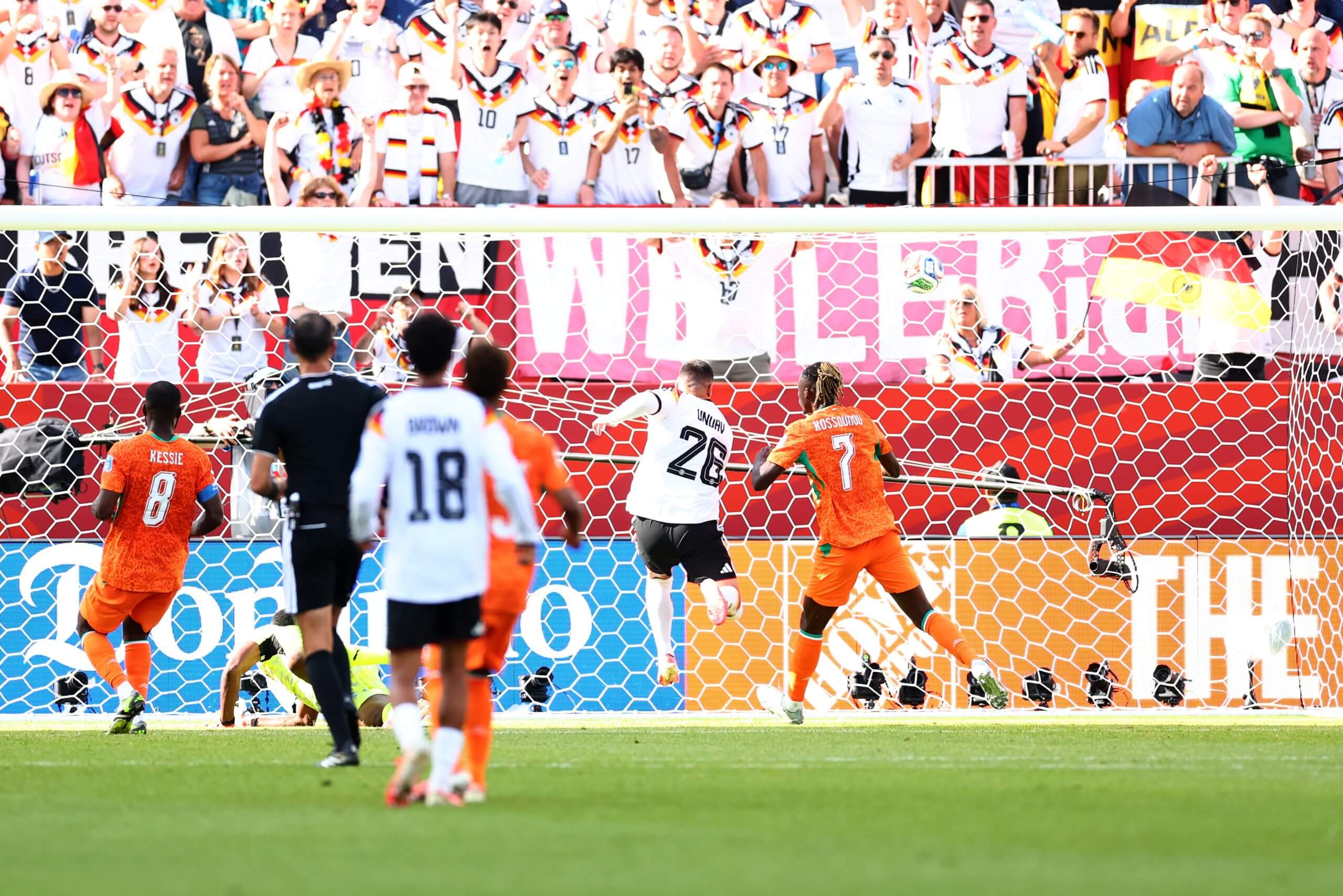
They looked significantly better following the triple substitution on 60 minutes, which saw the introduction of Deniz Undav into a strike partnership with Havertz, and meant they finally had targets in the box. Only eight minutes after coming on, two of the substitutes combined, with Nadiem Amiri crossing for Undav to tap in.
After that, Ivory Coast retreated to preserve the point, though could have won it late on when Simon Adingra got his feet tangled on a counter-attack. The Germany winner was surgical in its execution: Felix Nmecha fired a pass through midfield and into the feet of Undav, who scored on the swivel.
At the very least, Germany will not replicate the group-stage exits of 2018 and 2022. Unconvincing but effective is subtle shades of Argentina four years ago.
Liam Tharme
How good was supersub Undav?
The equaliser and winner were obviously good moments for Nagelsmann. One of his substitutes provided the assist for the first goal, scored by another substitute. It was a moment typical of both players: Amiri’s cross was measured and teasing, Undav’s finish was ruthless. Only Harry Kane (36) scored more goals in the Bundesliga last season than Undav (19) and this game illustrated those finishing skills.
Well done to Nagelsmann for that change; removing Musiala for Amiri would have been especially unpopular had it gone wrong.
But Undav and his double were the real story. His career began in the German fourth tier and he was playing in the 3.Liga six years ago. He was plucked from that level by Union Saint-Gilloise and set on a trajectory that now, many years later, has him as his country’s premier ‘Break Glass for Emergency’ option at a World Cup.
Deniz Undav equalises for Germany (Robert Cianflone/Getty Images)
He delivered; how Germany needed him and his brand of finishing. But the analysis is still mixed — positive because Nagelsmann had a player capable of snaffling opportunities like that and snatching victory from defeat, but less so because he needed Undav in the first place, to alter the perception of such a loose and often stale performance.
Seb Staff0rd-Bloor
How strong are Africa’s teams?
Ivory Coast’s hearts may have been broken at the end, but this was still an impressive performance — maintaining a theme of African sides delivering at this tournament.
The continent is represented by 10 teams this tournament, twice as many as in 2022, a deserved increase given in qualification spots as part of the tournament expansion.
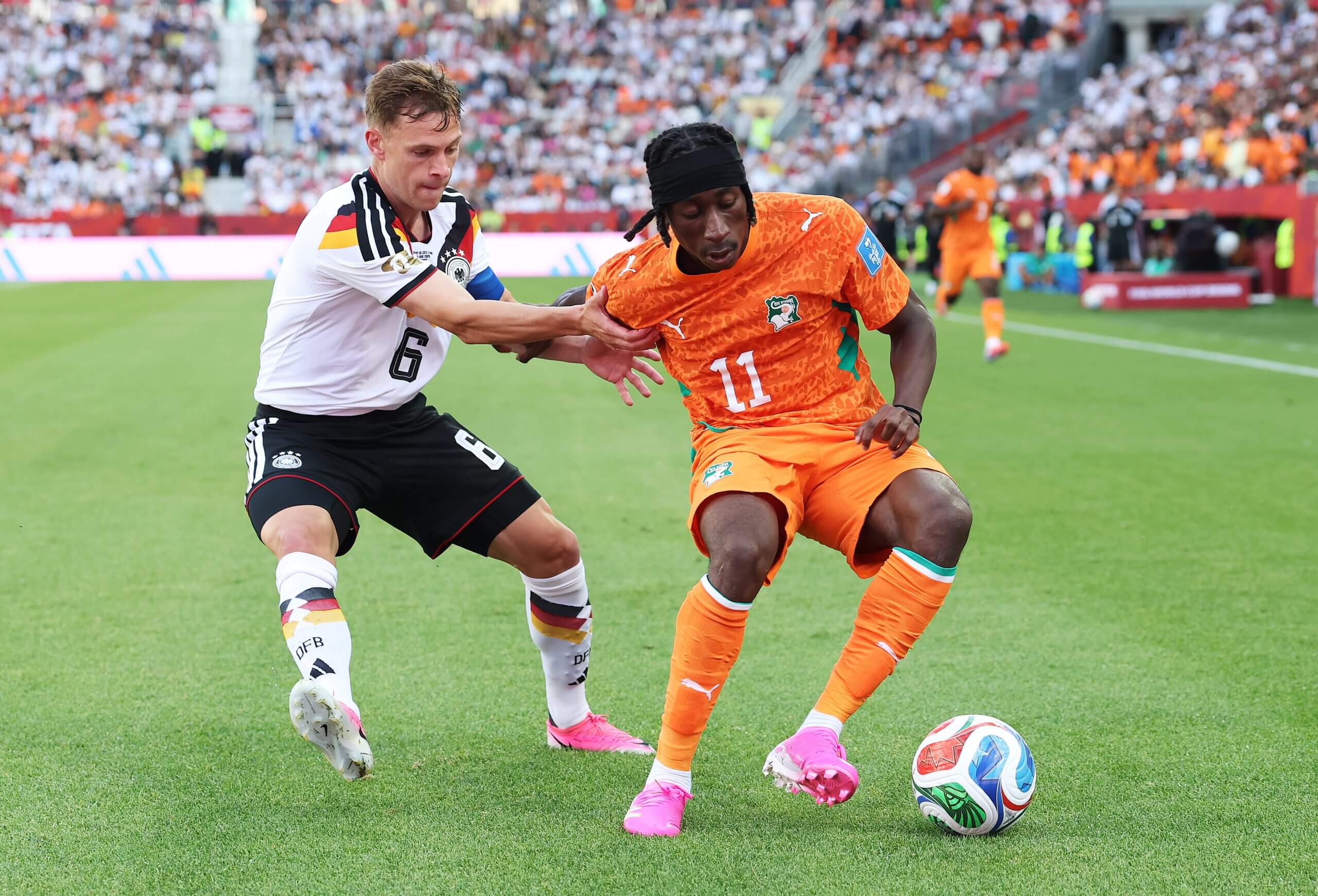
Ivory Coast outplayed Germany for much of the first half, defending in a 4-1-4-1 and attacking with a 4-3-3, threatening with pace on the break and direct passes and, in particular, exposing Joshua Kimmich’s defensive vulnerabilities at full-back. They should expect to seal a place in the last 32 against Curacao on Thursday.
Morocco, who made history as the first African side to make the World Cup semi-finals four years ago, are on four points. They caused Brazil plenty of problems in the opening round and outclassed Scotland in a 1-0 win — with Ismael Saibari’s winner on 70 seconds the earliest in tournament history.
If Senegal can replicate their first-half display against France, a game they eventually lost 3-1, they will take points from Norway and Iraq. Then there are Cape Verde, the debutants, who held Spain to a 0-0 draw. Egypt earned a point over Belgium and DR Congo recovered from 1-0 down to draw with Portugal. Ghana, too, have set themselves up for the knockouts, winning late on against Panama.
Liam Tharme
Is Germany’s defence a big problem?
Ultimately, Ivory Coast exposed the flaw that everyone knew Germany had.
Before and after Kessie’s first-half goal, Nagelsmann’s side looked vulnerable whenever they turned the ball over, with their defensive players then too easily isolated against attackers who thrived in space. That was a theme throughout the game and was suggestive of the balance issues that have stalked Germany for most of the last decade.
The goal they conceded, while well-crafted, was soft. Germany’s first choice side is full of deference to ball progression and chance creation, but at the cost of basic security. Kimmich’s failure to stop the cross that eventually led to Kessie’s tap-in was a case in point; the ball should never have got as far as it did.
Joshua Kimmich was given a torrid time by Yan Diomande (Alexander Hassenstein/Getty Images)
Germany concede a lot of goals like that — a basic mistake, followed by a panicked muddle and then the ball in the net.
What’s the answer? Given the defenders available and Nagelsmann’s preference for a ball-playing pivot of Aleksandar Pavlovic and Nmecha in midfield, the answer might have to be sacrificing one of the attacking players behind Havertz for another central midfielder, with the aim of providing more general security. Realistically, that would be Leroy Sane, but given that the attack hardly looks potent as it is, that could end up creating a new problem.
Seb Stafford-Bloor
How did Wahi fare after his turbulent week?
Ivory Coast’s Elye Wahi started on the bench after a tumultuous week in which the 23-year-old was initially barred from entering Canada over match-fixing allegations.
The Athletic exclusively reported on Wednesday that Wahi had been arrested by French anti-corruption police on May 29, less than two weeks before the start of the World Cup, by investigators probing whether the forward had deliberately received a yellow card in a Ligue 1 match against Metz 12 days earlier.
A spokesperson for the Marseille public prosecutor confirmed that a 23-year-old footballer had been arrested as part of an investigation into “organised fraud, organised sports corruption, handling of proceeds of crime and money laundering”.
Wahi has not been charged with any crime, meaning he was permitted to travel to the World Cup by French authorities. Multiple sources with knowledge of proceedings, speaking anonymously due to the sensitivity of the ongoing situation, told The Athletic that the investigation was still ongoing.
After the publication of The Athletic’sstory on Wednesday morning, the Ivorian Football Federation initially announced on Thursday that Wahi had not been permitted to enter Canada, stating that the striker would remain in the United States.
However, subsequent petitions on Thursday resulted in Wahi eventually receiving approval to travel to Toronto.
Wahi had started Ivory Coast’s opening win over Ecuador, but was dropped to the bench on Saturday as manager Emerse Fae switched formation from a 4-4-2 to a 4-3-3.
In the end, Wahi was not needed, with Evann Guessand brought on instead when Ange-Yoan Bonny was replaced in the 75th minute.
Asked whether the visa u-turn had affected his selection, Ivory Coast coach Emerse Faé said: “No, no he didn’t have any issues in regards to his prep time. Even when we were in Philadelphia, he coached and trained with us. I needed to make choices to put up front. I opted for a profile that was more physical.”
Jacob Whitehead
When do these teams play next?
Group E; Thursday, June 25
Curacao vs Ivory Coast: 4pm ET (9pm BST), Philadelphia, U.S.
Ecuador vs Germany: 4pm ET (9pm BST), New Jersey, U.S.