
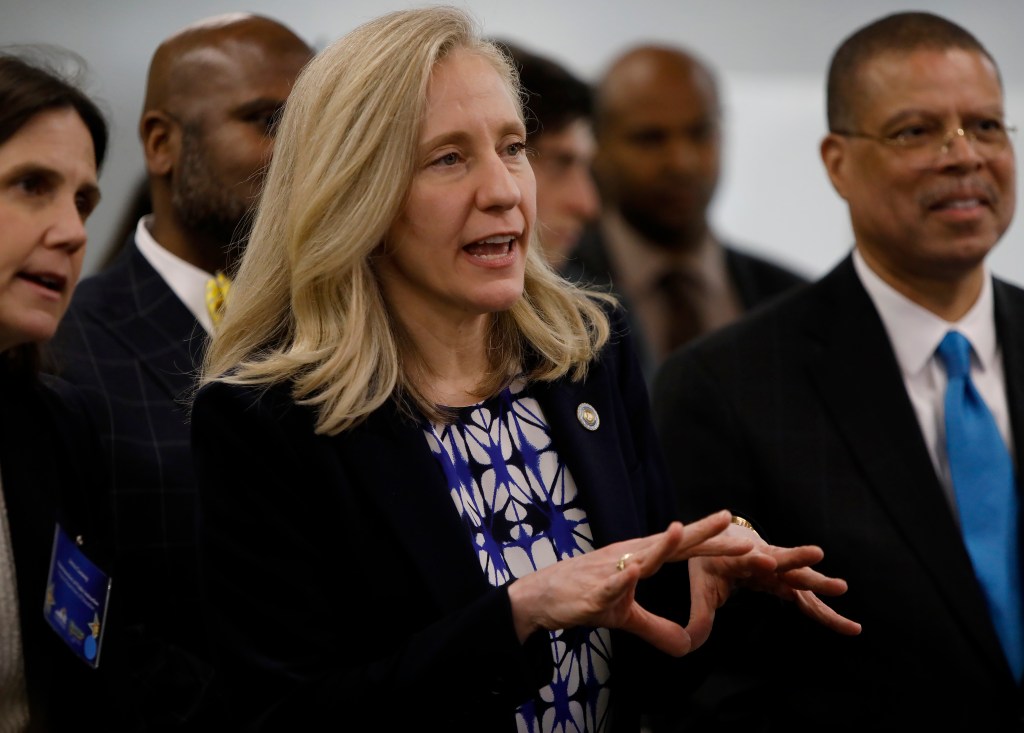
It’s time for Virginians to cut back on how often they water lawns or wash their cars, as the state faces its worst drought since 1941, Gov. Abigail Spanberger said Thursday.
Despite recent rain, Virginia has received about 8 inches less rain than average, and groundwater levels and water flow in the state’s rivers and streams are low.
Richmond and Henrico County draw their water from the James River, where the U.S. Geological Survey reports water levels are 3.68 feet, down from 6.7 feet at the same time last year and 3.8 feet on June 18, 2024.
Reservoirs generally are in fairly good shape across the state. The water level at the Swift Creek Reservoir, which accounts for much of Chesterfield County’s supply, stands at 176.2 feet, down from the 177-foot level that’s considered normal.
But groundwater, the source for much of Virginia east of Interstate 95 as well as for most rural parts of the state, has reached emergency conditions in much of the state, including the Northern Neck, Middle Peninsula, Southside Virginia, Shenandoah Valley, Northern Virginia and Hampton Roads.
All in all, the combined effect of rainfall, reservoir levels, stream flows and groundwater status means almost all of the state is now under a drought warning condition.
That means the onset of a major drought is imminent.
It is when the Department of Environmental Quality says water utilities should cut out nonessential flushing of water lines and tell customers to begin voluntary water conservation measures.
“All Virginians can play a role in protecting our water supply during this historic dry period,” Spanberger said.
“As communities across the commonwealth — particularly in Southside and central Virginia — continue to be impacted by these conditions, it is important that we take commonsense steps to meet this challenge,” she said.
Farmers have been hit especially hard, Spanberger said.
Dry soil conditions and lack of rain have delayed planting, and even when seeds are in the ground, yields are likely to be down.
The U.S. Department of Agriculture has declared drought disaster conditions in dozens of Virginia localities, which clears the way for emergency loans and other help. State officials are coordinating to ensure help is available.
In the Richmond region and extending west to Albemarle County and Lynchburg, the lack of rain has reached emergency levels, while groundwater levels are at the warning level. Reservoirs are considered full, but stream flow is assessed at a drought watch condition.
Spanberger said steps Virginians should take now include cutting back lawn and garden watering to alternating days, and to water only between dusk and dawn.
It’s time to turn off ornamental fountains and limit filling swimming pools, she said.
In addition, Virginians should limit washing their cars, trucks and paved surfaces.
“Taking simple steps now to reduce our own consumption can help prevent more serious restrictions as we move into the summer months,” said Secretary of Natural and Historic Resources David Bulova.
If drought conditions continue, the governor could declare a Drought Emergency by executive order.
That would mean mandatory water-use restrictions for certain users and industries.
The last time that happened was in the summer of 2002, when then-Gov. Mark Warner declared a Drought Emergency.
© 2026 Richmond Times-Dispatch, Va.. Visit www.timesdispatch.com. Distributed by Tribune Content Agency, LLC.