
Golf has long prided itself on discipline and emotional control, with players expected to behave with restraint even when a round is falling apart.
That tradition, however, has increasingly been questioned as the modern game evolves and as officials respond more firmly to recent incidents of poor conduct, including a high-profile breach of standards at the U.S. Open.
Paige Spiranac sparks a frenzy once again with a form-fitting outfit on the golf course
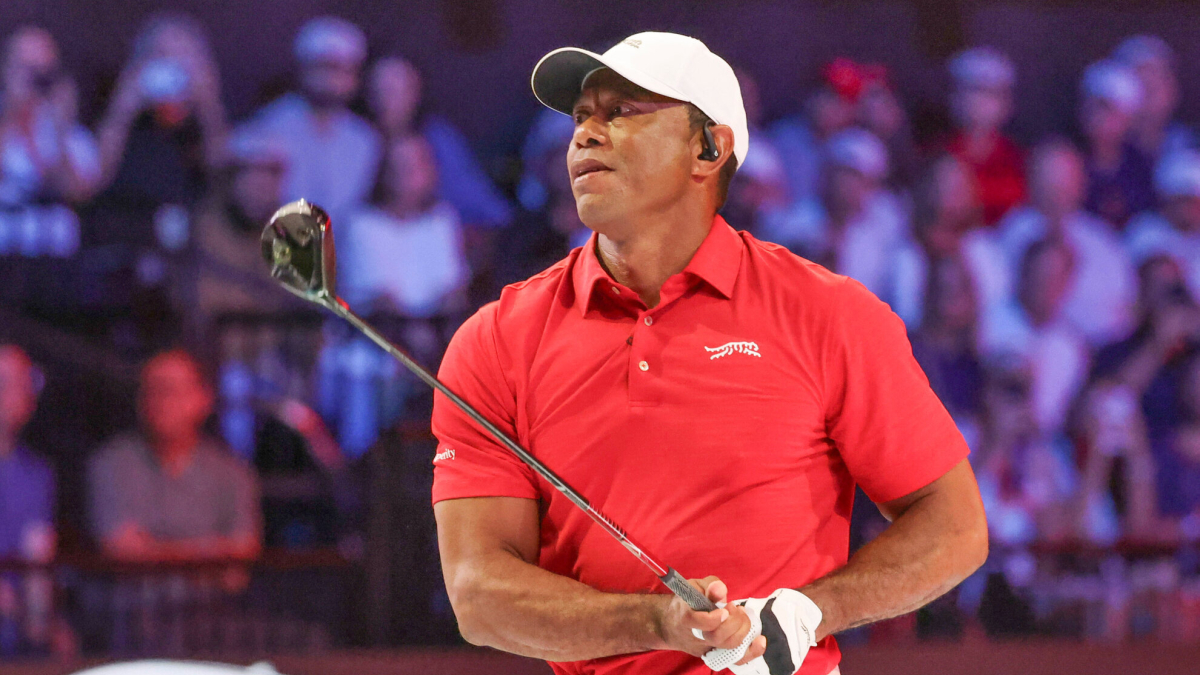
In the middle of this renewed debate, Golf Channel analyst Brandel Chamblee reignited controversy by arguing that Tiger Woods played a major role in shaping today’s more emotionally expressive, and sometimes volatile, culture on tour.
Chamblee suggested that Woods, while undeniably the sport’s biggest star and most influential figure of the modern era, also helped normalize visible frustration and frequent profanity during competition.
“Tiger Woods is the greatest player ever. We all love him. Everybody got rich off of him. But he was one of the most profane golfers to ever play the game,” Chamblee said on the Golf Channel.
“Nobody ever criticized him. He skated through. They did (criticize him) to some extent. They did. But it wasn’t prolific. And it wasn’t pervasive. And he wasn’t held to account, not the way Wyndham Clark was last year when he broke that locker.
Chamblee says Woods helped reshape golf’s emotional boundaries
Chamblee described Woods as both a generational talent and a player whose on-course intensity changed expectations across professional golf.
He claimed that many younger players grew up watching Woods compete at his peak, absorbing not only his shot-making but also his emotional responses under pressure.
According to Chamblee, that influence has carried forward, contributing to a tour environment where outbursts, club throws, and audible profanity are more common and more visible than in previous eras.
While acknowledging that Woods was criticized at times, Chamblee said it was not on the same scale as the attention directed at more recent incidents involving other professionals, reinforcing his point about uneven enforcement of conduct expectations.
One of the most widely circulated examples of Woods’ on-course frustration came during the 2022 Masters, when he was caught on a live microphone reacting to a missed shot with an expletive.
The moment spread quickly across social media, yet no public disciplinary action was reported by tournament officials or the PGA Tour.
By the mid-2000s, Woods’ emotional reactions had become a familiar part of televised golf coverage. His outbursts were often picked up by microphones, leading networks to rely more heavily on audio delays to prevent explicit language from reaching audiences uncensored.
Golf writers at the time noted that his presence alone created challenges for live broadcasting due to the unpredictability of what might be picked up on mic.
Outside of the course, Woods has also faced ongoing legal scrutiny. Florida prosecutors have sought access to medical and prescription records connected to his 2017 DUI arrest, including drug screening results and treatment documentation.
His legal team has objected, citing privacy rights, while earlier filings involved attempts to obtain pharmacy records in Palm Beach. Woods has pleaded not guilty to the misdemeanor charges and continues to contest parts of the investigation as legal proceedings move forward.