
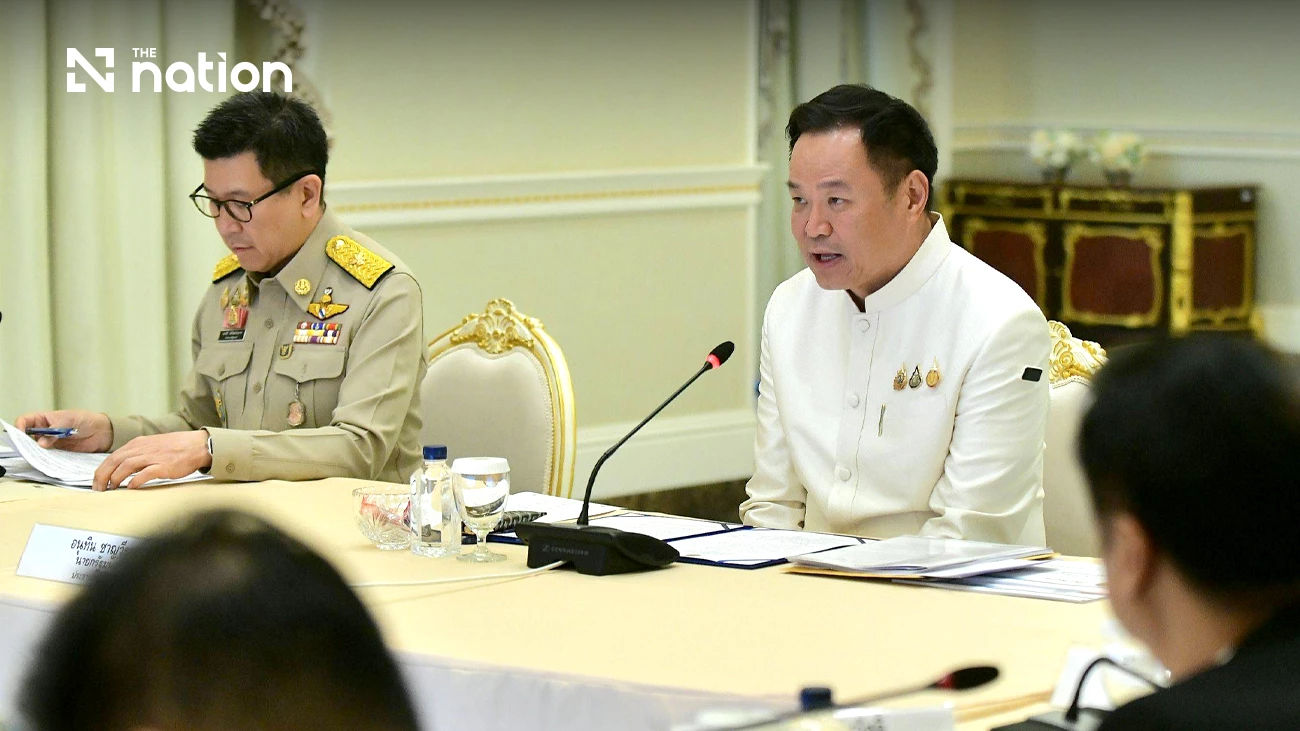
He added that the plan would mark a turning point in lifting Thailand’s economic potential through integrated work between state agencies and private businesses.
The private sector, he said, would not merely present problems but would help solve them and drive policies into real action.
Four engines to drive growth
Ekniti said the government had divided the economic drive into four main engines.
The first is new investment, focusing on future industries under the Thailand Fast Pass scheme.
This includes AI and digital technology, data centres to help Thais access technology at lower cost, Thailand’s development as a financial hub for both money and capital markets, the green transition through clean energy, and the upgrade of the automotive industry towards modern automation systems.
The second engine covers tourism, high-value healthcare, food security, processed agricultural industries, the creative economy, and the upgrade of wholesale and retail trade into local communities.
It also includes accelerating free trade agreement negotiations so Thailand can become a strategic base for companies seeking access to global markets.
The third engine focuses on human-capital development and innovation, which the government sees as a national agenda.
This includes improving education in science, technology, engineering and mathematics, expanding research and innovation, supporting start-ups, and upskilling and reskilling workers, especially in AI-related knowledge and digital skills.
The fourth engine aims to unlock state-sector obstacles by using digital government to make doing business easier, improve transparency, combat corruption, and reform state structures and public-asset management.
Deputy prime ministers responsible for each area will work with the private sector to identify and remove obstacles holding back growth.
Ekniti said the strategy would be divided into “quick-win” and “big-win” projects.
Quick-win projects must show results within six months to one year by using existing resources to deliver rapid benefits for the government, private sector, SMEs and the public.
Each working group will prepare details for submission to next month’s meeting.
Big-win projects will focus on structural problems that require more time and resources, with the aim of completion within the government’s four-year term.
Investment target raised to 30% of GDP
The government aims to raise investment as a share of GDP from the current 22% to 30%.
Ekniti said this would be a key factor in lifting long-term economic growth.
Each of the four economic pillars will set key performance indicators aligned with this investment target to build investor confidence and translate investment into real activity in target industries.
The government also sees FTA negotiations with major economies, including the European Union, the United States, Canada and the United Kingdom, as crucial to opening markets and balancing Thai exports so the country does not depend too heavily on any single market.
The plan also aims to help smaller businesses enter the global trading system.
At present, Thailand has only around 7,000 major exporters out of more than 20,000 business operators. Over the next four years, the government wants to spread income and opportunities more widely into communities.
Legal barriers to be removed
Pakorn Nilprapunt, Deputy Prime Minister for legal affairs, said his role in the JPPCC would focus on removing legal obstacles for businesses.
He said he had already held preliminary talks with the Joint Standing Committee on Commerce, Industry and Banking (JSCCIB) to make business operations easier and help generate more income for the country.
The initial focus will be on amending subordinate laws, followed by amendments to Acts where necessary.
The government also plans to link state data systems to make public services more convenient and efficient, while reducing opportunities for corruption.
For delayed public construction projects, the Prime Minister has ordered legal improvements to government procurement procedures to make them more efficient and accurate.
Pakorn said about 90% of Thai laws are permission-based. The government will therefore work to reduce procedures and requirements by revising subordinate laws that set licensing conditions.
It will also push more public services onto electronic platforms. The legal structure is already in place, while the Facilitation Act is awaiting publication in the Royal Gazette.
Human-capital development accelerated
Yodchanan Wongsawat, Deputy Prime Minister and Minister of Higher Education, Science, Research and Innovation, said the country must urgently develop its workforce.
He said Thailand would struggle to attract foreign investment if it lacked skilled workers ready for modern industries.
The focus will be on advanced skills to support new industries establishing production bases in Thailand.
The government will also help people already in the labour market adapt and improve productivity.
Yodchanan said the government would lay the foundations for AI knowledge nationwide, while creating advanced AI talent to support the transformation of future industries.
Per-capita income target
Danucha Pichayanan, Secretary-General of the National Economic and Social Development Council, said Thailand must accelerate economic restructuring if it wants to become a high-income country.
He said high-income economies currently have average annual per-capita income of around US$15,000, or about 490,000 baht.
Thailand’s current per-capita income is only around US$8,000-9,000, or about 260,000-290,000 baht per year.
In the next 12 years, Thailand’s per-capita income could exceed US$15,000, depending on inflation and economic expansion, he said.
Danucha said Thailand’s economic potential would need to reach 5.5% if the country is to become high-income, supporting GDP growth of around 5%.
He said the public-private cooperation plan should help restructure the economy through investment and the removal of regulatory obstacles.
“The restructuring will also have to consider the 20-year national strategy, but the details may not need major changes because the strategy already sets out a fairly comprehensive direction. Some minor adjustments may be needed, and the target already includes making Thailand a high-income country,” Danucha said.