
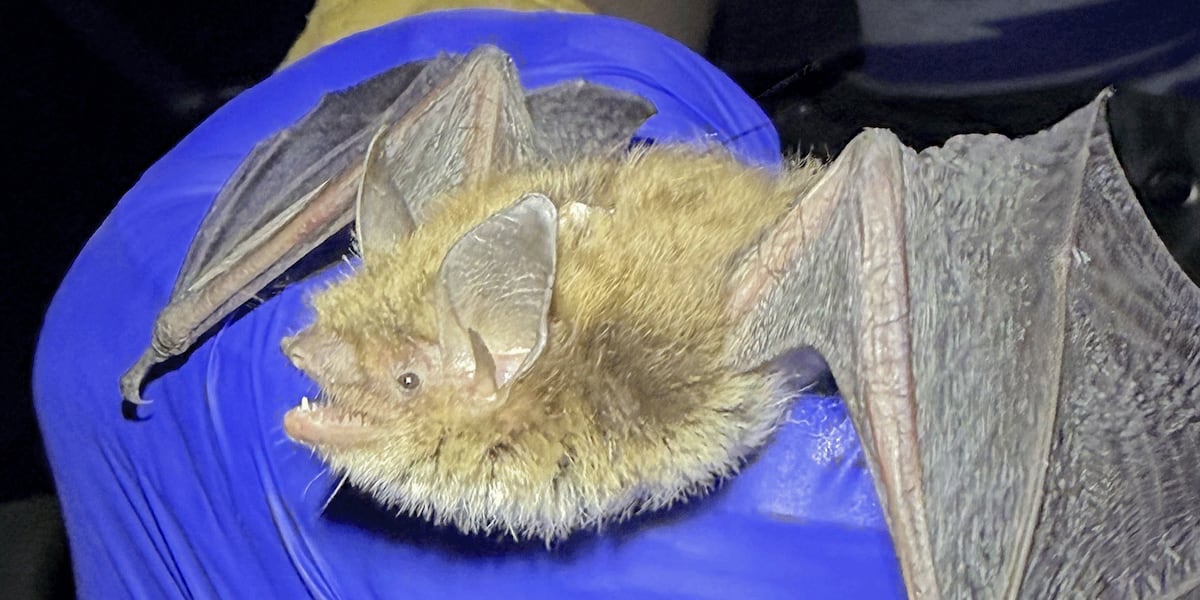
LINCOLN, Neb. (KOLN) – Nebraska Game and Parks announced Monday the first confirmed sighting of a live little brown bat in eastern Nebraska since 2016.
On May 24, the cave-dwelling species flew into a mist net set by researchers at Platte River State Park. Game and Parks biologists and researchers from the University of Nebraska at Omaha and the University of Nebraska at Kearney captured the bat over Decker Creek while conducting a spring migration survey.
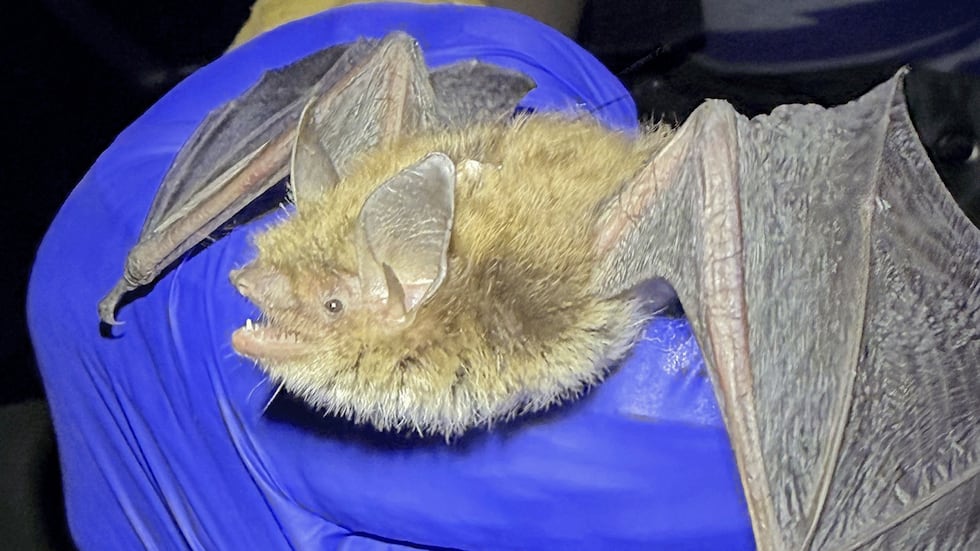 A researcher holds a little brown bat, the first confirmed sighting of a live little brown bat in eastern Nebraska since 2016.(Nebraska Game and Parks Commission | Nebraska Game and Parks Commission)
“The little brown bat has always been rare in eastern Nebraska,” said Brett Andersen, Game and Parks wildlife diversity program manager, who caught the bat. “In the Panhandle, we would catch 50 to 100 a night in some places, but in eastern Nebraska, I think I had only ever caught one since I started netting in 2014.”
Nebraska’s State Wildlife Action Plan, the Nebraska Natural Legacy Project, lists the little brown bat, one of 13 bat species in Nebraska, as a Tier I species. This designation is for the state’s most at-risk species, meaning the little brown bat is vulnerable to extinction and is a critical priority for state conservation.
Game and Parks said cave bats, like the little brown bat, have become even more difficult to find in recent years after the fungal infection white-nose syndrome (WNS) was found in Nebraska in 2015. WNS has caused significant population declines across North America, and bat researchers have noted that cave bats have all but disappeared in eastern Nebraska.
Andersen said the captured bat likely lives locally and did not migrate from another state.
“The surrounding states are all WNS positive, and these bats don’t typically move long distances,” Andersen said. “While the chances of catching them in a mist net are low, we are more likely to find them by conducting cave and mine surveys. Unfortunately, because we only know of a few mines in eastern Nebraska, it is difficult to determine whether there are any more left.”
Researchers will continue monitoring and surveying, and the information gained through these efforts and the Motus project could aid in the recovery of little brown bats and other at-risk bat species in Nebraska.
Click here to subscribe to our 10/11 NOW daily digest and breaking news alerts delivered straight to your email inbox.
Copyright 2026 KOLN. All rights reserved.