

This NASA illustration shows the Swift Observatory in space. The space agency is planning a mission to launch another spacecraft that will help boost the space telescope’s orbit to prevent it from falling to Earth.
Provided by NASA
Swift space telescope falls faster to Earth than expected
The Swift Observatory is in a region of space known as low-Earth orbit nearer to the atmosphere, which is also where the International Space Station resides.
All spacecraft in that region can expect to fall to lower altitudes if they don’t have propulsion systems to counteract atmospheric drag and maintain their orbits. But the Swift Observatory has fallen faster than NASA has anticipated because of increased solar storms since fall 2024.
NASA plans mission to rescue Swift
NASA could allow the Swift Observatory to fall back to Earth, where it would harmlessly burn up as it careened into the atmosphere.
Instead, the space agency is planning a mission to rescue the telescope and extend its mission for several more years.
A successful mission would mark the first time that a commercial robotic spacecraft captured a government satellite that — unlike other spacecraft like the Hubble Space Telescope — was never meant to be serviced in space. The unprecedented venture, NASA leaders say, would also test a new capability that could be used on other missions while negating the need to spend even more money to replace the observatory.
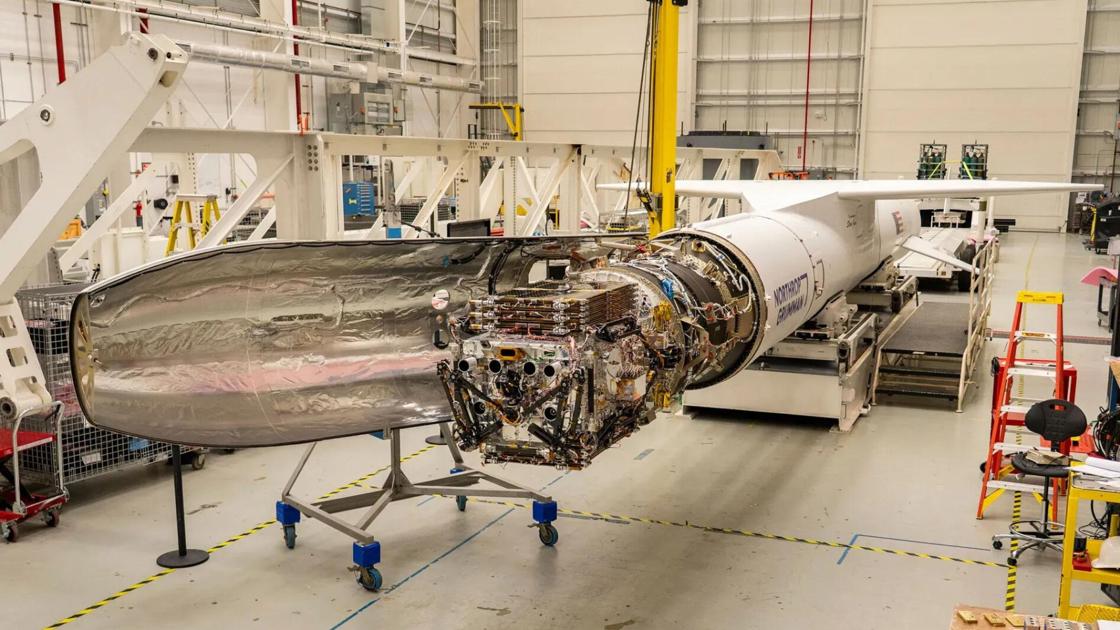
To accomplish the risky feat, NASA will need a spacecraft designed to capture and raise the orbit of the Swift Observatory, and a rocket to launch it into space, according to the agency. In the meantime, mission teams on the ground are keeping Swift at least 185 miles above Earth, where the boost mission has the best chance of success, NASA said.
Arizona aerospace company races to develop rescue spacecraft
The spacecraft that will attempt to rescue the Swift Observatory was developed by Katalyst Space, an aerospace company based in Flagstaff, Arizona, which was awarded the $30 million contract in September 2025.