
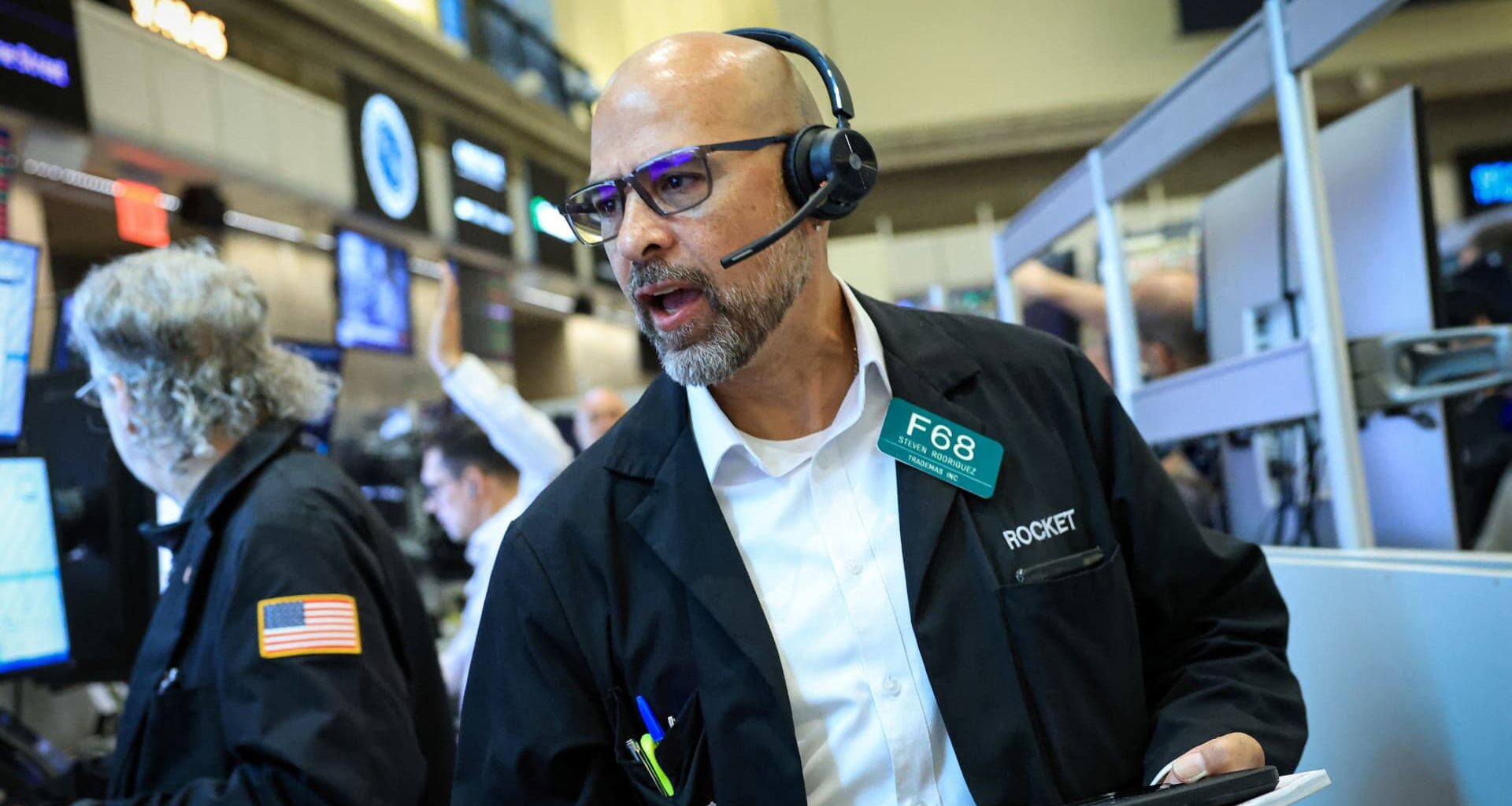
Futures-options traders work on the floor at the New York Stock Exchange’s NYSE American (AMEX) in New York City, U.S. June 24, 2026.
Brendan McDermid | Reuters
S&P 500 futures were little changed Thursday night after a decline in tech giants weighed on the broad market index.
S&P 500 futures traded near the flatline, as did Nasdaq 100 futures. Dow Jones Industrial Average futures rose by 45 points, or about 0.1%.
Investors continued moving out of tech names on Thursday, causing the Nasdaq Composite to pull back 0.46% and notch its first four-day string of losses since February. The S&P 500 slipped 0.01%. On the other hand, a rotation into healthcare, financial and industrial names boosted the blue-chip Dow 71.72 points, or 0.14%, higher.
Asia-Pacific markets were set to trade mixed on Friday, tracking a divided session on Wall Street.
Japan’s Nikkei 225 was poised to fall, with the Chicago futures contract at 71,710 and its Osaka counterpart last trading at 71,250 compared with the index’s previous close of 72,366.34.
Hong Kong Hang Seng index futures were at 23,005, lower than the index’s last close of 23,076.91.
In Australia, futures traded at 8,755, slightly higher than the S&P/ASX 200‘s previous close of 8,748.70.
In Thursday’s regular session, Apple lost 6% after announcing price hikes on its iPads and MacBooks, pointing to rising demand for memory and storage. Microsoft dropped more than 3% after announcing higher prices on its Xbox gaming consoles, citing surging component costs. Fellow tech giants Alphabet and Meta Platforms also closed the session lower.
“This is a market that we think is quite set up to test conviction. We have this flavor of market leadership in specifically semiconductors and memory chip leaders,” said Julia Hermann, global market strategist New York Life Investment Management, on CNBC’s “Closing Bell” on Thursday afternoon. “This is a structurally more volatile flavor of tech than we saw in the Magnificent Seven for the past several years.”
Hermann added: “Then you pair that with an astonishing repricing in Fed expectations — not just the what, but the why of why the Fed might be hiking next — and you have this environment, which is candidly a recipe for volatility.”
Thursday’s losses compounded the Nasdaq Composite’s existing week-to-date declines. The index is currently on pace to end 4.4% lower, followed by the S&P 500, which is down 1.9% on the week. The Dow, on the other hand, is bucking the trend with a week-to-date gain of 0.7%.
On Friday morning, traders will watch out for May’s preliminary wholesale inventories and June’s final University of Michigan sentiment reading.