
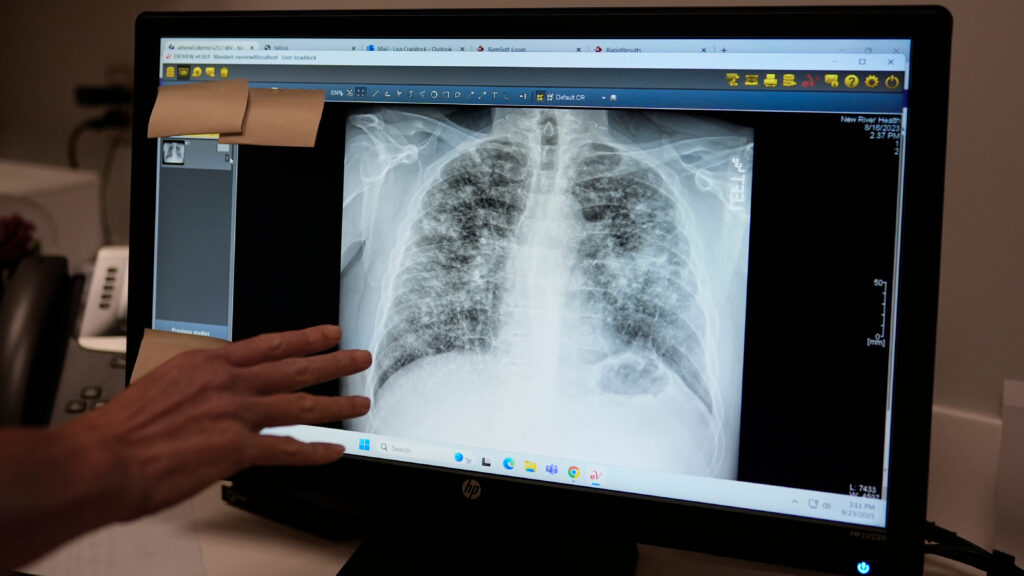
The Food and Drug Administration has granted breakthrough designation to two devices that use generative AI to interpret chest X-rays and draft the radiology reports typically written by human radiologists.
Machine learning systems have long analyzed images like X-rays and CT scans. But more recently, large vision language models have ushered in a new capability. Instead of highlighting a spot for a radiologist to review and write up, generative AI can process the entire image and draft many of its findings for a radiologist to review — a technological advancement that is challenging traditional validation and regulatory frameworks.
In March, one breakthrough designation went to Cognita, a Stanford researcher-founded startup acquired late last year by the large radiology practice Radiology Partners. Radiology AI company Aidoc announced its own breakthrough designation Thursday for a tool called First Read, specifically when it is used to detect and describe four life-threatening findings.
STAT+ Exclusive Story
Already have an account? Log in

This article is exclusive to STAT+ subscribers
Unlock this article — and get additional analysis of the technologies disrupting health care — by subscribing to STAT+.
Already have an account? Log in
Individual plans
Group plans
To read the rest of this story subscribe to STAT+.