
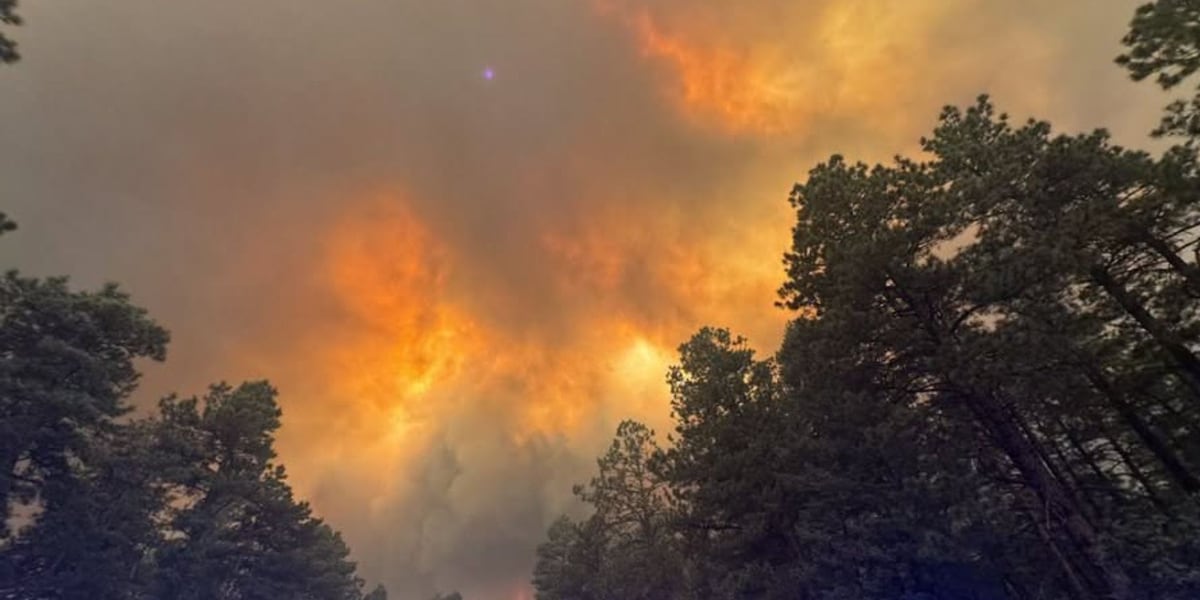
COLORADO SPRINGS, Colo. (KKTV) – On Monday, with multiple wildfires burning across the state, 11 News spoke with Scott Landes, supervisor for the State of Colorado’s Meteorology and Prescribed Fire Unit at the Air Pollution Control Division.
He described best practices for dealing with the impacts of wildfire smoke.
KKTV: When we have days like this where there is just a lot of smoke in the air, who is most at risk and what is the impact for those people?
Yeah, when we have heavy smoke, you know, folks who suffer from heart and lung disease are really going to feel those impacts. So we want to definitely get the word out to people who do have those health issues.
But also older adults, children, all are going to be feeling the impacts from that smoke. Now, if the smoke gets heavy enough, it’s not going to be confined just to those populations.
We’re talking about everybody starts getting impacted because fine particulates can be really difficult to deal with. You’re breathing these tiny little particles in. They get into your respiratory system and even the healthiest people can start having some issues.
KKTV: Can a short term event like these fires have lasting health impacts on people or does it usually fade away once the smoke is gone?
Well, there are plenty of health studies that are looking into that long term exposure to wildfire smoke.
We do know that exposure to smoke can last several days after the event, but there are some new studies going in when you’re exposed to very high levels of smoke that could last even longer.
KKTV: What can people do to help mitigate some of the impacts of smoky conditions in their homes?
If you do have an air conditioning system that recycles the indoor air, generally that’s kind of the best scenario for you. For people who may not have an air conditioning system, you can get a portable air cleaner with filters in there that will take the smoke out of the air.
So when people do have those, we ask them to have kind of a designated room that they can call their clean air room. So you can shut all the doors and windows in that one room, have that air filtration system running.
It can guarantee that you’re going to have some clean air to breathe in.
And then, of course, there are some do-it-yourself systems on our website, colorado.gov/airquality.
You can find a link to a way where you can build kind of a box filter fan. So you can actually put a filter system, attach it to a box fan, and that can also help clean the air in your home.
KKTV: Are there any little things like putting wet towels down under door jams or on window sills that people can do?
I would say that that can be helpful, generally, but if you start getting to the point where you can’t get the air clean in your home, for those that are able to, relocating might be a good idea if you can get to an area that has, you know, cleaner air quality.
But even going someplace like maybe the mall or the grocery store, at least for a few hours, gets you out of that environment.
[When air quality improves] then we ask people, open up your windows and you can kind of, you know, filter the air out of your home, which might have been compromised by wildfires.
KKTV: Are there things that people can do if they’re walking or driving to mitigate how much smoke they’re inhaling?
Well, an N95 mask does work. It will keep out wildfire smoke, so if you do happen to have one of those masks, they will be helpful.
But generally, we’re asking for, you know, people who are going to be outside during these kind of events, just take it slow. If you’re planning on doing a run, probably not the best idea.
Maybe just take a walk instead. You don’t want your lungs to have to work harder, especially when you’re breathing in wildfires.
KKTV: For people who are particularly vulnerable, who use a respirator or have really severe lung issues, is relocating the only trusted way to deal with smoke like this?
That’s generally the best way if you cannot be in a clean environment in your home. If you can, if you have the means to relocate, that’s a good idea.
But always consult with your personal physician. They’re going to have the best answers for you.
KKTV: Is there any guidance on when and where masking is more or less helpful? Is it worth masking indoors?
Well, I think it’s one of those things where I listen to your body. If you are inside and you’re still having issues breathing, just not feeling well, that could help.
Again, but we do, you know, urge folks, check with your personal physician. They’re going to have the best answers for you, but, you know, take any of those actions you can to, you know, try to protect your health.
Copyright 2026 KKTV. All rights reserved.