
If a wheelchair is broken, a child may have to stay home and miss school, therapy, and time with friends. An adult with a broken wheelchair may miss work or medical appointments. They may become bedridden, increasing the risk of pressure ulcers or pneumonia. If a wheelchair can’t be repaired for weeks or months, users’ lives are put on hold and their health is jeopardized.
Yet too many Massachusetts residents find themselves stuck with wheelchairs that need fixing while repairs are delayed for months.
At an April 2025 legislative hearing, Massachusetts assistant attorney general Ann Lynch said the attorney general’s office consistently gets complaints about wheelchair repairs that take anywhere from two to nine months. A national survey published by the U.S. PIRG Education Fund in 2022 found that 40 percent of respondents estimated their wheelchair repairs took on average at least seven weeks.
Get The Gavel
A weekly SCOTUS explainer newsletter by columnist Kimberly Atkins Stohr.
Disability rights advocates shared with the editorial board quarterly performance reports that wheelchair repair companies provided to MassHealth. National Seating and Mobility wrote that in the second quarter of fiscal 2026, median repair time was 59 or 63 days, depending if the wheelchair was manual or motorized, but 682 repairs took longer than 60 days. Numotion reported that over two quarters in fiscal 2025, median repair times ranged from 28 to 34 days, with more than 100 repairs each quarter taking over 60 days.
Legislation pending in the House and Senate Ways and Means Committees would require wheelchair manufacturers to repair wheelchairs more quickly. Lawmakers should pass a version of the bill before formal sessions end in July. Wheelchair users have been pushing the legislation for several years, and they shouldn’t have to wait any longer to fix a broken system.
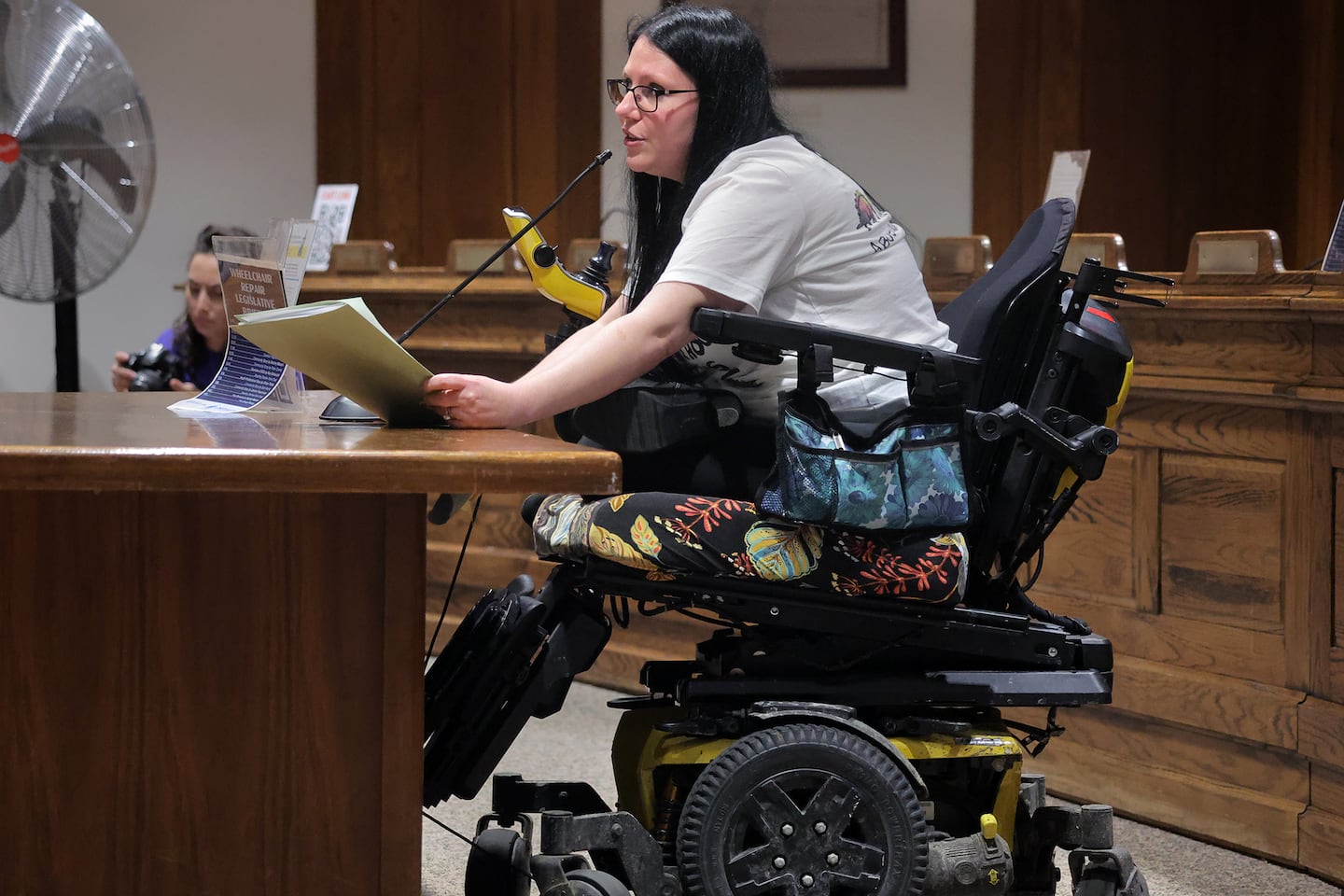
Destiny Maxam, a community organizer with the Disability Policy Consortium, told the editorial board that she landed in the hospital with pneumonia after her lungs weakened when she was bedridden while waiting nine weeks for a wheelchair repair. Wheelchair users face repair issues every day, Maxam said. “It’s not the rare exceptions. They can’t get to work, can’t access the community … many people are stuck in bed.”
The House and Senate versions of the bill have slightly different provisions. One important piece that should be included in any final bill is the elimination of insurance requirements for prior authorization, at least for routine repairs costing under $1,000, which is the standard used by MassHealth. Another important piece is the imposition of a timeline during which repairs must be completed. For example, the House bill requires repairs be made within 10 business days of a request but pauses the clock while waiting for parts to be delivered or for prior authorization.
This type of timeline isn’t unprecedented. MassHealth, in 2024, established a similar time frame, giving companies an extra $1,000 if repairs were made within 12 calendar days. Connecticut implemented a law in 2024 requiring wheelchair suppliers to respond to a repair request within one business day and make repairs within 10 business days.
Other provisions under discussion would extend the warranty period for new wheelchairs from one to two years; allow consumers to sue if they suffer losses because the law is violated; and require manufacturers to provide a loaner chair if repairs take more than 10 days.
The wheelchair industry opposes a timeline. Wayne Grau, executive director of NCART, the National Coalition for Assistive and Rehab Technology, blamed insurance companies for delays and said eliminating prior authorization alone will reduce wait times by about 20 days. He suggested insurance should bear the costs of addressing the problem, similar to the way MassHealth already pays for loaner and backup chairs and pays for transportation for patients to bring their wheelchairs to a repair shop, saving technicians a trip.
But the companies that profit from selling these chairs are the ones who should ensure that repairs are made in a timely manner, rather than shifting the burden to insurers, whose costs are paid by customers.
Ideally, wheelchair repairs — like any appliance repair — could be handled through a competitive marketplace, where someone who isn’t getting good service at one facility can go elsewhere. The problem is two private equity-backed national companies — Numotion and National Seating and Mobility — dominate the market and have, over time, bought up most of their competitors. Medicare rules make it hard for new companies to enter the industry. As the U.S. PIRG Education Fund has documented, low insurance reimbursement rates lead to companies losing money on repairs, so companies are incentivized to prioritize sales over repairs.
One promising program is a MassHealth initiative that reimburses Stavros, a disability services organization, for doing simple wheelchair repairs for clients in Western Massachusetts. If similar initiatives could be set up through insurers statewide, that could help eliminate backlogs at Numotion and NSM.
But ultimately, the companies that sell these wheelchairs must also fix them in a timely manner, so wheelchair users can resume their lives.
Editorials represent the views of the Boston Globe Editorial Board. Follow us @GlobeOpinion.