
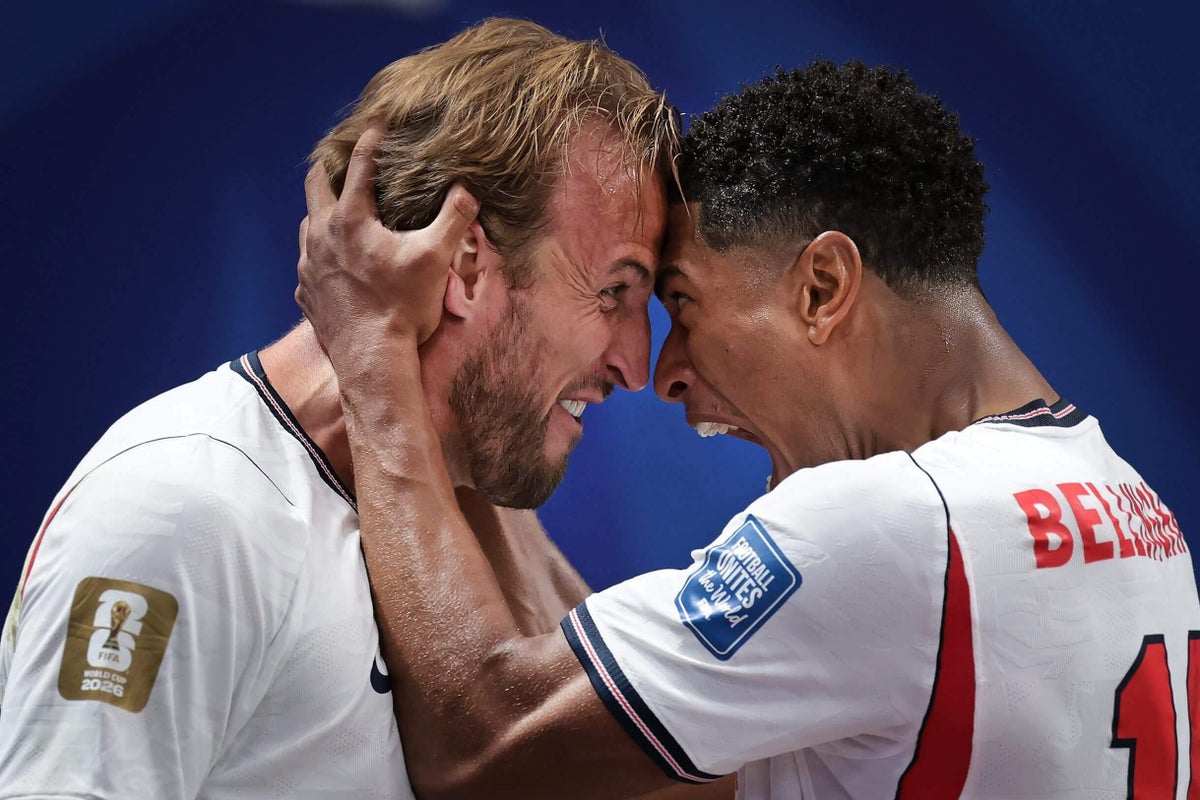
This is one of the classic situations in football. The underdogs are 1-0 up. The favourites are dominating the game; they might not get one goal, but if they do, a second will surely follow.
Midway through the second half in Atlanta on Wednesday, the two options here seemed like a 1-0 DR Congo win or a 2-1 England one. Thanks to the brilliance of Harry Kane, it was the latter. But how did DR Congo go a goal up in the first place?
In his pre-match press conference, England head coach Thomas Tuchel was very clear about what he expected from the opposition.
“They are very compact, a very physical and well-drilled team — probably in 5-3-2, sometimes 5-diamond-1,” he said. “Off the ball, they are disciplined; they change between a high press and a low block. They are very dangerous on counters, very direct in their approach. They’re not shy to play long balls into depth and make it a running game, and make it into second balls.”
But DR Congo came out and played completely differently. Their 4-1-4-1 system was nothing like the formation they’d used in the group stage and was more similar to the system Ghana used, one which caused England serious problems in a goalless draw on matchday two. There was no sign of them playing long balls, they didn’t really threaten on the counter-attack, and this wasn’t about second balls. DR Congo came to play.
Get free access to the most comprehensive World Cup coverage in The Athletic app
Their shape was partly inspired, it seems, by the way Ghana had played — and England’s punishment for failing to break down Carlos Queiroz’s side that day is other opponents in this tournament are going to play that way too. “We wanted to shut down the centre better, to cut off the path to (Elliot) Anderson, who is very important to building the game,” said DR Congo manager Sebastien Desabre. “So we decided that our strikers had to focus on them, as Ghana did with Jordan Ayew.”
This wasn’t just a defensive job from the African side, however. DR Congo played some excellent attacking football, with slick one-twos and their defence pushing up to act as the playmakers. Their goal showed that the element of surprise in their system had caused England serious problems.
Right-back Djed Spence pushed infield to track the run of Noah Sadiki, bursting forward from midfield — just as DR Congo right-back Aaron Wan-Bissaka had done from the other side, creating multiple runners up against England’s defence.
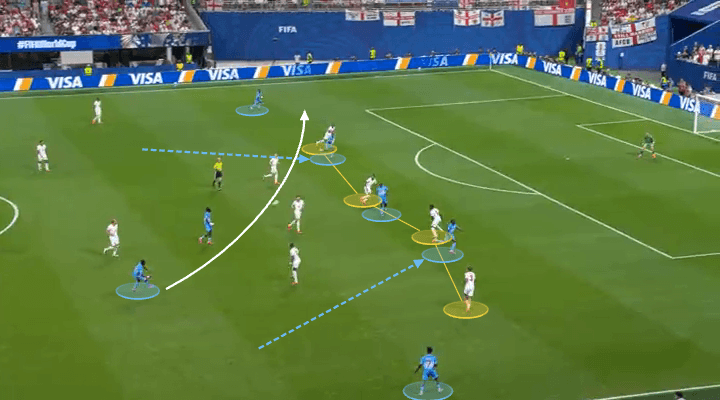
The confusion left Brian Cipenga, the left-winger, completely unmarked at the far post to fire home. England, of course, hadn’t expected DR Congo to play with wingers at all.
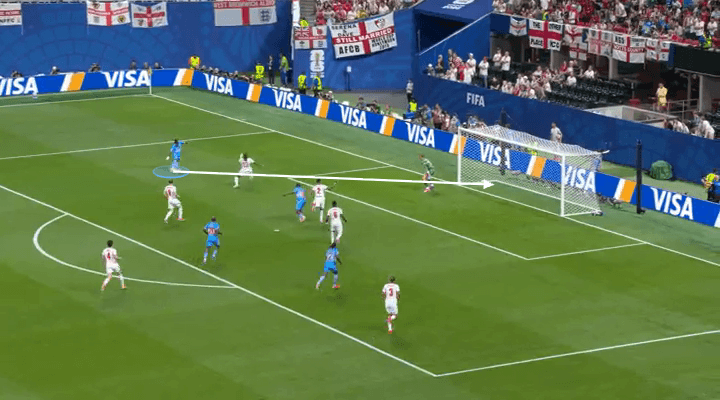
“We didn’t get the press right — we were too aggressive with the press, especially on the left wing,” Tuchel said afterwards. “Sometimes they had four players on our last line, so we couldn’t push through into the press. It was a bit difficult in the first 20 minutes for our centre-backs to read this.”
But England responded to adversity well.
By half-time, they’d accumulated over 1.0 xG, and it felt like a goal was on the cards. Goalkeeper Lionel Mpasi was DR Congo’s star performer. And while Tuchel’s precise selection decisions have been questioned this month, it’s clear England do, at least, have a plan at this World Cup and that they’re largely going to stick to it.
“There were no new messages,” said Tuchel of his team talk in the second half’s hydration break. “The message was always the same: keep pounding the rock, keep knocking, don’t give in, do what we believe in.”
In other words: England will always play with two wide players who stretch the play without possession but want to check inside, whether that is Marcus Rashford and Noni Madueke, or Anthony Gordon and Bukayo Saka. “The wingers were always clear,” said Tuchel. “We push with the wingers who start, then replace them — this is the plan, the players knew that — we’re all-in on the wings, then after 60 or 70 minutes, we come with fresh legs.”
The only major change of shape is tilting the midfield trio. Here, with Eberechi Eze coming on for Spence and playing alongside Jude Bellingham, leaving Anderson as the sole holding player.
This also resulted in Declan Rice shifting to right-back, an unfamiliar position but one he played on occasion for Arsenal last season without looking uncomfortable. In truth, he’s a better crosser than England’s recognised right-back options in this competition. When he made an underlapping run and reached the byline to hang up a cross in the move that led to Kane’s equaliser, he was in the same position as in the opening minute, when he popped up there from midfield.
But there are various things England won’t do until an emergency situation.
Is Harry Kane England’s greatest ever player?
Jack Pitt-Brooke and Rachael Tinde
They won’t abandon a back four. They don’t use a player drifting in from wide. They won’t throw on a second striker before, say, the final 10 minutes, and even then you can argue that it wouldn’t be that different from Bellingham’s role, considering how almost all his contributions come inside the opposition box.
England may yet lurch into the ‘Out of ideas’ stage we’ve seen before. But they won’t be shapeless.
“We didn’t need to unlock something tactically; we didn’t need a new solution,” said Tuchel. They were clear in their mindset.
Counterpart Desabre was also pleased with his own tactical approach. Why did he think DR Congo eventually lost?
“It took,” he said, “the best striker in the world.”