
Published Jul. 4, 2026at6:00am
Less than 72 hours after the Valkyries’ inaugural season fizzled with a first-round playoff loss to the Lynx, their players scattered across the globe.
The WNBA and the Women’s National Basketball Players Association’s newly ratified collective bargaining agreement, which includes dramatic player salary increases driven by a revised revenue-sharing model, is changing pro women’s basketball — domestically and around the world.
For nearly three decades, WNBA players left the U.S. every fall because they needed a second paycheck. Now, increasingly, they’ll be able to stay home.
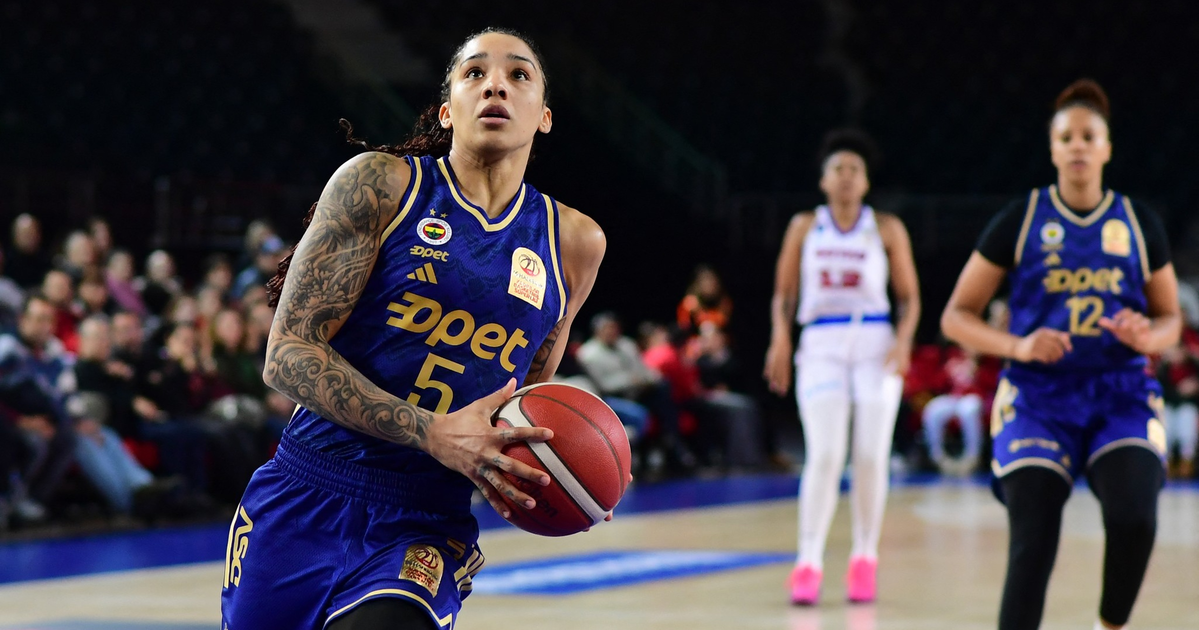
Gabby Williams knows the old routine as well as anyone. Williams, named an All-Star starter Thursday, has spent offseasons playing in France and Turkey. This winter, she’ll stay stateside, after signing a multiyear deal with Unrivaled, the 3-on-3 league Napheesa Collier and Breanna Stewart launched in 2025 to offer WNBA players an opportunity the sport had never provided before: elite competition, elite pay, and the chance to remain in the U.S. during the offseason.
Unrivaled’s 2026 average salary was $222,000 — higher than the WNBA’s maximum contract last year — and it’s expected to rise again. Unrivaled’s season lasts under three months. Not long ago, this option was unimaginable.
When Valkyries center Kiah Stokes entered the league in 2015 after winning three national titles at UConn, her rookie salary was about $40,000.
“Great for like a summer job, right?” Stokes said on the “Section 415″ podcast. “We knew from the jump, I’m definitely going overseas to play and make a little bit more money so I can sustain this.”
A decade ago, first-round WNBA draft picks earned roughly $55,000 annually, while the league minimum hovered around $37,000. Even Stewart, a No. 1 pick, made under $60,000 as a rookie in Seattle. Those circumstances pushed the stars overseas, but now, with WNBA salaries on the rise and a new domestic league gaining popularity, players suddenly have something previous generations rarely did — options.
“I’m glad that the players now actually have a choice,” Stokes said. “They can go overseas if they want to make extra money, but they don’t have to … all the growth from 2015 to now, I think is incredible. I’m excited to see how much it’s going to grow in another 10 years.”
For some Valkyries players, “overseas” carries a different meaning.
Italian sharpshooter Cecilia Zandalasini joked that the WNBA is actually her overseas league. The 30-year-old played with teams in Italy and Turkey for more than a decade. Then in 2017, she started spending half of the year in the WNBA.
“For the past many, many years a player would make more money in Europe than they would in the W,” Zandalasini said. “So now that that has changed, we for sure have to rethink about what we all want to do. It opens many more doors, but also many more opportunities to rest and work on our bodies.”
Offseason decisions might become increasingly complicated for the international players on a Valkyries roster that draws talent from six countries.
French center Iliana Rupert, who is pregnant and sitting out the 2026 season, has long balanced WNBA seasons with EuroLeague basketball. Janelle Salaun, also French, played six years of pro basketball in Europe before making her WNBA debut in 2025 as a 23-year-old rookie. Lithuanian guard Justė Jocytė, who turned pro in Europe at 14 and came to the U.S. to join the Valkyries in May, said staying overseas still has advantages for international players despite the WNBA’s financial progress.
 Juste Jocyte spent six seasons playing professionally in Europe before joining the Valkyries in May. | Source: Borja B. Hojas/Getty Images
“If a European is playing in Europe, it’s really hard to make that decision, even though the CBA is much better,” Jocytė said. “You have no life other than basketball. You are all year-round away from your family.”
She believes improved salaries will accelerate the trend of more European stars joining and prioritizing the WNBA, though not every player will abandon overseas clubs.
Have thoughts on this story?Start the conversation
Salaun and Jocytė are two of the many WNBA players committed to play in Project B, a six-team league set to launch in 2027 that will play seven two-week tournaments in Europe, Asia, and Latin America.
Unrivaled, an eight-team league with six players per team, doesn’t have enough roster spots for every WNBA player, but leagues like Project B and Athletes Unlimited, where Stokes and Valkyries guard Kaitlyn Chen competed last offseason, provide alternatives.
Next year, the WNBA will expand its season from 44 to 50 games, shrinking the offseason. As the calendar grows longer and salaries rise, squeezing another full pro season into the winter will become increasingly difficult.
As long as the WNBA has existed, the league’s top players have chased championships in Turkey, Italy, Spain, China, and elsewhere because they had to. Now they have the choice to spend the offseason playing at home.
Wherever home might be.