
Another remarkable set of games at the 2026 World Cup meant a dramatic penalty shootout was relegated to the third, or even fourth, most dramatic moment of the day.
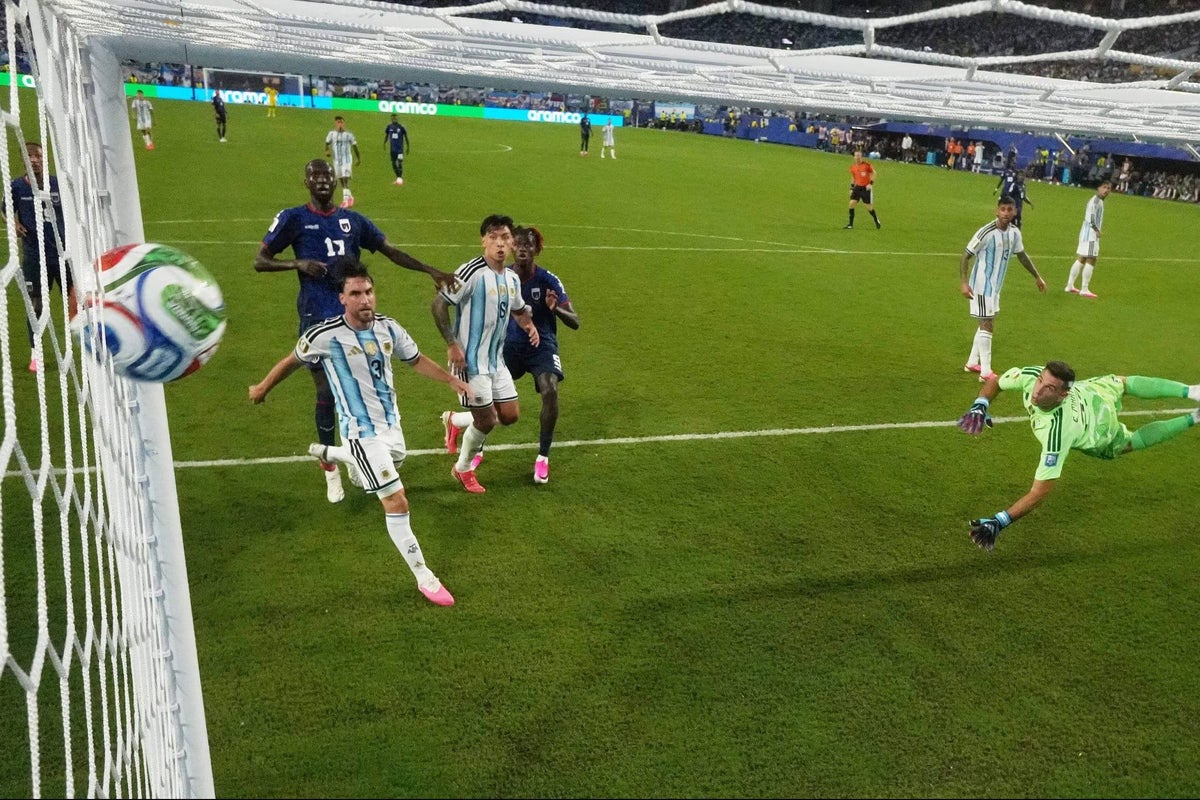
Cape Verde came astonishingly close to taking defending champions Argentina all the way to penalties, eventually falling to a 3-2 extra-time defeat despite an incredible goal from full-back Sidny Lopes Cabral. Lionel Messi scored again, a record-extending 20th World Cup goal.
Egypt beat Australia on penalties after a 1-1 draw in Dallas. Australia brought on goalkeeper Mat Ryan specifically for the shootout, but he didn’t get near any of the Egypt penalties: Mohamed Salah converted a Panenka, chipping his spot kick down the middle, and 18-year-old defender Lucas Herrington was one of two players to miss for Australia.
Colombia squeezed past Ghana for the final last-16 spot after an attritional game in Kansas City, Mo., with Jhon Arias’ first-half goal securing a 1-0 win.
Off the field, a plan was considered and then dropped to move the time of England’s game against Mexico at the Azteca. The Athletic revealed the talks centred on safety and security worries.
Matchday 23 results
Australia 1 Egypt 1 (2-4 on pens)
Argentina 3 Cape Verde 2 (after extra time)
Colombia 1 Ghana 0
How remarkable was Lopes Cabral’s goal?
Sidny Lopes Cabral has packed a lot into his short career.
The 23-year-old left-back was playing in the German third tier last year. He has also already played in Sweden, the Netherlands and Portugal, and has just signed for Turkish side Trabzonspor. He had only joined Benfica in January, where he witnessed goalkeeper Anatoliy Trubin score an extraordinary last-minute goal against Real Madrid in the Champions League.
He might have thought that goal would be the most remarkable one he would be party to this year. That was until he got the ball on the left flank, with Cape Verde trailing Argentina 2-1 in extra time, and pulled back his right foot.
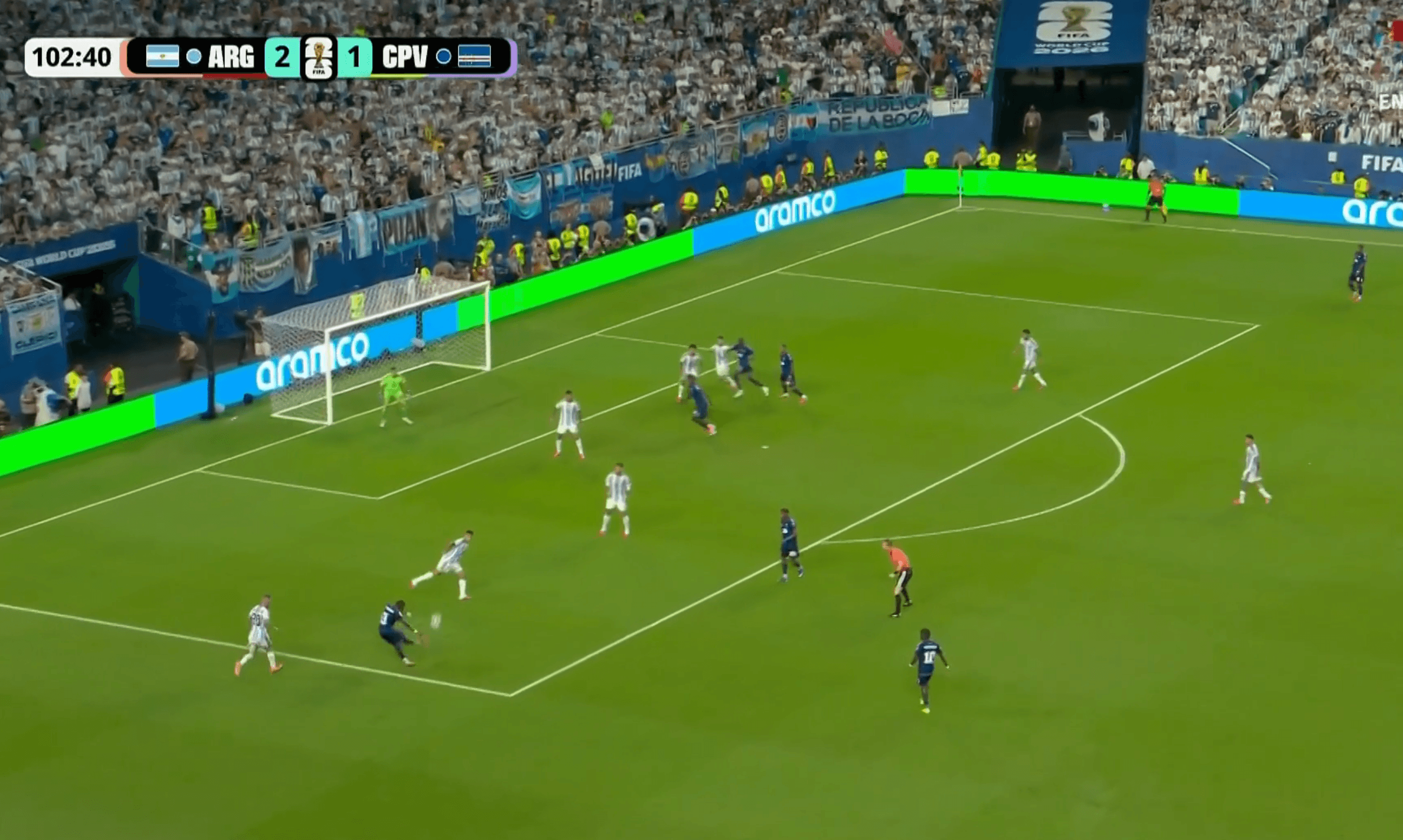
Dipping, swerving, arcing, it flew into the top corner and became the latest astonishing on-pitch moment of Cape Verde’s World Cup journey. Lopes Cabral charged off into the stands, looking for a loved one, who he eventually found, but not before standing there for what felt like minutes, as if he was a spectator asking a steward where his seats were.
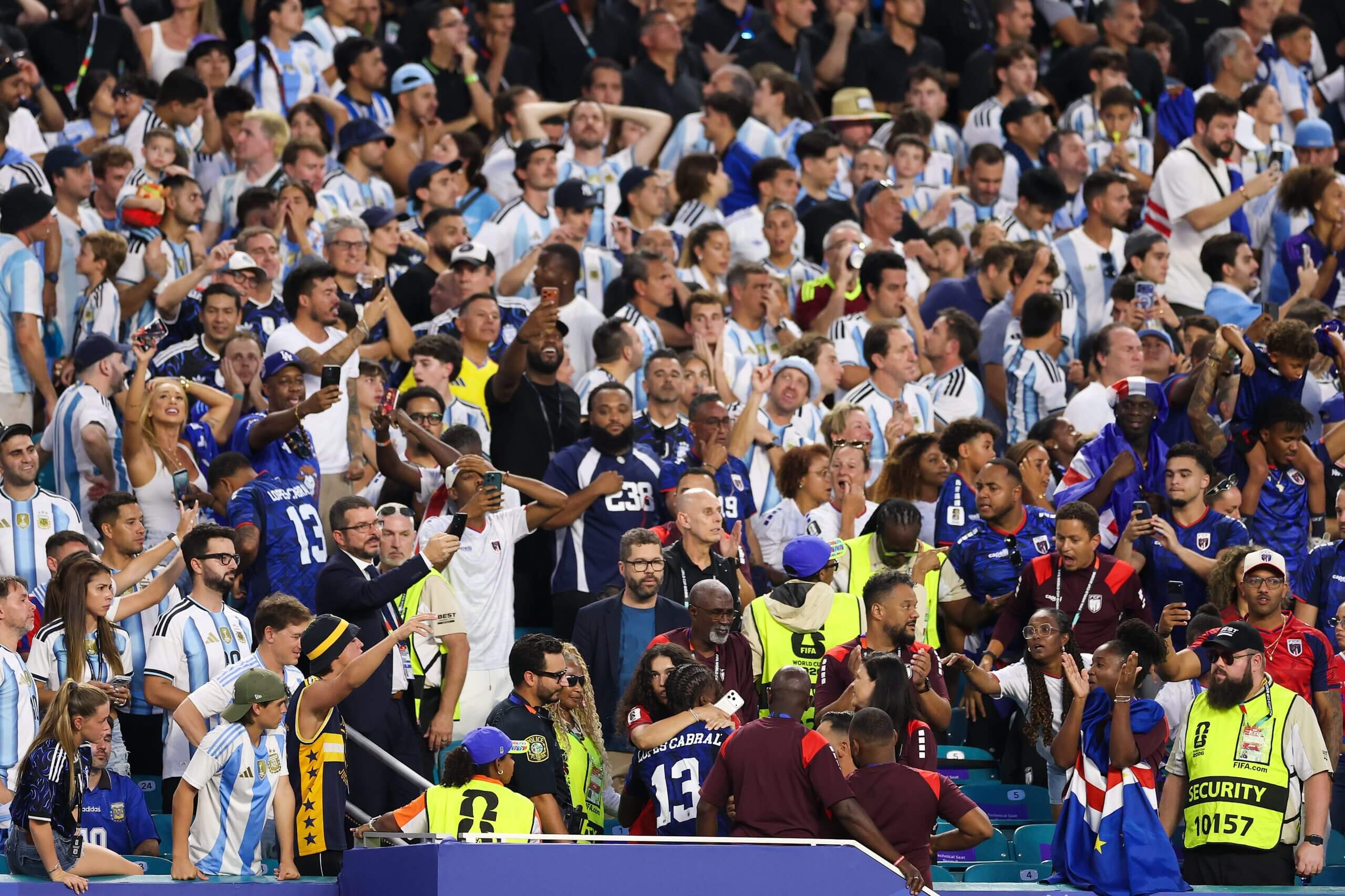
Lopes Cabral shares a hug after climbing into the stands in Miami (Robert Cianflone/Getty Images)
Was that the most incredible goal, in its quality and significance, of an utterly incredible World Cup? If it had led to Cape Verde doing the unthinkable and actually winning, it would have been among the top 10 most extraordinary World Cup goals of all time.
Cape Verde’s run is over. While the allegations against Ryan Mendes mean their story is far from a fairytale when taken as a whole, on the pitch, they have been astonishing.
During extra time, the cameras picked out a grey-haired man in the stands, holding a baby. The man was Ireland-born defender Pico Lopes’ father-in-law, who, along with Lopes’ wife Leah and other family members, has been travelling around the United States in an RV. The baby was presumably Pico Jnr, born the day after Cape Verde sealed their World Cup qualification back in October. What a summer they’ll be able to tell that kid he had.
The biggest World Cup upset of all time, almost | World Cup Daily Briefing
Felipe Cardenas and Luke Bosher
Based on the round of 32, who will win the World Cup?
The first knockout games are in the bag, and another 16 teams have exited the tournament. It’s taken a long time to reach the last 16, but now we have a clearer perspective on the main challengers for this World Cup.
In some respects, a lot of things haven’t changed. Germany and the Netherlands are the biggest names knocked out, but even if they played well at times in the group phase, neither side looked like a genuine contender.
Similarly, England, Portugal and Brazil all had strong moments, but also displayed their flaws in getting past DR Congo, Croatia and Japan. The co-hosts — the U.S., Canada and Mexico — are significant long shots to go all the way, but they made it through with varying degrees of comfort and little would have changed about the general opinion of their chances.
Argentina are perhaps the team who raised the loudest questions about their prospects while still actually progressing. They took the lead against Cape Verde twice, but either through defensive weakness or complacency (possibly a mixture of both), they looked astonishingly fragile at times.
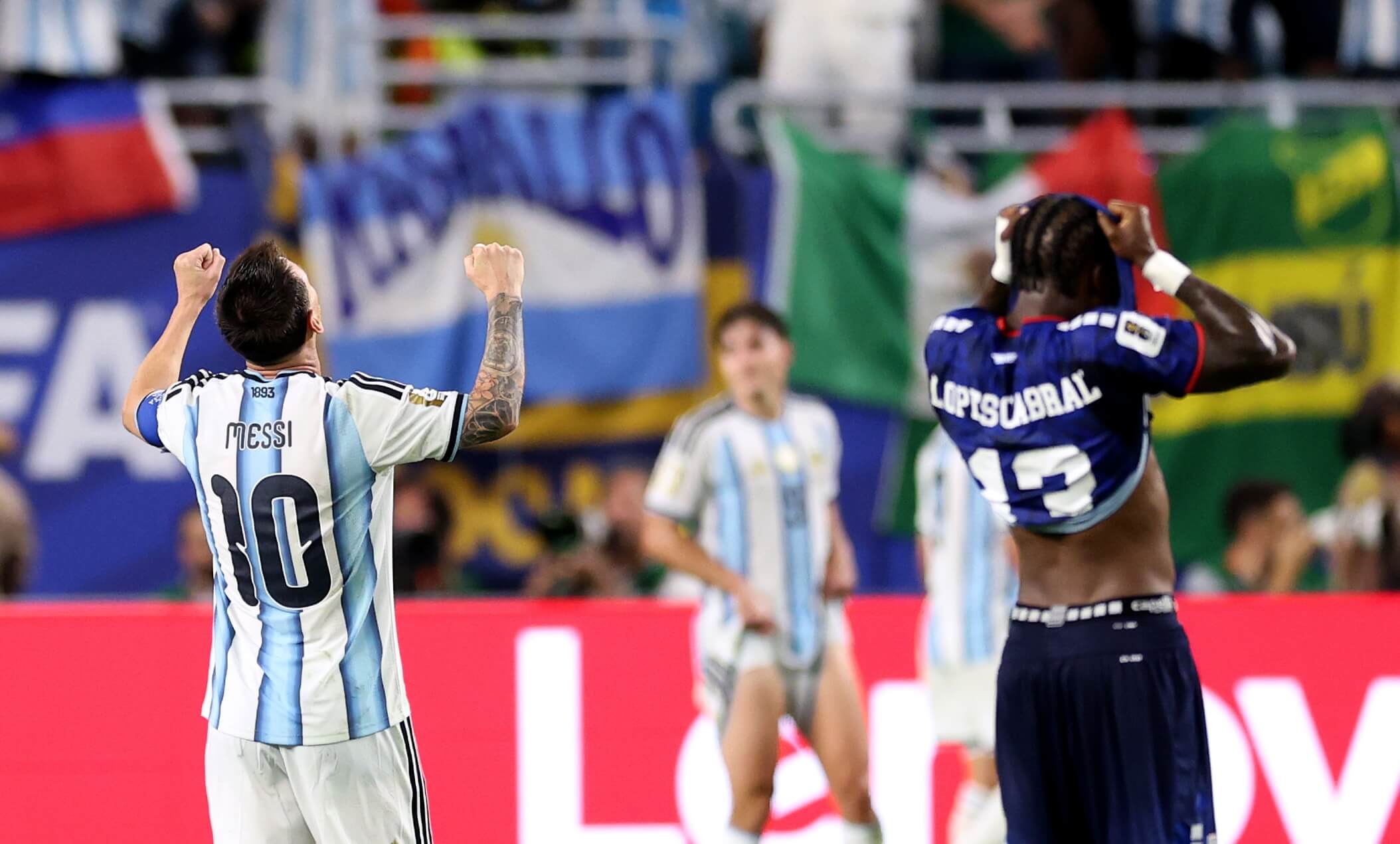
Lionel Messi and Argentina had a lucky escape (Getty Images)
Cape Verde, for all their spirit and hard work, are a technically limited team: if they can get at Argentina, then imagine what better sides will do. There’s also a big dollop of the old Messidependencia: the great man scored one and set up another, but beyond him, they were devoid of attacking ideas.
By far and away the best teams in the round, as was probably the case in the groups, were France and Spain. The French are a terrifying attacking force. Kylian Mbappe leads the way, beautifully complemented by Michael Olise and Ousmane Dembele. Their depth is such that they could afford to leave out Desire Doue and still wipe the floor with Sweden.
Spain are a more understated attacking unit, and there’s a sense that while Lamine Yamal has been excellent, there is another gear for the Barcelona 18-year-old to find, which is fairly frightening for everyone else.
They are the teams to beat, but they are on the same side of the draw, so would meet in the semi-finals rather than the final. The other half looks pretty open: if we’re expecting Spain or France to be one of the sides lining up on July 19, the identity of their opponents is tough to predict.
Has there been a harder World Cup to follow in person?
This has been an astonishing tournament.
For footballing quality, drama and narrative, it’s already one of the best World Cups in years, and we haven’t even started the last 16.
And yet, how many people who have tried to attend in person have actually been able to enjoy it?
It’s also been a World Cup that has constantly thrown up barriers for fans, especially supporters who have travelled from around the world, encapsulated by the farcical few hours on Saturday when it looked like Mexico’s last-16 game against England was going to be brought forward by six hours.
While it was initially said to be due to concerns over extreme weather, internal discussions with FIFA and local organisers centred on safety concerns. The deaths of four people following Mexico’s round-of-32 win over Ecuador had intensified concerns that a 6pm kick-off in Mexico City could prove dangerous to fans, with a full day of drinking time potentially spilling into the game and beyond.
That raises a couple of points. One is that the hours of confusion on Friday may well have caused some England fans to make some pretty expensive decisions if they thought the kick-off time was changing. Many will be arriving in Mexico City on Sunday morning: plenty of time for the scheduled start, but a 1pm start would have changed plans. Some fans will have purchased alternative plane tickets and booked extra hotel nights, anticipating a change that never came.
The other, more pertinent point is that there will now be significant safety concerns among those fans.
And this is on top of all the other problems supporters have had to negotiate: the issues fans from some countries had in getting visas; unfriendly, to say the least, welcomes from some of the American authorities; massively high ticket prices; the cost and difficulty of travel; the cost of accommodation; the weather conditions, whether that’s extreme heat or torrential rain and flooding.
No World Cup in recent memory has been more difficult to follow for matchgoing fans.
What to know about Saturday’s games
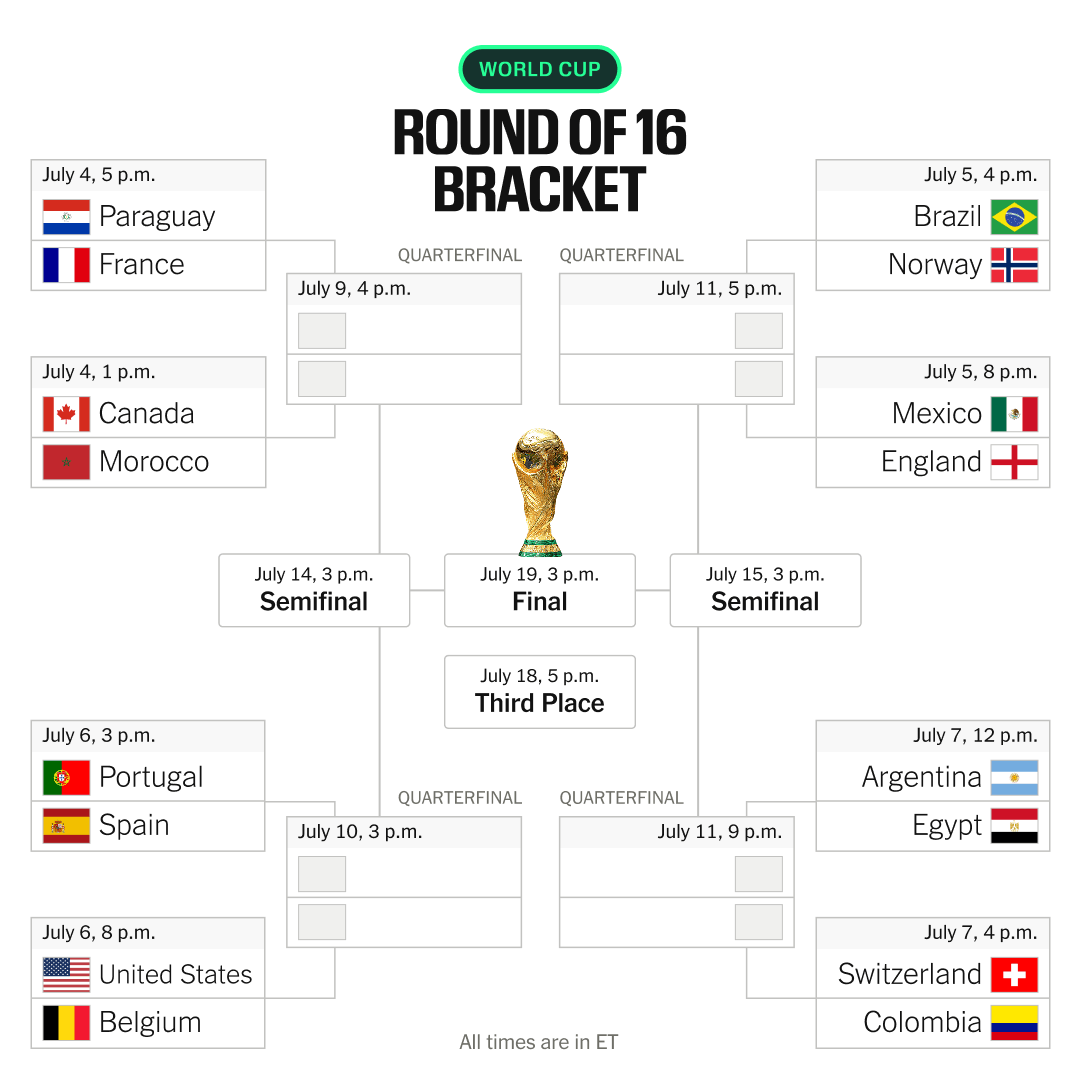
Assuming FIFA does not change the kick-off time because it looks a bit cloudy or something, the first round-of-16 game will see Canada face Morocco in Houston, the second instalment of the slightly odd idea of a World Cup host country playing away from home.
All eyes will be on Alphonso Davies and how much he can play for Canada. Coach Jesse Marsch has been very coy about the fitness of his star player: Davies played 15 excellent minutes against South Africa, but that’s the total of his football since injuring his hamstring for Bayern Munich in May.
Then the favourites/best team in the tournament, the rampant French, are in action in their last-16 game against Paraguay. Is it possible to stop Kylian Mbappe? Probably not!
Today’s fixtures
Canada vs Morocco 1pm ET, 6pm BST
Paraguay vs France 5pm ET, 10pm BST