
In April, the race to develop and roll out truly autonomous Artificial Intelligence (AI) seemed to enter a disturbing new phase when viral videos surfaced showing human workers wearing headsets featuring cameras that were tracking their movements.
We’ve become accustomed to AI systems scraping vast amounts of data from the internet to train, improve and update themselves. But, as demand for increasingly sophisticated robots that can operate in the physical world grows, human workers are being co-opted to train their own replacements.
In India’s garment manufacturing industry, a firm called Egolab AI supplied manufacturer Pearl Global Industries with headsets for its staff to wear. As the workers were stitching, folding, handling cloth and making the tiny adjustments to the items they worked on, a machine watched, hoovering up training data.
According to reports, workers had been told the devices would record what they did during their shifts, but had not been asked for written or verbal consent.
The principle is called capturing “egocentric video footage”, which can be used as training data for humanoid robots. It brings us closer to the industrial ideal of so-called “dark” or “lights-out” factories, which can run with very few humans (or none at all), because the machines have replaced workers in every part of the manufacturing process.
In north-east China, carmaker Zeekr is one example of this kind of lights-out manufacturing. Vehicles roll off a heavily automated line without a human hand touching them. The International Federation of Robotics said China installed 295,000 industrial robots in 2024, 54 per cent of the global total, showing how quickly the country is trying to automate its manufacturing base.
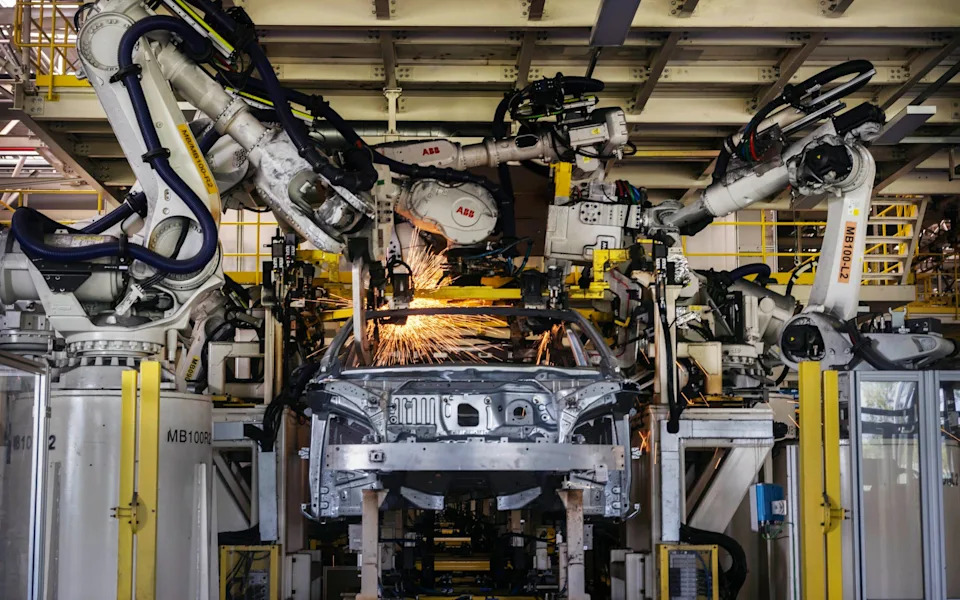
Chinese car maker Zeekr runs a ‘dark’ factory where machines have replaced workers in almost every part of the manufacturing process – Kevin Frayer
Closer to home, one of the world’s biggest companies is apparently trying to do something similar for office work. In late April, Meta, the owner of Facebook, Instagram and WhatsApp, announced internally that it was testing a tool called the Model Capability Initiative (MCI), which would run on US-based company devices and capture mouse movements, clicks and keyboard inputs – as well as occasional screenshots – to help build so-called “agentic” AI systems that can work without oversight.
“This is where all Meta employees can help our models get better simply by doing their daily work,” the internal announcement claimed. The programme has not yet been implemented in the UK or Europe because of stronger workplace protections and data-protection rules.
But, even with that geographically limited rollout, the response within Meta was hugely negative. “It’s totally digital surveillance. It’s mining your work and your data to find a way to replace you,” says one former employee who was made redundant from the company in May along with 8,000 or so others, accounting for around 10 per cent of the total Meta workforce.
“A lot of people internally were very upset about it, and were speaking up about how this is the wrong choice,” adds the ex member of staff, who wishes to remain anonymous. In fact, more than 1,500 Meta employees signed a petition against the MCI, saying that “collecting and repurposing this kind of data raises serious concerns around privacy, consent, and trust in the workplace.”
The petition also alleged that the initiative was “intrusive, coercive, non-consensual data collection”. And, addressing Mark Zuckerberg and Meta leadership directly, added: “It should not be the norm that companies of any size are permitted to exploit their employees by non-consensually extracting their data for the purposes of AI training. AI meant to serve and empower people cannot do so while disregarding or disrespecting the consent of the people it claims to serve.”
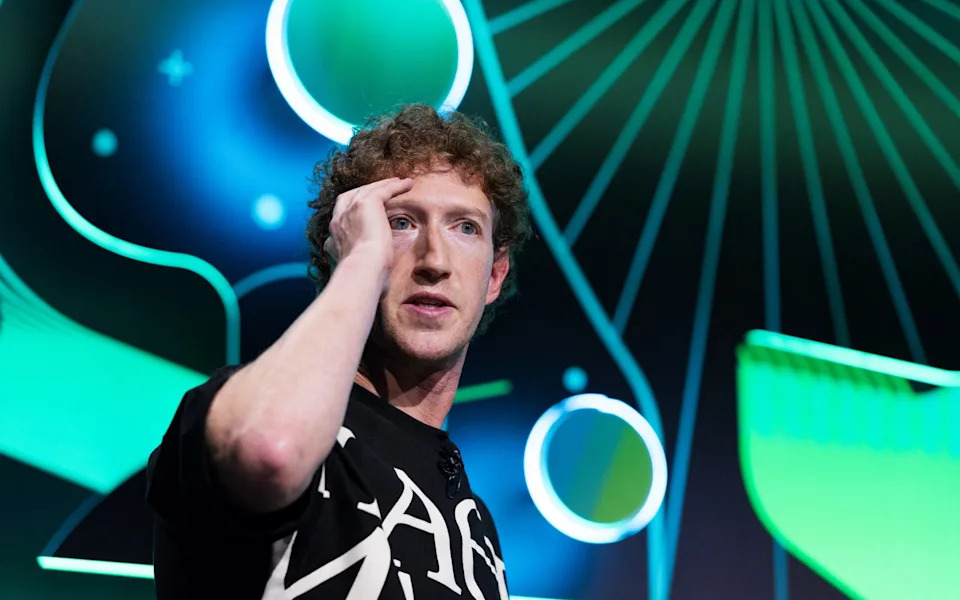
Mark Zuckerberg, whose company, Meta, sparked a row earlier this year when it introduced technology to record employees’ keystrokes, clicks and mouse movements – Laure Andrillon/Reuters
Asking staff to grant permission to a tool to track their every digital movement in order to help better train AI systems that are in turn designed to ultimately replace them was seen as beyond the pale for most employees.
“It feels gross to be monitored like that,” the former employee says. “How would you feel in the workplace if your every keystroke, and every movement, was tracked and recorded to create this product?
“Let’s be real. They want to create a product that they can sell to others that says, ‘You can make your human employees dispensable.’”
Speaking to Reuters after the plans were first revealed, a Meta spokesman emphasised that the system was not being used to monitor the performance of staff, but said: “If we’re building agents to help people complete everyday tasks using computers, our models need real examples of how people actually use them – things like mouse movements, clicking buttons, and navigating drop-down menus.”
Meta paused the programme at the end of June after learning that unauthorised individuals within the company were able to access the data collected.
Despite that, experts have warned this is the direction of travel within many industries. That doesn’t bode well for innovation. As the former Meta employee explains: “People have asked me, do I actually think that AI can replace the work that I do, and the honest truth is, no. This is a technology that, like many technologies, can accelerate certain repetitive tasks, but fundamentally – and I worked on these internal systems – it’s a probabilistic model. It doesn’t do critical thinking.”
As Catherine Flick, an AI ethicist at the University of Staffordshire, puts it: “These sorts of systems are trained on existing data, and so therefore they’re just a mirror on things that have already happened.”
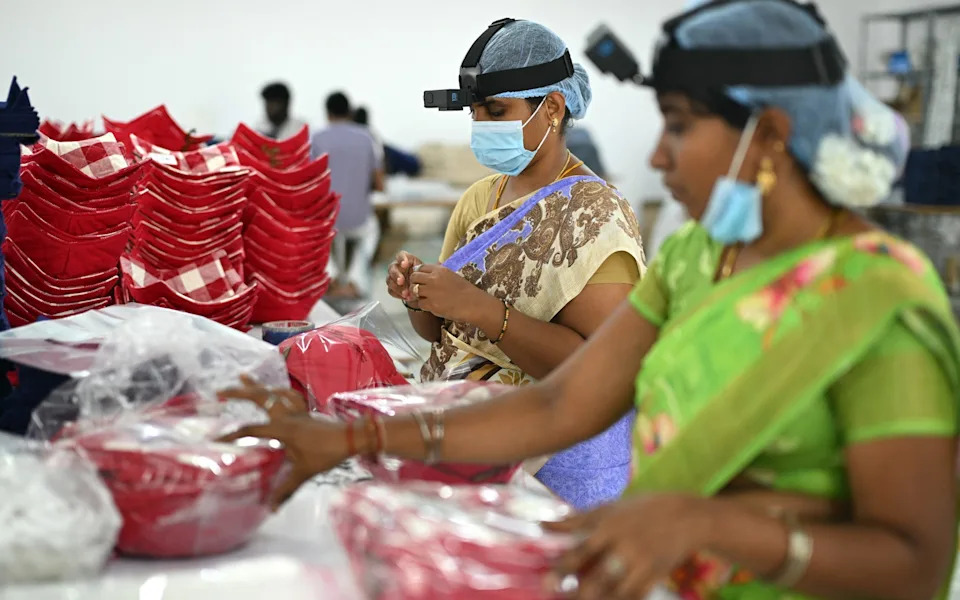
Women with GoPro cameras collect ‘egocentric data’ while they work inside a factory in Tamil Nadu, India – R.Satish Babu
The backlash to Meta’s initiative created another, unforeseen, problem for the company: as well as the petition, signed by more than 1,500 staff, some employees boasted on business social networks that they were deliberately making errors in their work, or working in an intentionally lackadaisical manner, in order to feed the AI model bad training data.
Whether such actions could meaningfully impact the model’s capabilities is yet to be seen. But the decision by a Silicon Valley giant to roll out such a programme is itself a sign of a new workplace norm in the AI era. Where Meta leads, others are likely to follow.
“This is the message that I want to share,” says the ex-employee. “Sooner rather than later, it’ll not just be Meta employees or tech workers affected by this, but anyone who is a knowledge worker.” They call it a “wake-up moment”.
And even if, like the ex-staff member, an individual thinks AI will never be able to do their job as well as they can, that may not be the view of their boss. “This is a trend that is really concerning for your own livelihood,” adds the ex-employee. “I think a lot of skilled knowledge workers, especially in tech, but in other places, think that, somehow, they have skills that are special and not replaceable.”
Flick adds that it is also “a really egregious thing for companies to do”.
But, says the ex-employee, bosses have already shown they do not value human labour in manufacturing industries and other sectors. “Why would you think that that’s not [going to be] the case for engineers or writers or data scientists?” Ultimately, the ex-staff member says, “we’re all dispensable to the handful of billionaires” who control the new systems.