
Get The Gavel
A weekly SCOTUS explainer newsletter by columnist Kimberly Atkins Stohr.
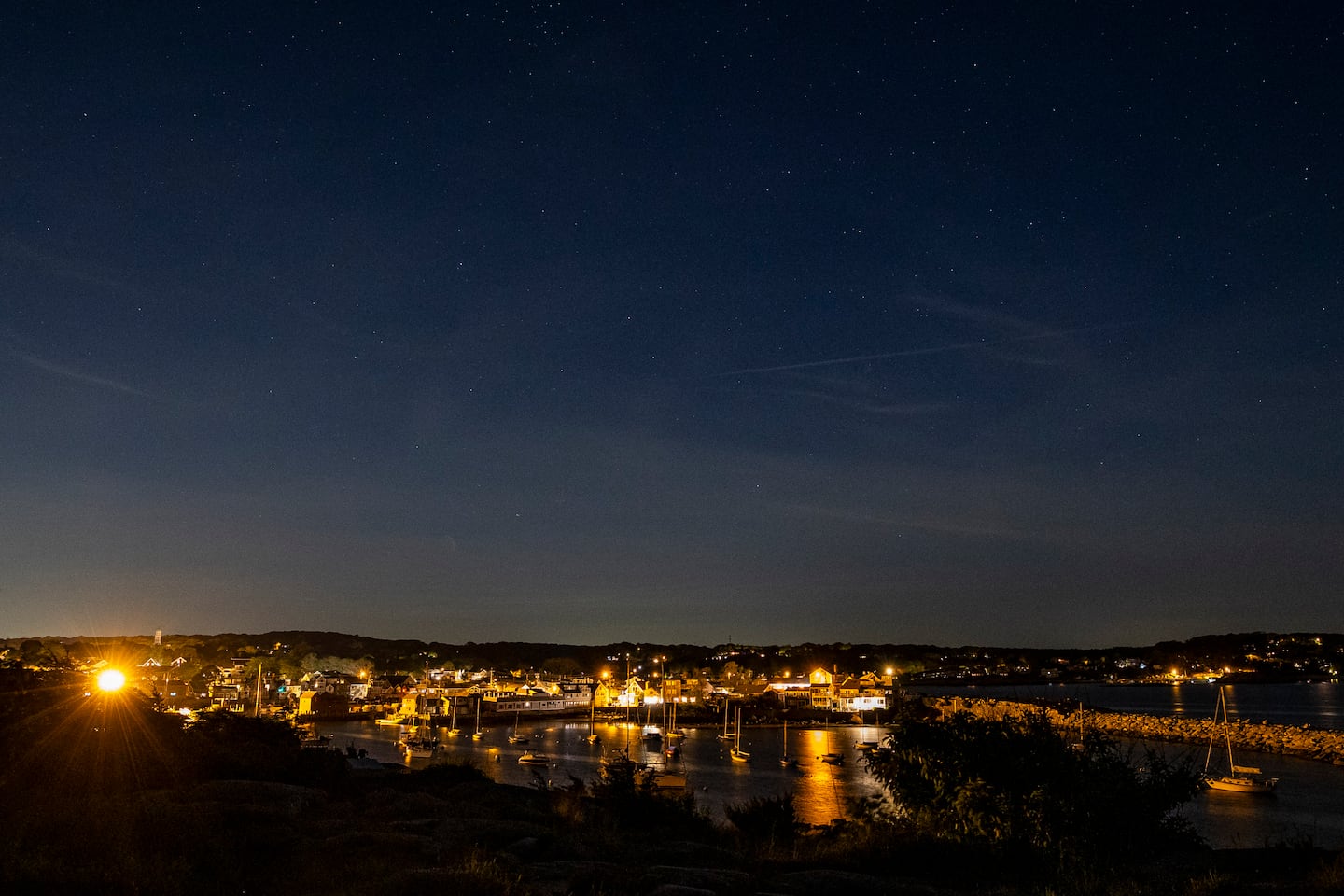
Not surprisingly, the good people of Rockport enjoy the summer mating dance of their fireflies and their view of the stars just the way they are and are willing to fight the kind of light pollution that has the potential to interfere with both.
So when National Grid offered to replace the town’s existing incandescent street lamps with bright new modern LED lamps, which would have yellowish color temperatures of either 3,000 or 4,000 degrees Kelvin, the answer was a resounding no. (The color temperature of midday sunlight is about 5,000 degrees Kelvin; the lower the temperature, the more yellow, orange, and red the color is.)
The Select Board voted unanimously against the proposal after a poll of local voters showed overwhelming opposition (823 against, 82 for, and 22 with no opinion).
Sure, the switch would have saved the town an estimated $40,000 a year, and it’s not as if new streetlights aren’t needed, but according to the Cape Ann Climate Coalition these particular lights came at too great a cost.
“LED lights save energy, but the 3,000K to 4,000K lights have consequences to health, wildlife, and the environment,” the group noted on its Facebook page. “Nobody is saying don’t change the lights for LEDs, but use 2,200K,” which have a more orange or amber cast and don’t cause as much harm, the coalition said. “Once the lights go in, you are stuck with them, so you want to make the right decision.”
Rockport is one of those towns with an engaged citizenry and a Select Board that listens to its constituents. Other towns might not be so fortunate — and curbing light pollution shouldn’t be a town-by-town matter.
After all, fireflies have a devil of a time reading road signs. But they do know a hostile light-filled sky when they see it.
Enter the Massachusetts Senate, which this week gave its approval to a bill that would give all communities in this state the kind of guidance they need to do the right thing — to keep communities well-lit and safe while also protecting wildlife, migratory birds, and, yes, fireflies from the impacts of light pollution.
The legislation deals strictly with publicly owned lighting — street lamps that are the responsibility of a city, town, or the state — and its specifications come into play only when new lights are being installed. It would require street lights and parking lot lights to be “fully shielded,” assuring that light shines down and out — not upward toward the sky. It provides for warmer colors, avoiding the bright white that is considered most disruptive to wildlife, and sets the color of illumination at a maximum of 3,000 degrees Kelvin.
There are appropriate exceptions for public safety, for aviation, and for the illumination of playing fields and tennis courts — also for temporary emergency, repair, or construction lighting.
It is modeled on both the research and legislation supported by DarkSky International. And similar proposals have already become law. At least 19 states, including New Hampshire, Maine, and Connecticut, have adopted laws aimed at curbing light pollution. Some even make seasonal adjustments — like Florida dimming certain beachfront lighting during sea turtle hatching season.
So this is hardly revolutionary legislation. It’s simply a case of Massachusetts catching up with the times and with the now well-founded research that brighter isn’t always better. Not every community needs to be decked out like Times Square.
The Senate bill is mirrored on the House side by legislation that remains in that Ways and Means Committee. With the end of the session drawing close, this would be a great time for the House to advance its version as well.
Rockport made a great call, but it shouldn’t have had to go it alone without the kind of guidance states around the country supply to their cities and towns. Massachusetts communities — and fireflies everywhere — deserve better.
Editorials represent the views of the Boston Globe Editorial Board. Follow us @GlobeOpinion.