
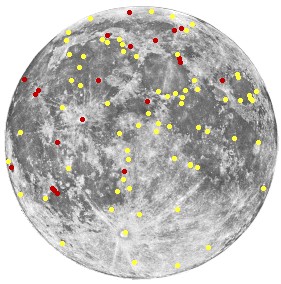
According to the science of transient lunar phenomena, observers have reported brief lights, colors, and hazes on the Moon for at least a thousand years, and astronomers still cannot fully explain them. The British astronomer Patrick Moore coined the term for a 1968 NASA catalog of reported lunar events.
On June 18, 1178, five or more monks in Canterbury reported that the crescent Moon “split in two,” with “a flaming torch” springing from the gap, so that “the moon throbbed like a wounded snake.” During Apollo 11 in 1969, Houston relayed a report of “lunar transient events reported in the vicinity of Aristarchus,” and Neil Armstrong radioed back that there was “an area there that is considerably more illuminated than the surrounding area.”
Modern explanations fall into a few classes: gas escaping the Moon’s interior, meteorite impacts, and electrostatic effects. Lunar Prospector detected radon “emanating from the vicinity of the craters Aristarchus and Kepler,” the same region that produces the most reports.
Previously: