
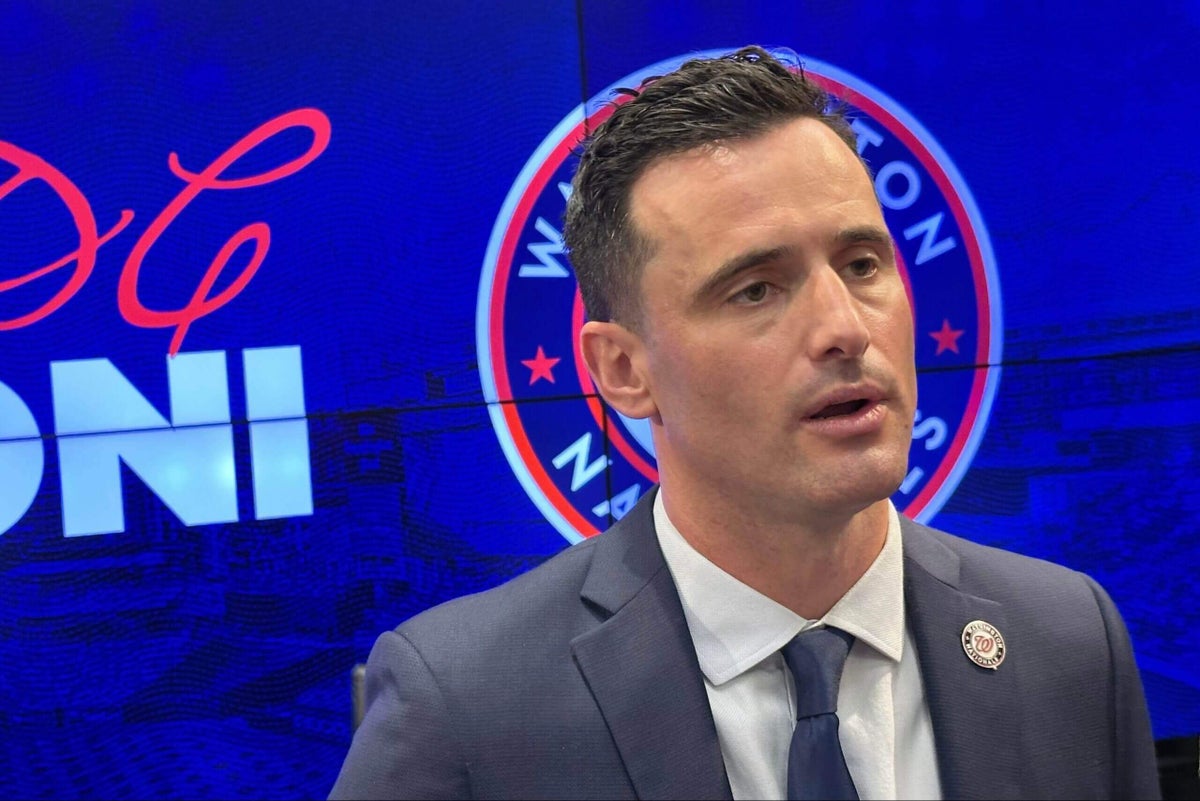
WASHINGTON — One week has passed since The Athletic released its trade deadline tiers, in which we placed the Washington Nationals in the “hinge” category.
Almost nothing I have heard or seen over the last week has changed my feelings on the matter. The team is still hovering just above .500, without a big break in one direction or the other. The list of possible targets at the Aug. 3 MLB trade deadline feels endless. I’d say that optionality is a good thing for the organization. For you all, I’ve gathered, it means there are a lot of questions about the deadline. I did my best to answer them.
(Note: Questions have been lightly edited for brevity and clarity.)
Why this July will be an exciting month for MLB
Ken Rosenthal and Johnny Sweet
Who are some intriguing bullpen options the Nationals could go after? — Joshua S.
Jim Bowden presented a handful of names this week, most of whom are low-cost options with a lot of control and not much experience: Colorado Rockies righty Seth Halvorsen, San Francisco Giants righty Keaton Winn and Los Angeles Angels righties Chase Silseth and Sam Bachman.
Bowden also floated Rockies right-hander Antonio Senzatela, who has two years of control, though the $14 million club option for 2027 makes one wonder whether the Nationals would view him as more of a one-year rental. Kyle Finnegan (two years, $17.65 million) intrigues me, too.
Ultimately, Bachman is my favorite from the list: Lots of whiff, lots of control, lots of stuff, some late-inning experience. Generally speaking, I like the idea of their targeting names from that first group, since it would keep the contention window open for a while, and relievers are volatile. It would also be wise to engage with teams that would agree to a strength-for-strength trade. For example, if a team with plentiful pitching depth, such as the Los Angeles Dodgers, Milwaukee Brewers, Seattle Mariners or New York Yankees, were open to trading a Triple-A arm and wanted someone in return whom Washington is more bearish on, I could see the two sides engaging. The limited number of true sellers complicates things.
That said, I have to imagine a lot of you would prefer the team to acquire a shutdown or shutdown-ish arm with experience this season and then figure out the rest later. I don’t entirely agree, but the frustration is fair — the Nationals have the worst ERA from the eighth inning on this year. Maybe Detroit Tigers righty Drew Anderson or Kansas City Royals lefty Matt Strahm fits that mold.
Is the bullpen fixable at the trade deadline? What would it take to get multiple bullpen pieces like the (Sean) Doolittle and (Ryan) Madson trade of several years ago? — Ray M.
Not in one month. Can they get someone who will shore up the ninth at a reasonable cost? I wouldn’t put the odds over 50 percent, but I would not rule it out — and I wouldn’t have even entertained it two months ago. Going after multiple proven bullpen players is much harder, and perhaps unwise, given they don’t want to dip too much into the farm system.
Foster Griffin: trade or extend? — Jeremiah O.
If you’re asking me which is more likely, it’s trade. The following is generally true for players across MLB: Griffin has lots of incentive to test the open market and see how much he would make with 30 teams after his services. An extension limits negotiations to one team. He would be getting some cost certainty with an extension, though.
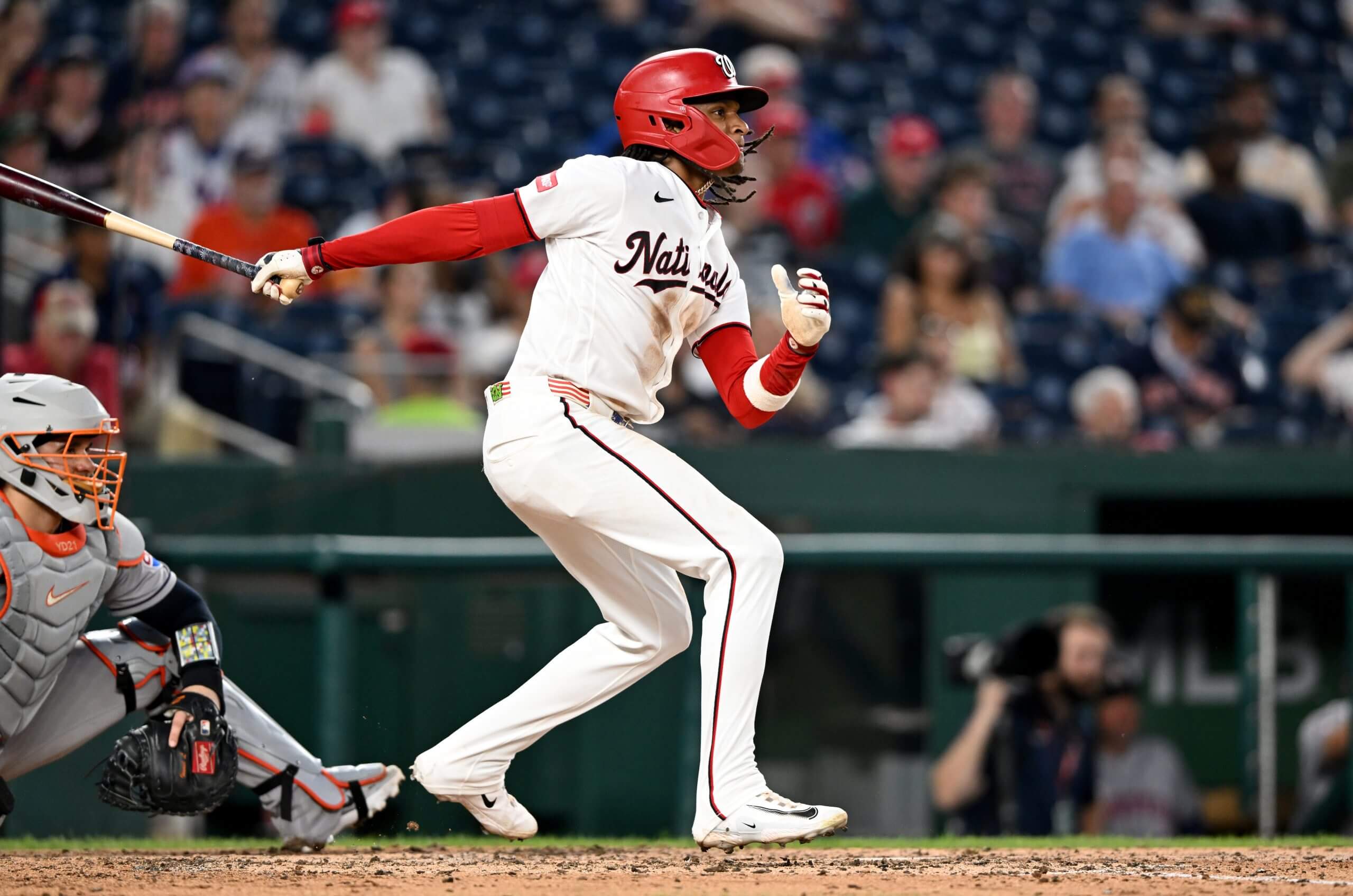
CJ Abrams has been the best offensive shortstop in baseball this season. (Greg Fiume / Getty Images)
If the Nationals trade (CJ) Abrams, what kind of package are we looking at? Something similar to (MacKenzie) Gore? What teams would be in play, and what kind of prospects do you see (Paul) Toboni targeting? — alexandermbauer
It would have to be a better package than what they got for MacKenzie Gore, which was pretty strong to begin with. Position players are generally more valuable than pitchers (lower injury risk, and they play every day), CJ Abrams has more control than Gore did (2 1/2 years, compared with two when Gore was traded), and Abrams is now a two-time All-Star who has been the best offensive shortstop in MLB this year (though the defensive metrics are still not where he’d want them to be).
Though pitching is a priority for the Nats, most teams that acquire prospects don’t limit the scope of those trades to one position. Generally, you aim to get as much value as you can, in whatever form you can, and figure it out from there. It’s hard to comp this deal, because players of Abrams’ stature are rarely traded, and the Nats are in no rush to move him. They have already rebuffed the Giants, who offered a top-100 prospect in January. They would have some leverage to ask for a valuable pitching prospect and a player close to the majors, though, if they wanted. Several American League contenders need help at shortstop.
It feels like the Nats have a nice little surplus of outfielders at all levels of the minors. Any thoughts on potentially packaging them for a starter with a couple years of control? Any idea which guys it would be, if so? Could throw (Brady) House in there too … — jghorton
From what I’ve been told, Christian Franklin has the most value of the Triple-A group, and Sam Petersen (.859 OPS in Double A) is trending in the right direction offensively. I’d push back on the idea they have boatloads of outfield depth at all levels, as the organization’s shortstop depth is stronger, but there’s no reason to believe they couldn’t move one of those guys. Brady House is an interesting one. If I were another team, I would get the Nats on the phone. And if I were the Nats, I’d be listening closely.
How self-aware do you think the clubhouse is about the trade deadline? — Bobby O.
It’s aware. The general sentiment, from my understanding, is the players want the team to buy, but they know it’s on them to make it as hard as possible for the front office to decide to sell. It’s less about whether they accept it in the moment and more about whether it has an impact on their effort down the stretch. To that, I’d say: It almost certainly would to some degree. That’s human nature.
Do you think Toboni really has a green light (from the Lerners) to spend at the deadline if they are still in WC contention? — Lynn G.
I’m not entirely sure what you mean by “spend.” If you mean “add big-league talent,” then that is (broadly speaking) within the confines of what president of baseball operations Paul Toboni is allowed to do and a decision that will largely be left to the front office. If you mean “increase the payroll,” then I don’t have a definitive answer for you. I’m almost certain adding a player with a large deal would require a conversation with ownership because that’s how MLB organizations work. Knowing what I know about the way the deadline works and how the organization is run, I believe the dollar amount attached to whatever player they are interested in should be a smaller factor than the quality of the player (or his value per dollar).
Luis García Jr. is a sell-high candidate right now. Would Luis be a good enough chip (along with others) for quality bullpen pieces? — Stephen M.
A big leaguer-for-big leaguer swap feels unlikely, though it’s not a wild idea. To a larger point, a National League evaluator who spoke anonymously because they did not have permission to discuss the matter publicly recently told me García and Curtis Mead have improved their value dramatically over the last six weeks. The other factors at play, if we’re talking about the market:
There aren’t a lot of teams that need a right-handed-hitting first baseman and DH unless they are exceptional. And also …
Garcia has been exceptional.
He is under club control through the end of next year. He is making $6.875 million this year and is set to make more next year.
It feels like regardless of where the Nationals are in buy/sell/both mode next month, they’ll inevitably look to clear some of their logjams one way or another over the next month? — Michael N.
I wouldn’t view it as “clearing” a logjam because teams’ best-laid plans at any position can change so quickly in this sport. I’d put it like this: From 30,000 feet, it’s fair to reason the Nationals’ most likely deadline scenario includes trading from a position of strength and acquiring a position of weakness. But again, the most important thing is the overall value on each side of the deal.