
Anger and frustration seemed to emanate from Mark Reynolds every time he was asked about his prodigious strikeout total during the 2009 season. He’d already set the MLB record a year prior with 204 strikeouts, and when he shattered it easily once again, questions proliferated.
“I don’t care,” he said that September. He blew off any inquiries about it — which, today, he chalks up to a sense of shame at all those Ks.
“When I set the record, it was embarrassing,” he told The Athletic earlier this month. “I didn’t want to talk to reporters about it.”
The record of 223 strikeouts he set that season still stands. Players have come close to surpassing Reynolds. Eight have gotten within 10 Ks since that fateful season. One player, Adam Dunn, got within one. Two players got within two. No one, however, has topped Reynolds, who retired in 2019 and now champions the mark as his baseball legacy.
“That’s a badge of honor, man,” Reynolds said. “I’ve got a big-league record.”
What changed?
“Now, I’m older. Have perspective. People ask me, ‘Do you want someone to break it?’ I’m like, ‘No. How many big-league records do you have?’”
Reynolds’ record is once again relevant because his small slice of this sport’s history is at grave risk: Four players are roughly on pace to surpass him.
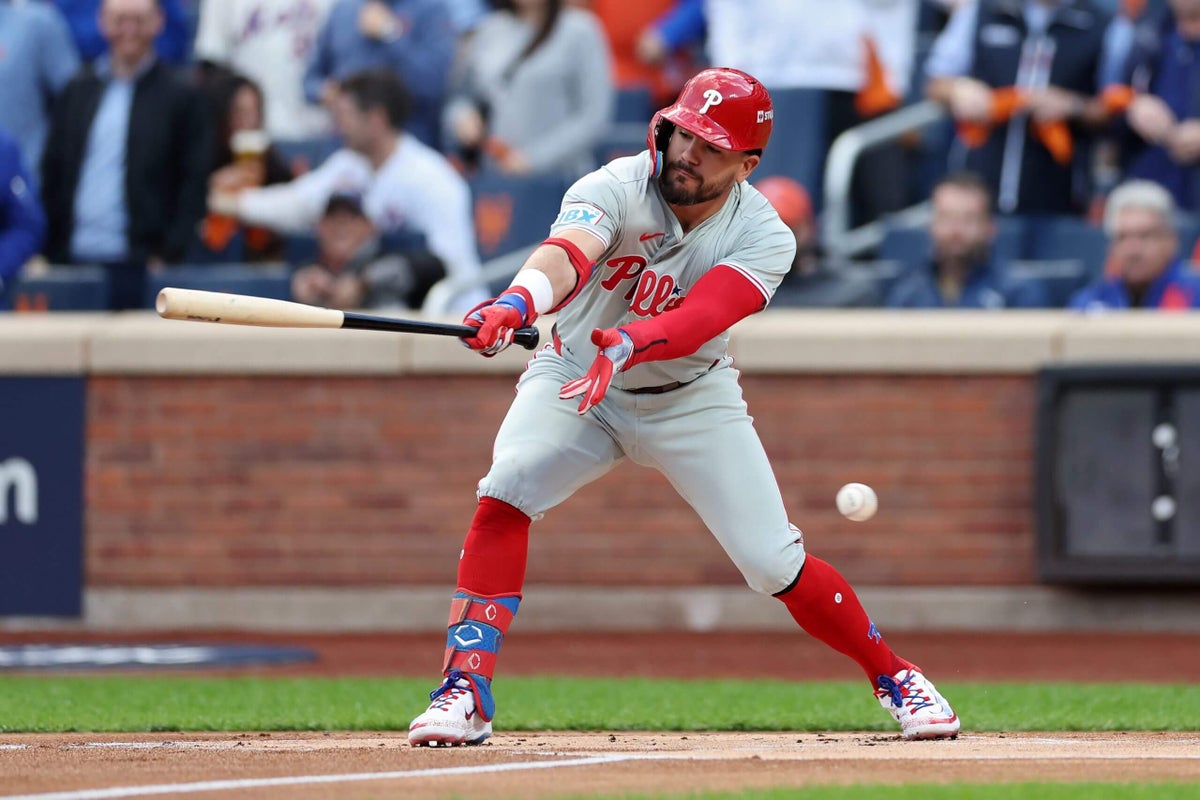
Phillies designated hitter Kyle Schwarber leads the group, with 135 in just 88 games. Three others — Angels shortstop Zach Neto (128), A’s first baseman Nick Kurtz (128), and Nationals right fielder James Wood (126) all have a shot at eclipsing 223.
But the perception of the strikeout is not the same today as it was in Reynolds’ time. Strikeouts are far, far more common across baseball, and hitters have come to see them as the cost of doing business in an era where pitchers throw harder and spin the ball more than ever.
“I’m not anxious about it. I mean, it is what it is,” Schwarber said of the record. “There’s a lot of other good things that I’ve done. I hate the perception of, ‘You sell out for this, you sell out for that.’ That’s just like the farthest thing from the truth.
“We’re hitters at the end of the day. And we want to be good professional hitters. Average is just as important as homers. And RBIs are just as important as any other stat too, right?”
The irony, as Schwarber suggests, is that this race to this unenviable crown is being waged by very productive hitters. Three of the four were named to the All-Star Game. And Neto, the lone non-All-Star, has a 119 OPS+, 39 extra-base hits and 2.5 bWAR this year.
This was true in Reynolds’ time as well. His 2009 season wasn’t just a record-breaking strikeout campaign — it was also the best season of his 13-year career. He hit 44 homers, posted an .892 OPS and earned his only MVP votes.
After all, no one gets the chance to strike out that much without doing well in the other plate appearances.
Wood even said he came across an Instagram post that showed the strikeout leader for every position. Seeing the names, he concluded, the lineup would be World Series caliber.
“I think the guys who are doing the most damage get pitched to a lot more carefully, they get less pitches to hit,” Wood said. “There’s two sides to it. There’s how the pitchers are pitching guys, where you’ve got to be really disciplined and not chasing. (And) also just trying to do damage. You obviously sacrifice a little bit of contact trying for more damage.”
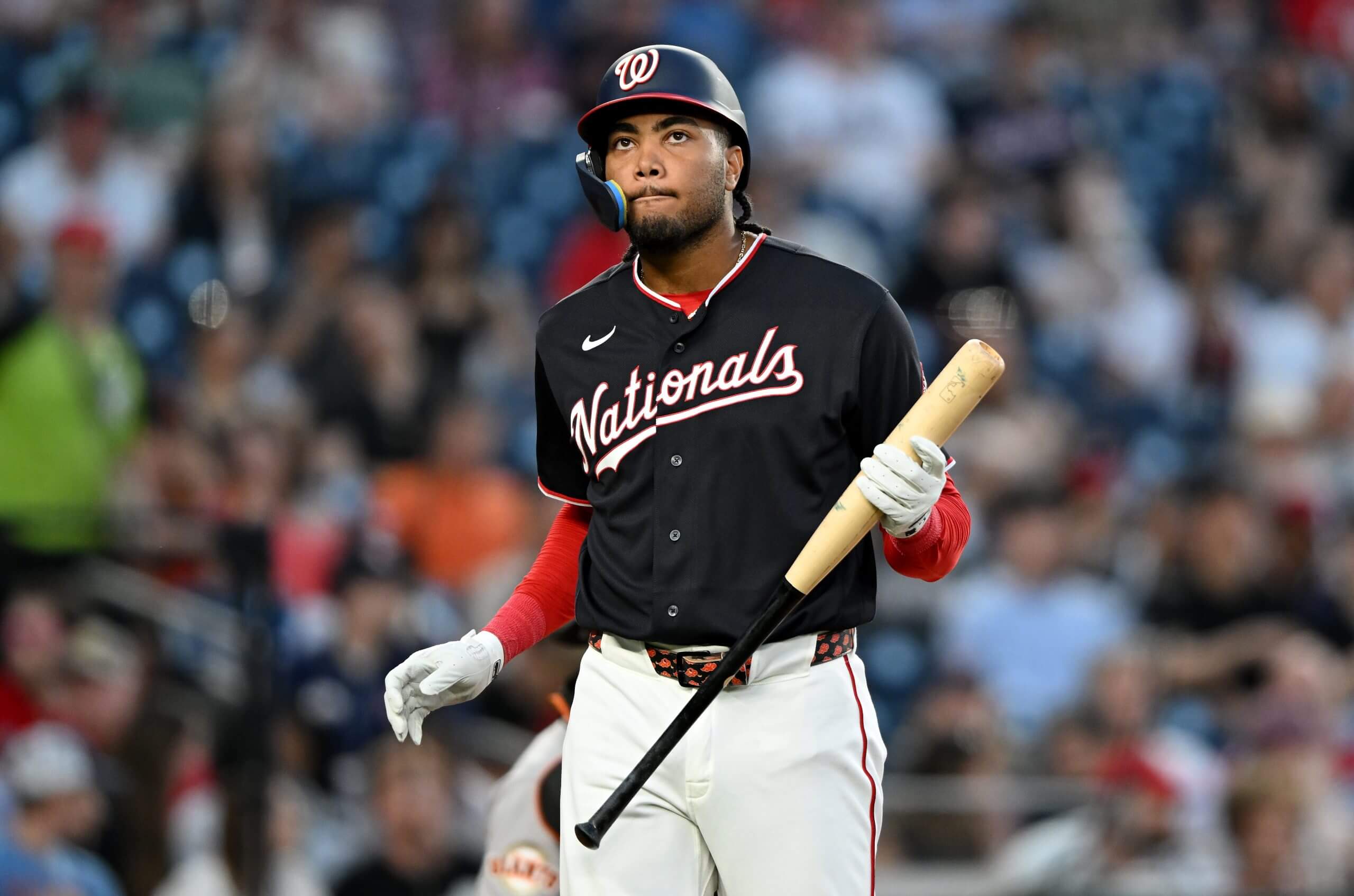
James Wood sees the reasons behind all the strikeouts. (Greg Fiume / Getty Images)
In 1975, the league strikeout rate was 12.9 percent, and it gradually climbed nearly every year. By 1995, it was 16.2 percent. In Reynolds’ record season, it was 18 percent, and it sits around 22.1 percent today. A combination of increased velocity and movement, a prioritization on hitting home runs and hitting for power, and more pitching data available are all contributing factors to the marked rise in Ks.
“The balls are starting to move way more than they used to. It’s tough,” Neto said. “Pitchers know how to throw a strike-to-ball pitch, or ball-to-strike pitch. It’s just tough. This league’s tough.
“I don’t pay attention to those numbers, because they’re gonna happen,” Neto said. “It’s just a matter of how you bounce back after that. I don’t want to let it be a snowball effect.”
Neto would be on pace to strike out 233 times this season, if he played 162 games, which he won’t. He’s already missed three games, meaning his candidacy for the record will come down to the wire. Same goes for Wood, who is on pace for 219 after cutting down on his strikeouts in the past few games; his bid for history came up short last season, when he finished with 221 Ks, the third-most ever. Kurtz is on a 230-K pace.
Schwarber, however, sits first on the leaderboard. More than halfway through this season, he is on pace for 249 strikeouts over 162 games. If anyone is going to take the crown, at least as of now, it’s him.
“It’s a double-edged sword. It really is. It’s frustrating. And it’s funny,” Schwarber said. “(My teammates) always talk about it. We always joke (after a strikeout). They go, ‘What are you mad about?’ I want to be better. I don’t like striking out.
“The game’s changed so much even from when I came into the big leagues in 2015. It was easier to touch the ball, you know? It was easier to not strike out as much.”
The history of this record reflects the evolution of overall strikeout tendencies, with multiple players holding the record for decades.
Four players have held the strikeout record for longer than Reynolds. Sam Wise’s 104 strikeouts for the 1884 Boston Beaneaters hung around for 20 years. Jake Stahl struck out 128 times in 1910, a record which stood for 28 years, before Vince DiMaggio K’d 134 times, which was the record for 18 years.
Bobby Bonds was the strikeout king for 34 years, striking out 189 times in 1970; seven players had at least that many in 2025.
“Vince (DiMaggio) is the only player I know who could strike out three times in one game and not be embarrassed,” said Casey Stengel, who managed DiMaggio during that whiff-filled 1938 season with the Boston Bees. “He’d walk into the clubhouse whistling. Everybody would be feeling sorry for him, but Vince always thought he was doing good.”
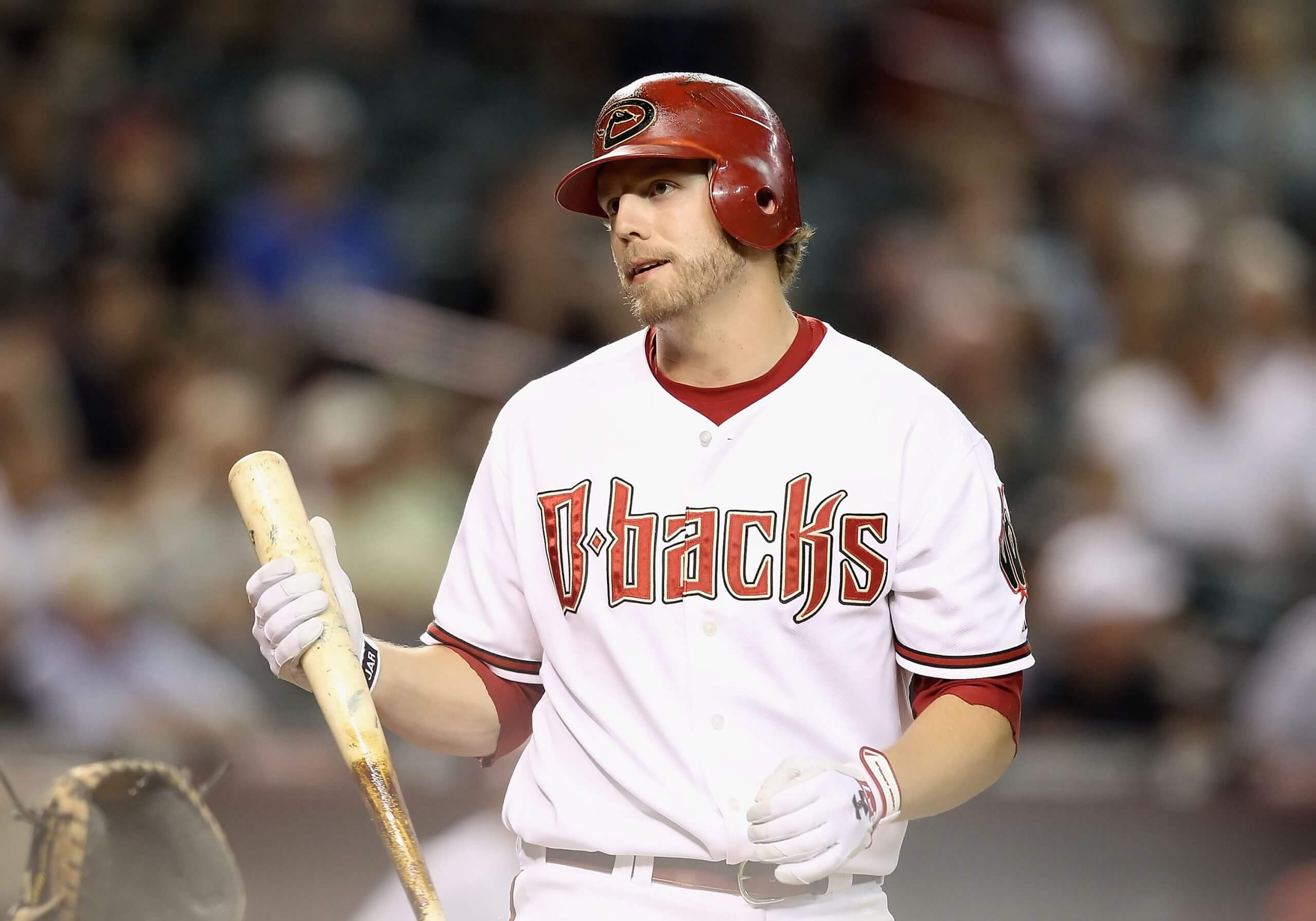
During his playing days, Mark Reynolds hated talking about his strikeouts. He looks at them differently now. (Christian Petersen / Getty Images)
DiMaggio’s easy embrace of his Ks was more of an acquired skill for Reynolds, who needed the passage of time to come to terms with his record. But he understands that it may not be his for much longer — it will fall this season, or maybe next, or the year after that. The game, he conceded, has evolved to be more accepting of players with his offensive profile.
He wishes he was more of a complete hitter, of course. Perhaps a better eye or penchant for contact would have turned Reynolds, who hit 298 MLB homers, into a perennial All-Star.
But now, with only time to reflect, he’s at peace with the ballplayer he was, and would welcome celebrating another just like him.
“I feel like I should take my strikeout award and give it to (the new record holder) on ‘SportsCenter’,” Reynolds said. “It’s eventually gonna happen at some point.
“But as of right now, today, I’m still the strikeout king.”
With contributions from The Athletic’s Matt Gelb, Spencer Nusbaum and Daniel Brown.