
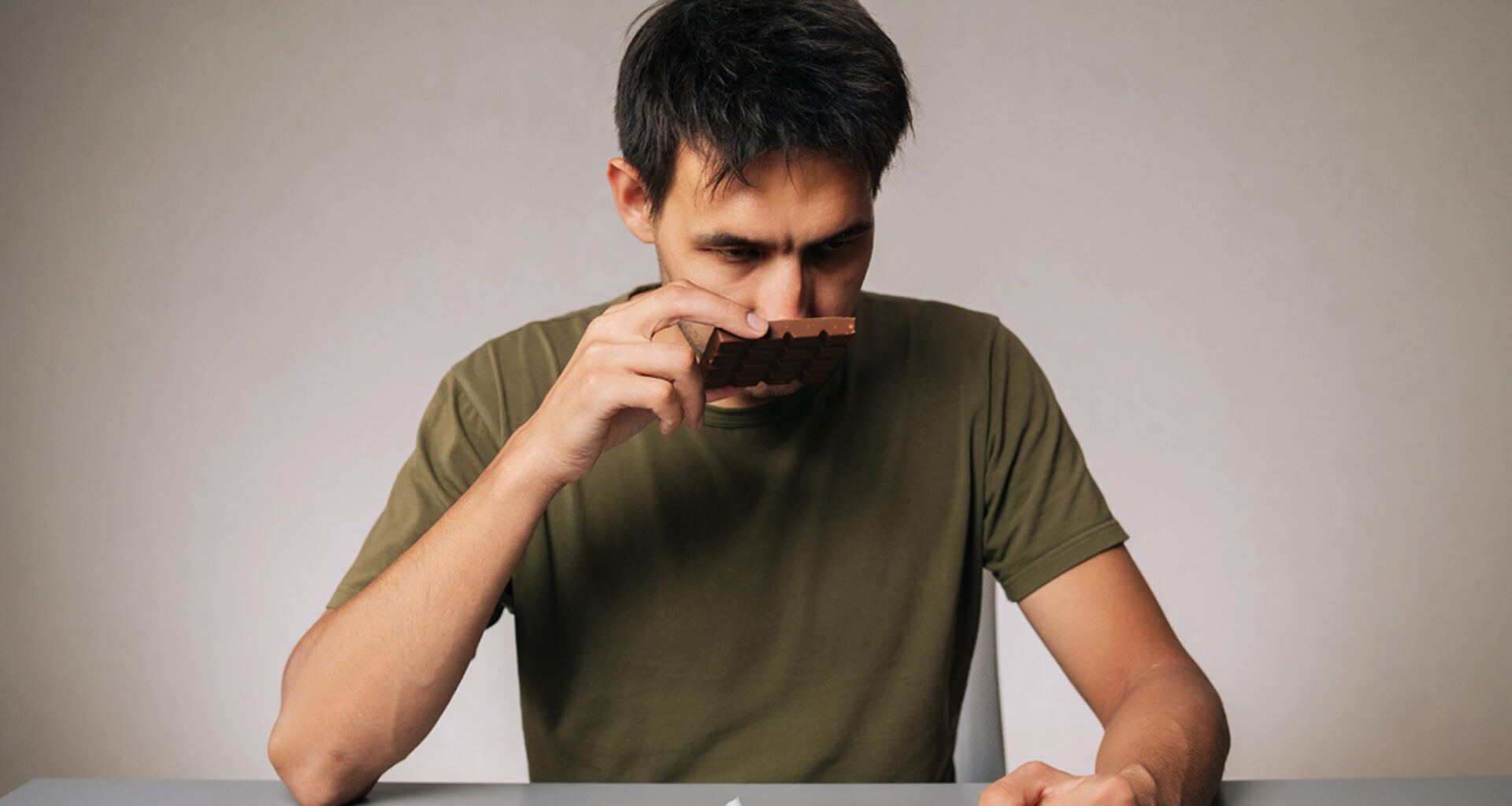
Smelling chocolate between sets at the gym pushed men to complete far more repetitions than they managed with no scent at all, a new study has found.
The men had not eaten for at least ten hours. Yet the boost showed up anyway, and it was strongest with dark chocolate. They did not feel like they were working any harder, even as their rep counts climbed.

That gap suggests the brain, not the muscles, is where the smell did its work, hinting that a simple sensory trick could help people train on an empty stomach.
How the test worked
The team recruited 23 moderately trained men in their early-to-mid-20s. Each arrived at the lab having skipped food for at least ten hours. They each sat down at a leg-extension machine, a staple of resistance training, and lifted until they could not finish another set.
The work was led by Mohamed Nashrudin bin Naharudin, an assistant professor and the study’s senior author, from the Faculty of Sports and Exercise Science at the University of Malaya (UM) in Kuala Lumpur. He wanted to know whether a smell on its own could change how much a person could lift.
Each man came back for three separate visits, one per scent. Before and between every set, a researcher held a freshly made liquid under his nose. The options were dark chocolate at 90% cocoa, milk chocolate at 60% cocoa, or plain water as a neutral comparison.
The difference between the scents was large. With the dark chocolate odor, the men completed about 18 more leg extensions than they did with water, and with milk chocolate, about nine more. The weight never changed, so their muscles faced the same load every time.
That last detail is what caught the team’s attention. On a simple zero-to-ten scale for how hard the effort felt, the men’s ratings rose as they tired, yet the scent under their nose made no difference to those numbers.
More reps came at no extra cost in strain. “Seeing a substantial increase in repetitions without the athletes feeling like they were exerting themselves any harder is a fascinating psychobiological outcome,” said Naharudin.
Dark versus milk chocolate
The two chocolates did not work the same way, and the men’s appetite ratings showed it. Before lifting, they marked their hunger, fullness, and desire to eat on a sliding scale.
After the dark chocolate, they reported less hunger, more fullness, and a weaker pull toward food.
The milk chocolate left those hunger signals untouched. What it changed was pleasure. The men rated its smell as more pleasant than either the dark chocolate or the water, even though it did nothing to dull their appetite.
Naharudin’s team reads the split as a story about expectation. A bitter, intense dark-chocolate smell signals a heavy, filling food, so the body begins to behave as though a rich meal is on the way.
“The dark chocolate scent serves as a learned cue for a rich, bitter, and highly satiating food, which essentially tricks the system into an anticipatory state of fullness,” said Naharudin.
The sweeter milk chocolate did not tap that sense of fullness. The researchers think it worked more like a reward, making the grind feel better and nudging the men toward a few more reps on pleasure alone.
Why scent works
None of this needs food to reach the stomach. The sight and smell of a meal can switch on the body’s digestive machinery before the first bite.
Scientists call this the cephalic phase – the body’s head start on eating. A review of it describes saliva, stomach acid, and hormones all firing in anticipation of food.
If those signals can tip hunger toward fullness, they may also change how a workout feels. The men had eaten nothing, yet their bodies seemed to respond as if a meal were close. Anticipation appeared to do some of the work that food usually does.
Researchers have long known that smell runs deep into the brain regions governing hunger and emotion. A recent study traced a circuit from the nose to the hypothalamus – a brain hub for hunger – that can quiet appetite when a food smell lingers.
What no one had tested was whether that wiring could change how much a person could lift.
Training while fasting
Plenty of people train before breakfast, whether to fit a session into a busy morning or as part of a fasting routine. The trade-off is familiar.
Lifting on an empty stomach often feels harder and tends to cut a workout short. A smell that boosts reps without increasing perceived effort could be a calorie-free way around that.
The result fits a strange but real corner of sports science. Athletes who swish a sugary drink and spit it out, swallowing no calories, can push harder in some sessions. The effect is clearest when they have not eaten.
One trial found that this mouth-rinse trick increased reps on demanding lifts without changing how hard the exercise felt. The chocolate scent produced the same signature, more output with no added sense of strain.
Looking beyond chocolate
The findings come with real limits. It was a small, all-male study built around a single exercise, so it is unclear whether the effect would hold for women, older lifters, or a full workout. No hormone levels or brain activity were measured, which leaves the mechanism inferred rather than observed.
What the study establishes is narrow but clear. A chocolate smell, especially a dark and bitter one, can help someone training on an empty stomach complete more repetitions without making the effort feel any harder.
The open question is whether chocolate is special or just one of many familiar smells that might work.
“We don’t think chocolate is entirely unique, though it is a food cue with incredibly strong, universally recognized reward associations,” said Naharudin.
If other appealing food scents turn out to do the same thing, the payoff could be small but genuine. A familiar food scent before a hard set might become another low-cost tool for training on an empty stomach.
The study is published in Frontiers in Physiology.
—–
Like what you read? Subscribe to our newsletter for engaging articles, exclusive content, and the latest updates.
Check us out on EarthSnap, a free app brought to you by Eric Ralls and Earth.com.
—–