
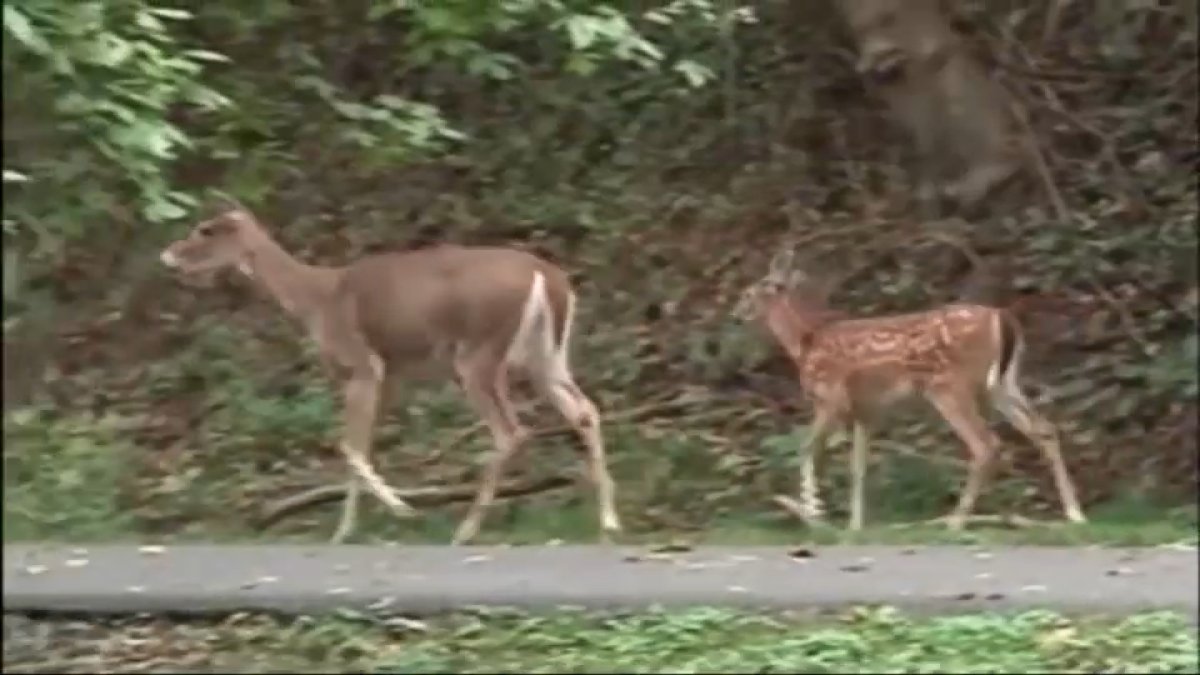
Deer populations in parts of Massachusetts have grown to the point that wildlife officials say they’re causing widespread problems for forests, farms and public safety.
MassWildlife says some areas of eastern Massachusetts now have 30-40 deer per square mile, far more than other parts of the state.
“It’s pretty significant. At this point, essentially, a lot of the ecosystems around this portion of the state are really getting pretty negatively impacted,” said Martin Feehan, deer and moose biologist with MassWildlife. “It’s also really impacting a lot of farms in eastern Mass., it’s impacting people’s gardens, it’s leading to a lot of vehicle collisions, and certainly, we’ve seen a rise in tick-borne diseases, as well.”
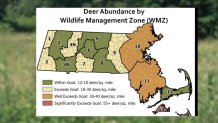
Mass.govMass.gov
Feehan said the overpopulation is damaging tree farms, threatening local agriculture and increasing risks to public safety.
“It’ll lead to really significant damage to farms in an area where it’s already hard to farm. We really need to make sure we have a local source of produce and being able to support our local farmers,” Feehan said. “It’ll also lead to increasing problems with human health and safety when it comes to vehicle collisions and tick-borne diseases.”
Conservation leaders said heavy deer browsing is also changing the makeup of forests. Deer feed on plants like white oak, which support hundreds of other species and help maintain biodiversity.
“Overabundant deer populations are immediately linked to us having forests that are lacking those keystone species that hold everything else up,” said Emma George Ellesworth, executive director of the Mount Grace Land Conservation Trust.
Wildlife officials said hunting antlerless deer remains one of the most effective ways to reduce the population because female deer have the greatest impact on future population growth.
“Females are where you really have the reproductive impact of a population, so when you’re trying to manage a deer population, you really focus on those antlerless deer,” Feehan said.