
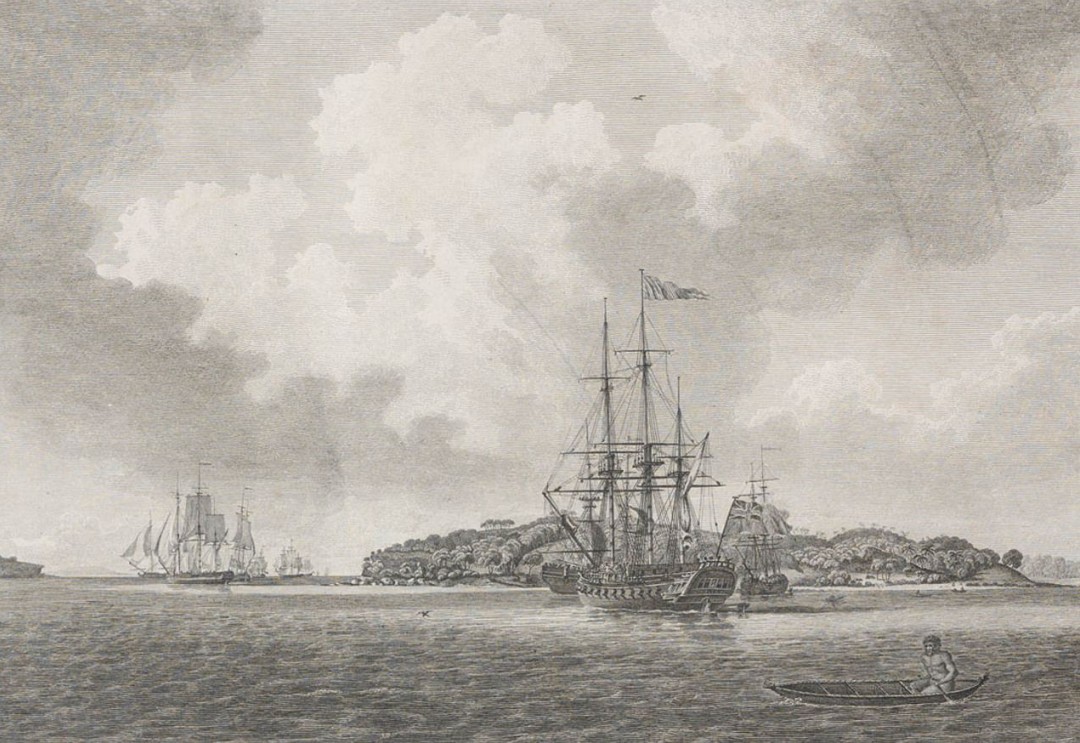
A fresh analysis of an old scourge suggests smallpox likely slipped into Australia not via sick sailors, but via jars of infected scabs. Two new preprint studies, now accepted by peer-reviewed journals, argue the virus arrived with Britain’s First Fleet in 1788, carried as “variola matter” used for inoculations—powdered material made from the scabs of survivors, rubbed into scratches to induce a milder infection, reports Smithsonian Magazine. “Although ships of the British royal navy did not routinely carry variola matter, it is likely that at least one of the surgeons would have brought it along or acquired it en route in Rio de Janeiro or Cape Town,” the researchers write. The fleet had 11 ships that arrived to found a penal colony.
The work also radically revises how many Aboriginal people were there to be harmed. Where past estimates put the pre-colonial population at 200,000 to 800,000, the researchers now suggest two to three million. “We estimate that a median of 2.4 million additional people might have died through disease directly or indirectly through broader social impacts, and/or were killed in frontier violence in the early and mid-19th century,” the researchers write. As Science notes, that undermines the long-held notion that the Brits colonized a sparsely populated land. The studies find no evidence that the British deliberately weaponized smallpox against Aboriginal communities.