
Every election cycle, like clockwork, the conversation begins. Not about policy. Not about vision. Not about record. It begins with a question that has shadowed political candidates of color for generations: Can they win?
The answer — hiding in plain sight, etched into the historical record of this nation — is an emphatic yes.
According to the Smithsonian Museum of African American history, over 100 Black Americans have held statewide office across the United States, spanning roles from governor and lieutenant governor to attorney general, secretary of state, treasurer, and superintendent of public instruction. That count includes those who served during the Reconstruction era, when Black men such as P.B.S. Pinchback of Louisiana and Francis Lewis Cardozo of South Carolina broke the mold of American democracy at its most fragile and contested moment. It also includes the post-Reconstruction surge, a wave which accelerated dramatically beginning in the 1960s and has produced Black statewide officeholders in states as politically diverse as Massachusetts, Indiana, Colorado, Ohio, Nevada, and Virginia.
States like New York, New Jersey, Illinois, and Mississippi have each produced eight or nine Black statewide officeholders. California gave us Kamala Harris, who served as Attorney General before ascending to the United States Senate and ultimately the Vice Presidency. Indiana — yes, Indiana — has produced four Black statewide officials. Ohio, three. Michigan, three. The evidence of Black electability is not a theory. It is a documented, well-established fact.
And then there is Wisconsin.
In the entire history of the Badger State, only three Black individuals have ever held statewide office. The trailblazer was Vel Phillips, who served as Secretary of State beginning in 1978 — the first Black person elected to statewide office in Wisconsin’s history. She was followed decades later by Mandela Barnes, who served as lieutenant governor from 2019 to 2023. And Carolyn Stanford Taylor, who served as State Superintendent of Public Instruction — Taylor was appointed, not elected, to fill the role. So, of the three, only two were chosen by Wisconsin voters at the ballot box.
Three. In the entire history of this state.
Compare that to Michigan, where three Black statewide officials have served and where Garlin Gilchrist currently sits as lieutenant governor. Compare it to Ohio and Pennsylvania, which have both produced Black lieutenant governors in recent years. Compare it to Illinois, where a Black man has served as lieutenant governor continuously since 2019. Wisconsin’s rust belt neighbors have elected multiple Black mayors of their largest cities — Detroit, Cleveland, Pittsburgh, Minneapolis — and have sent Black men and women to statewide offices with regularity. Wisconsin has not.
This context matters enormously as the state hurtles toward its August 11, 2026, Democratic gubernatorial primary. The field includes former Lieutenant Governor Mandela Barnes, State Rep. Francesca Hong, Lieutenant Governor Sara Rodriguez, State Senator Kelda Roys, and Joel Brennan. Hong and Barnes are the only people of color vying for the office.
Candidate Joel Brennan drew criticism for suggesting Wisconsin isn’t ready for a female or non-white governor, a comment he later walked back. The reporting that preceded his walk-back was even more pointed: a political observer raised the question of whether being white would help Brennan “neutralize a possible advantage for Tom Tiffany, the white male Republican candidate,” noting that all other candidates are non-white on the Democratic side.
Sara Rodriguez, a white female, was publicly chided after she told an audience at a Marquette College Democrats event in April that she had doubts about whether Hong or Barnes could defeat Tiffany in the general election. She later softened that position, but the damage to the discourse had been done. The question of whether a Black or Asian candidate could win statewide in Wisconsin had been injected — again — into the bloodstream of this primary.
Why does this keep happening? In part, because Wisconsin is approximately 78% white. The logic, as cynical as it is familiar, goes: a white electorate needs a white candidate. But that logic collapses under scrutiny. Deval Patrick won the governorship of Massachusetts twice. Wes Moore is currently the governor of Maryland. Douglas Wilder became governor of Virginia in 1989. These men won in states with majority-white electorates because they ran excellent campaigns, spoke to the concerns of working families, and were invested in and supported by their parties.
That last point is worth dwelling on. Black voters are the most reliable constituency in the Democratic Party. They show up in primaries. They show up in generals. They delivered Georgia in 2020. They have powered Democratic victories across this country for decades. And yet, when a Black candidate seeks the nomination, some in the party quietly murmur about whether white voters will follow. Congresswoman Jasmine Crockett’s recent U.S. Senate primary is a textbook example of this phenomenon.
That is not a strategic calculation. That is a double standard.
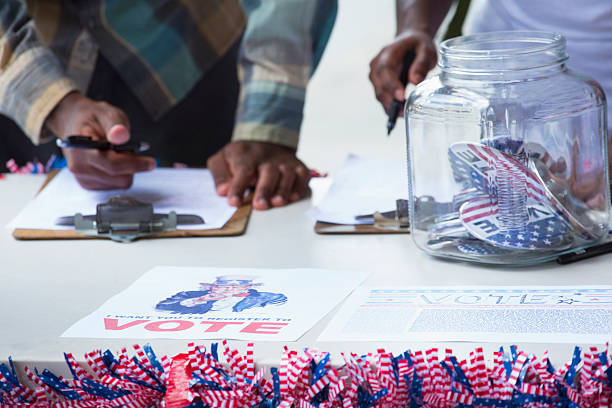
If you are a Democrat in Wisconsin who is worried about the electability of a Black candidate, or an Asian American candidate, there is one surefire remedy: vote for one. Your vote is the only poll that matters. Your vote makes a candidate electable. The question of whether Wisconsin is “ready” for a governor who is not white is not answered in a focus group or a cable news segment. It will be answered in the voting booth on August 11th.
The record shows that leaders of color, when given the opportunity and the investment, win. They govern. They deliver. Wisconsin has lagged behind its neighbors long enough. It is past time for the Badger State to catch up — not because diversity is a talking point, but because talent has never been confined to any single race, and Wisconsin voters deserve to see that talent in the governor’s mansion.