
CADILLAC — For Diane Patterson, finally hearing the words “Parkinson’s disease” brought an unexpected sense of relief.
After years of symptoms that included a diminished sense of smell and other subtle warning signs, Patterson said doctors confirmed the diagnosis when she was 60. At one point, ALS had also been considered.
“My first thought was, ‘Thank God,’” Patterson said. “I knew Parkinson’s wasn’t a death sentence. I knew it was manageable.”
For Robert Whitney, the diagnosis came with far less surprise.
Whitney noticed a tremor in his right hand when he was 32. His mother had been diagnosed with young-onset Parkinson’s disease at 38, so he recognized the symptoms almost immediately. After waiting about two years, he sought medical care and was diagnosed at 34.
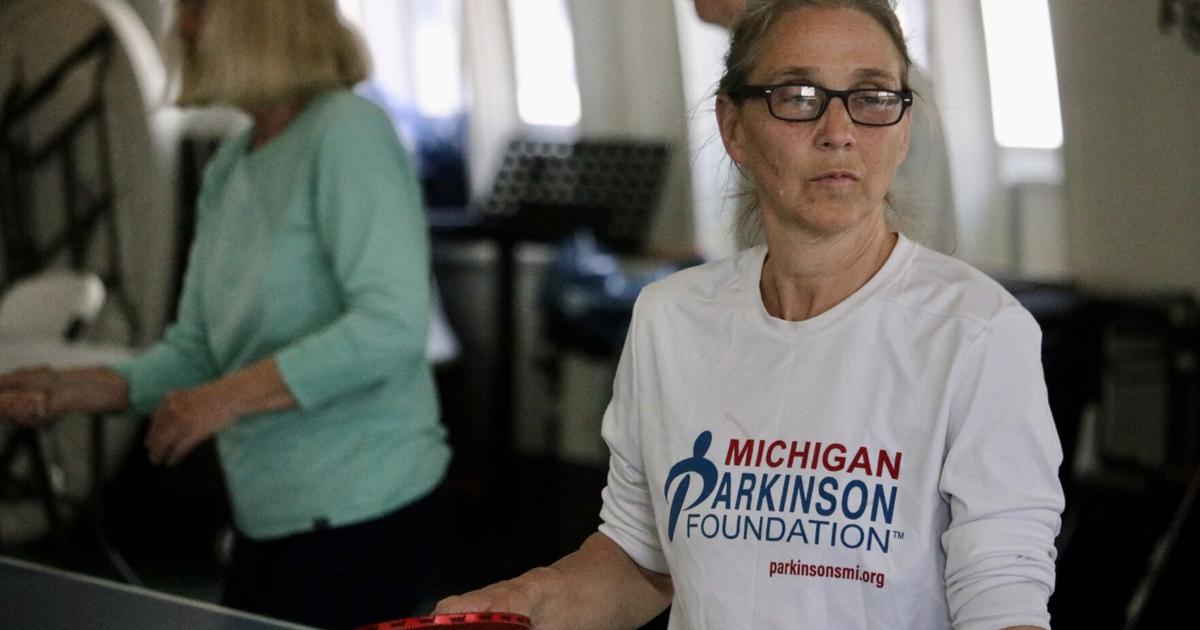
Today, Patterson, 66, and Whitney, 48, are among the members helping others navigate the disease through the Parkinson’s support group at the Cadillac Senior Center, where a growing exercise program now includes walking, Tai Chi and even ping pong.
Patterson has helped lead the local support group for more than two decades. She became involved while working at the Wexford County Council on Aging, and when she moved to the senior center 21 years ago, the support group moved with her. The organization now has five facilitators and continues to provide education, guest speakers and support for people living with Parkinson’s and their care partners.
Although Parkinson’s is often associated with tremors, Patterson said the disease affects everyone differently.
“There are multiple symptoms, and not everyone shows the same ones,” she said. “People often tell me, ‘You don’t look like you have Parkinson’s.’ What does that even mean?”
She said symptoms can include rigidity, slowed movement, balance problems, sleep disorders, constipation, depression, brain fog, changes in handwriting and speech, reduced arm swing while walking and facial masking where facial muscles become stiff and slow to respond. Many people begin experiencing symptoms years before receiving a diagnosis.
Managing the disease has become a carefully planned routine.
Patterson said every day revolves around medication schedules, meals and activities. Because Parkinson’s medications replace dopamine and can be affected by protein, she carefully times meals to get the greatest benefit from the medication while planning exercise during the hours she feels her best.
“It is like a roller coaster,” she said. “I have to plan my days around my medication, my activities and my meals.”
Even after breaking her hip earlier this year, Patterson continues to emphasize the importance of staying active.
She participates in Flexercise, cardio drumming and regular walks through activities at the senior center. She believes exercise is one of the most effective treatments available alongside medication.
“If you look at the Michigan Parkinson Foundation, the Michael J. Fox Foundation or any major Parkinson’s foundation, the message is the same. Exercise, exercise, exercise,” Patterson said. “Movement is medicine.”
That philosophy inspired the newest addition to the senior center’s offerings.
After seeing television reports highlighting ping pong programs for people with Parkinson’s and learning about research showing improvements in balance, coordination and range of motion, Patterson decided to start a local program. The opportunity came together after a community ping pong group approached the senior center looking for a place to play.
The center purchased two tables and launched the Parkinson’s ping pong sessions in April.
Participants meet at the senior center on the first, third and fourth Tuesdays for a walk at 1 p.m. followed by ping pong at 1:45 p.m. The second Tuesday includes Tai Chi at 1 p.m. before ping pong. The fourth Tuesday is reserved for the monthly support group meeting, although participants can still stay afterward to play.
Patterson said the activities are designed for both people with Parkinson’s and their care partners, allowing everyone to exercise at their own pace. Walking sticks are also available to encourage better posture, longer strides and improved balance.
The senior center also hosts a Wednesday drop-in ping pong session at 3:15 p.m. for anyone age 50 and older.
Whitney joined the support group about seven years ago after his symptoms progressed to the point where he could no longer work.
Medication initially controlled his symptoms, but eventually he underwent deep brain stimulation surgery at Henry Ford Hospital in 2017. During the procedure, a neurosurgeon plants electrodes in the brain and a pacemaker-like device in the chest to block abnormal signals, dramatically reducing tremors, stiffness, and involuntary movements
The procedure, which followed extensive testing to determine whether he was a good candidate, dramatically improved his quality of life.
“It gave me my life back,” Whitney said.
He has been part of the ping pong group since it began this spring.
“I didn’t think I would be very good at it, and I’m not,” he said. “But I’m better than I thought I would be.”
More important than the competition, Whitney said, is having something to anticipate each week and the opportunity to encourage others facing the same diagnosis.
“If I can help somebody, that’s why I come,” he said.
Patterson hopes more people experiencing possible Parkinson’s symptoms, as well as family members, caregivers and health care professionals, will attend the support group and learn about available resources.
The group partners with the Michigan Parkinson Foundation, which provides educational programs, speakers and support services.
As part of that partnership, the Michigan Parkinson Foundation will host a free Community Forum from 1 to 3 p.m. July 28, at the Cadillac Senior Center, 601 Chestnut St.
The event is open to people with Parkinson’s disease, care partners, family members and health care professionals.
Dr. Kaitlyn Vanias of Mary Free Bed will present “Balance and Mobility in Parkinson’s,” followed by an exercise demonstration led by Michigan Parkinson Foundation Northern Michigan Programs Manager Torrey Davenport and Patterson.
Patterson said the forum is designed to connect people with valuable information while introducing them to the local Parkinson’s community.
“If you’re thinking you’re showing symptoms, come to the meeting,” Patterson said. “Whether it sets your mind at ease or you’re joining the club, we’ll take your hand and lead you through.”
She said the group’s mission mirrors the Davis Phinney Foundation’s mantra: “Live well, inspire others and connect the community.” The foundation focuses on education, inspiration and connection and was started by Olympic cyclist Davis Phinney in 2004 after he was diagnosed with Parkinson’s at age 40
For Whitney, the message to anyone newly diagnosed is simple.
“Life is not over,” he said. “Find something to look forward to.”
• Two Cadillac residents share how Parkinson’s disease changed their lives and how a local support group has helped them navigate the diagnosis. • The Cadillac Senior Center now offers walking, Tai Chi and ping pong programs that encourage exercise, which experts consider one of the best ways to manage Parkinson’s symptoms. • The Michigan Parkinson Foundation will host a free Community Forum on July 28 in Cadillac, featuring education on balance, mobility and exercise for people with Parkinson’s, caregivers and health care professionals.