
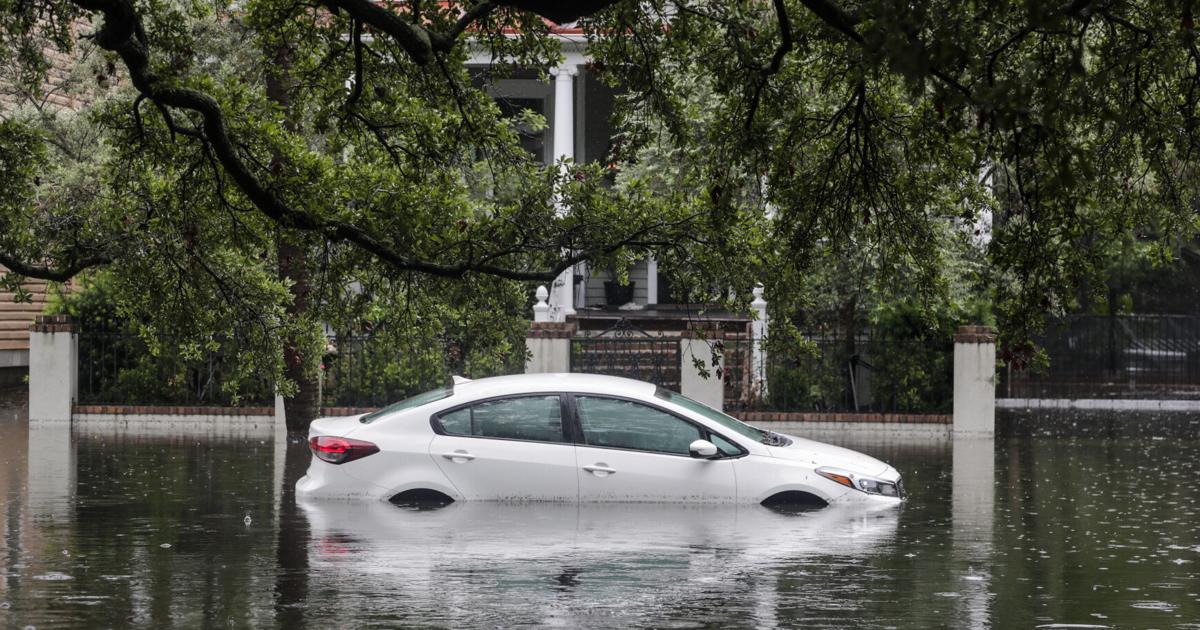
The groundwater in question isn’t the stuff utilities pump from the ground, treat and pipe into taps and sprinklers. Beneath the streets of Charleston is something akin to a massive, layered cake made of sediments and aquifers. The deeper aquifers between hard layers of rock are “confined,” and they contain the water that utilities pump to the surface for municipal water systems.
The groundwater that the college and city are monitoring is not confined between layers of rock, it creates the water table that raises and falls near the ground’s surface, and interfaces with area creeks and the Atlantic Ocean.
There isn’t much to the well, just a PVC pipe with a device that monitors pressure and temperature every hour, which Matthew Swanson, a College of Charleston graduate student who has been managing the wells, pulls up and downloads when he conducts another manual measurement.
Norman Levine, director of the Lowcountry Hazards Center, said the water table sits about three feet below his backyard in Charleston. Compared to places further inland with a water table 15 to 20 feet below the surface, there’s a lot less space in Levine’s backyard to absorb rainfall.
Understanding how long it takes for groundwater to rise, and then fall, after a rainfall event can help determine how much capacity the ground in that area has for holding and absorbing more groundwater. If the groundwater table is high after a period of high rainfall, then the ground has less capacity for more rainwater, causing the area to flood quicker during the next storm.
The average groundwater depth across the city can vary, depending on the geography of the area. Using the information available, it’s clear that the groundwater levels spike soon after heavy rainfall events, such as Tropical Storm Debbie in 2024. What doesn’t significantly affect the groundwater levels is the tides, the impact of which taps out around 400 feet from the water.
In the future, Swanson see the data as an important tool in predicting what areas of the city will flood, and how severely, due to rainfall.