
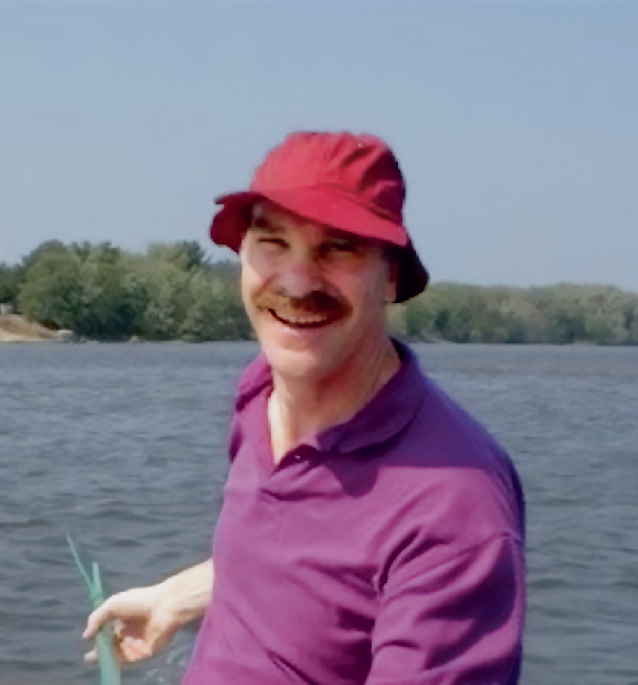
Mark was born in Cleveland, and from an early age he was surrounded by science, engineering, and industry through weekend lectures from local professors, working at his father’s lumberyard, and a summer job at the Harshaw Chemical Company synthesizing dyes. He attended Harvard University (Cambridge, MA), where a winding academic road, which went through semesters where he majored in math or English, ultimately ended with a degree in chemistry. Chemistry offered an appealing tangibility. “Chemists are physical scientists. They deal with the world”, he used to say. He went on to a PhD in chemistry at Northwestern University (Evanston, IL) with Ludwig Hofacker, working on the theory of hydrogen bonding, and a postdoctoral fellowship at Aarhus University (Denmark). He started his independent career as an associate professor at New York University in 1970, staying there until 1974. By 1975, he was back at Northwestern, where he served twice as department chair; was an architect of the International Institute for Nanotechnology (IIN); founded and co-directed the Institute for Sustainability and Energy at Northwestern (ISEN); and was both associate dean and interim dean of the College of Arts and Sciences.
Mark’s career in chemical theory was a study in electronic motion along many length scales, ranging from molecules defined by orbitals, to molecular and semiconductor bands, to complex proteins. But he always saw these systems as elements of a bigger electrodynamic universe where electrons interact with nuclei and electric fields, exchanging energy with the environment through vibrations and dipoles and the ‘friction’ of solvent. His most well-known proposal1 was that if this environmental interaction (including the delicate connection of the molecule to a solid-state electrode2) could be dissected and controlled, molecules would be supremely tunable conductors of charge and energy through the placement of inherently electron-rich and electron-poor chemical groups with specific vibrational structures, and chemists would be electrical engineers.