
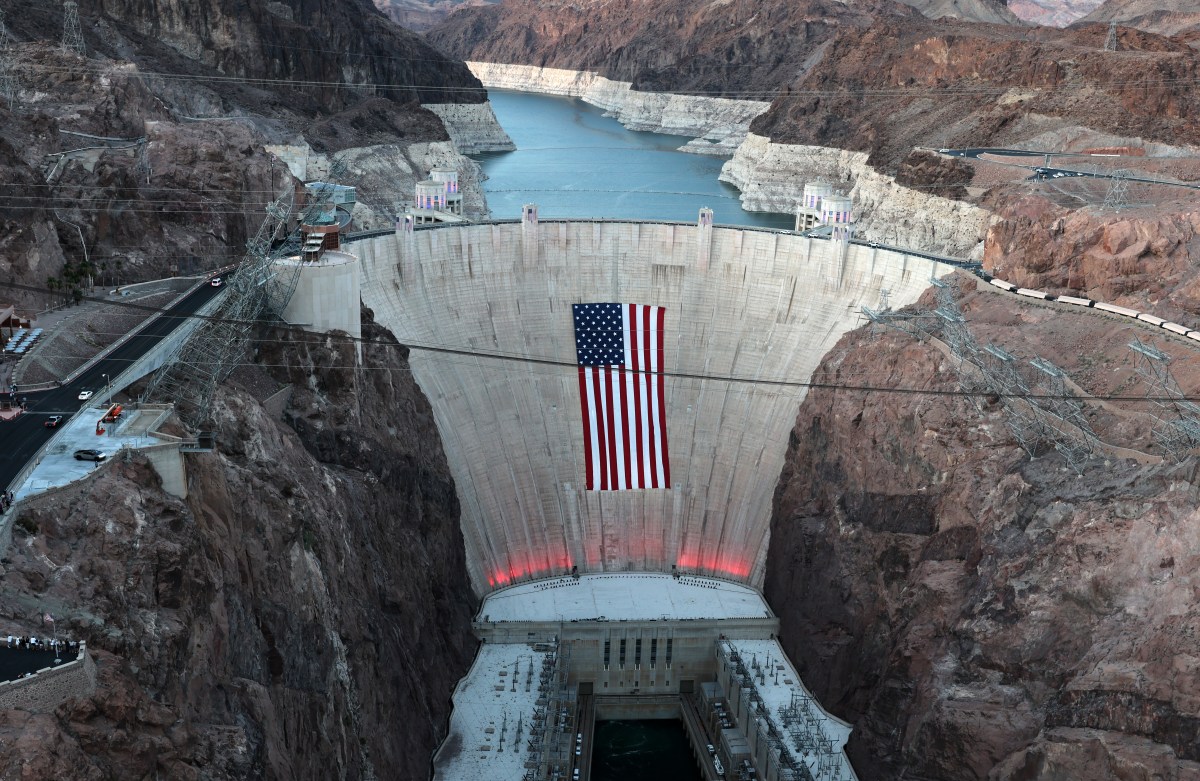
With negotiations over future Colorado River operations still unresolved and water levels at Lake Mead and Lake Powell remaining far below historical norms, policymakers, water managers and researchers are continuing to examine a range of proposals aimed at stabilizing the river system.
Dwindling Water Levels
The reservoirs remain under pressure after more than two decades of drought in the Colorado River Basin while demand for water continues to exceed the river’s long-term supply. The river irrigates millions of acres of farmland and provides water for tens of millions in the West.
Read More on News
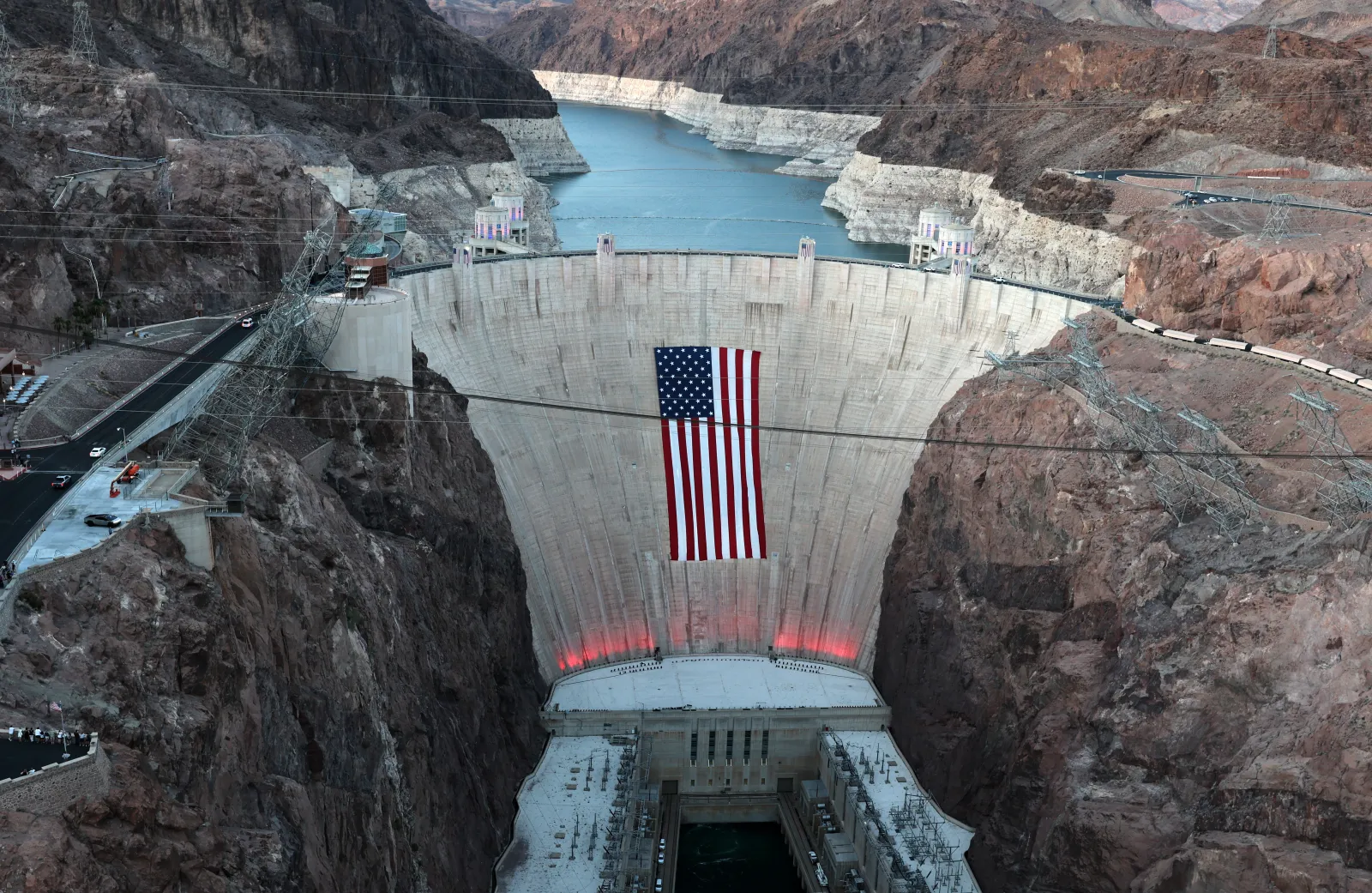
As of Friday, Lake Mead was only 27 percent full, while Lake Powell was just 23 percent full, according to U.S. Bureau of Reclamation (USBR) data. The levels represented 46 percent and 34 percent, respectively, of the average water storage for the date.
Falling reservoir levels have also raised concerns about hydropower generation. Lake Powell’s Glen Canyon Dam and Lake Mead’s Hoover Dam supply electricity across the West, and lower water levels can reduce generating capacity and operational flexibility.
 Water Savings
Arizona, California and Nevada have proposed a short-term plan to conserve up to 1 million acre-feet of Colorado River water through 2028, adding to previously announced reductions by those states and Mexico.
Together, the savings would total 3.2 million acre-feet—enough to serve more than 25 million people for a year. Under the proposal, Arizona and Nevada would each use roughly one-third less than their annual Lake Mead entitlements, while California, which holds the largest and most senior rights, would cut use by about 13 percent, according to the outlet.
Changes to Agriculture
Agriculture is another focus, with irrigated farming accounting for roughly three-quarters of direct human water use and more than half of all water use in the Colorado River, according to a 2024 water-accounting study.
“The basin cannot sustain the agricultural productivity of past decades,” Jay Famiglietti, a global futures professor at Arizona State University’s School of Sustainability, told Newsweek.
“Combined with climate change, it has literally sucked the basin dry,” he said. “Big solutions such as shifting away from thirsty crops like alfalfa and nut orchards, and more importantly, significantly scaling down the basin’s agricultural footprint, will be key to its long-term water security.”
Experts cited by Politico and Aspen Journalism say urban conservation alone cannot close the Colorado River’s supply-demand gap, arguing that agriculture must be part of any serious reduction strategy, even as permanent cuts remain politically difficult.
Ideas range from compensated, temporary fallowing to longer-term changes in what and how farmers grow. The Colorado River Resilience project points to less water-intensive crops, regenerative practices that improve soil moisture, upgraded irrigation infrastructure and voluntary paid fallowing as ways to reduce pressure while keeping producers involved.
In the Imperial Irrigation District (IID) in Southern California, farmers have spoken through local and agricultural outlets about paid conservation programs. Larry Cox, a Brawley farmer, told the Calexico Chronicle that compensation rates for IID’s on-farm conservation and deficit irrigation programs were not enough to cover actual costs. Mark McBroom, an Imperial Valley farmer and chair of IID’s Agricultural Water Advisory Committee, told Ag Alert in 2023 that growers had to weigh whether payments made it viable to forfeit crop revenue by drying fields.
Drain Lake Powell to Save Lake Mead
Another solution could involve sending Lake Powell’s water downstream to Lake Mead, effectively retiring Lake Powell as a primary storage reservoir.
Known as “Fill Mead First,” the plan could involve water currently stored in Lake Powell being moved downstream to Lake Mead in stages.
Initially, Lake Powell would be drawn down toward minimum power-pool levels, exposing previously inundated portions of Glen Canyon. A second phase would lower the reservoir further, toward the dam’s outlet works.
The final phase would involve constructing diversion tunnels around Glen Canyon Dam to allow the Colorado River to flow freely through Glen Canyon while continuing to route water downstream. Proponents say Lake Powell could then serve as a backup reservoir during wetter years while most long-term storage would be concentrated in Lake Mead.
“The timeline of phasing out Lake Powell to save Lake Mead depends on how quickly Glen Canyon Dam can be reengineered. Current hydrologic conditions are already pushing these dams to their lowest limits, a trend which is only projected to get worse,” Zana Stutz, program director at the Glen Canyon Institute, which advocates for the strategy, told Newsweek. “We need to take Fill Mead First seriously to protect the environment and infrastructure of the Colorado River system, now and into the future.”
Desalination
Federal and state water agencies have also been exploring whether desalinated seawater can help ease pressure on the Colorado River system.
In June, the USBR and agencies in Arizona, Nevada and California signed a memorandum of understanding (MOU) at San Diego County’s Claude “Bud” Lewis Carlsbad Desalination Plant to study interstate water exchanges involving desalinated or recycled water.
The concept is not to build new pipelines carrying desalinated ocean water inland. USBR says agencies could instead use existing infrastructure to “move” water on paper, enabling transfers or exchanges tied to desalinated or recycled supplies without constructing costly new conveyance systems.
The MOU does not alter existing water rights or commit any party to a specific project. USBR said that, if implemented, it would be the first mechanism to facilitate interstate movement of desalinated or purified water within the seven-state Colorado River Basin.
Sarah Porter, director of the Kyl Center for Water Policy at Arizona State’s Morrison Institute for Public Policy, told Newsweek that solutions such as desalination could produce costly water that would likely not be financially accessible to agriculture, the biggest water-using sector in the system.
Water Recycling
Another possibility could involve stretching existing supplies by reusing more municipal wastewater before it is discharged.
A UCLA Institute of the Environment and Sustainability report found that Colorado River Basin states recycled an average of 26 percent of municipal wastewater from major publicly owned treatment works in 2022, with large differences among states. Arizona reused 52 percent and Nevada as much as 85 percent, while California reused 22 percent, New Mexico 18 percent, Colorado 3.6 percent, Wyoming 3.3 percent and Utah less than 1 percent.
The report said that if states other than Arizona and Nevada raised reuse to 40 percent of treated wastewater, recycled water availability could increase by nearly 900,000 acre-feet per year. Reaching 50 percent would add nearly 1.3 million acre-feet.
“This represent a significant percentage of the projected shortfall on the Colorado River, and a solution that should be pursued aggressively to ensure sustainable management of the river,” it said.
Cloud Seeding
Cloud seeding is another idea aimed at adding snow to the snowpack that feeds the Colorado River. The Colorado River District says its program uses propane generators to release small amounts of silver iodide into suitable winter storms, helping ice crystals form and fall as snow.
It says the practice can increase snowfall from some storms by up to 15 percent, increase associated streamflows by up to 5 percent, and potentially add up to 80,000 acre-feet of water annually once it melts—enough to serve about 160,000 households on average per year.
Colorado has permitted cloud-seeding programs in several mountain basins, and CBS News in Colorado described it as a tool that can enhance storms already forming, not create new ones.
The Associated Press reported in 2023 that the Bureau of Reclamation funded a $2.4 million effort, administered through the Southern Nevada Water Authority, to support cloud seeding in Upper Basin states. Colorado and Utah have practiced cloud seeding for decades, the report said.
Mojave Desert Water Pipeline
Another proposal from Cadiz Inc. would pump groundwater from beneath the Mojave Desert and move it through a converted pipeline. Cadiz’s pitch said that up to 2.5 million acre-feet of Mojave Desert water could be moved or stored across the Southwest, according to Politico, which quoted CEO Susan Kennedy as saying the company hoped its projects could support federal efforts to manage Colorado River resources and Lake Mead.
The project cleared a federal hurdle this month, when the Bureau of Land Management (BLM) approved a plan to repurpose a former oil-and-gas pipeline to carry water. The Los Angeles Times reported that BLM found the pipeline conversion would “not significantly affect” the environment while also determining that the impacts of groundwater withdrawal were outside the scope of its review. Cadiz said the decision moved the project to the construction stage.
Opponents say the plan threatens the Mojave Desert but doesn’t address the Colorado River problems. The National Parks Conservation Association says taking water from the Mojave Desert would harm valued national park lands and worsen water scarcity for nearby communities.
Meanwhile, Representative Raul Ruiz, a California Democrat, has urged a full federal review, citing risks to water tables, ecosystems, rural communities and tribal resources.
Contact Newsweek editors on this story: Tobias Meyjes and Dave Siminoff.